Cape to Etosha 2024
Join us on our tour of the Southern African West coast from Cape Town north through Namaqualand, over the Orange River border into Namibia, and all the way to Etosha Pan before leaving for home via Windhoek.
We will spend time mesmerised by the beauty of the daisy fields of Namaqualand, a fun day rafting down the Orange River and an awesome balloon trip over the Sossusvlei Desert. We will visit the towns of Luderitz, Walvis Bay and Swakopmund before making our way to a grand finale at Etosha Pan game reserve. And a lot more along the way.
We will spend time mesmerised by the beauty of the daisy fields of Namaqualand, a fun day rafting down the Orange River and an awesome balloon trip over the Sossusvlei Desert. We will visit the towns of Luderitz, Walvis Bay and Swakopmund before making our way to a grand finale at Etosha Pan game reserve. And a lot more along the way.
The Cederburg
Days 1 and 2
Leopard Valley
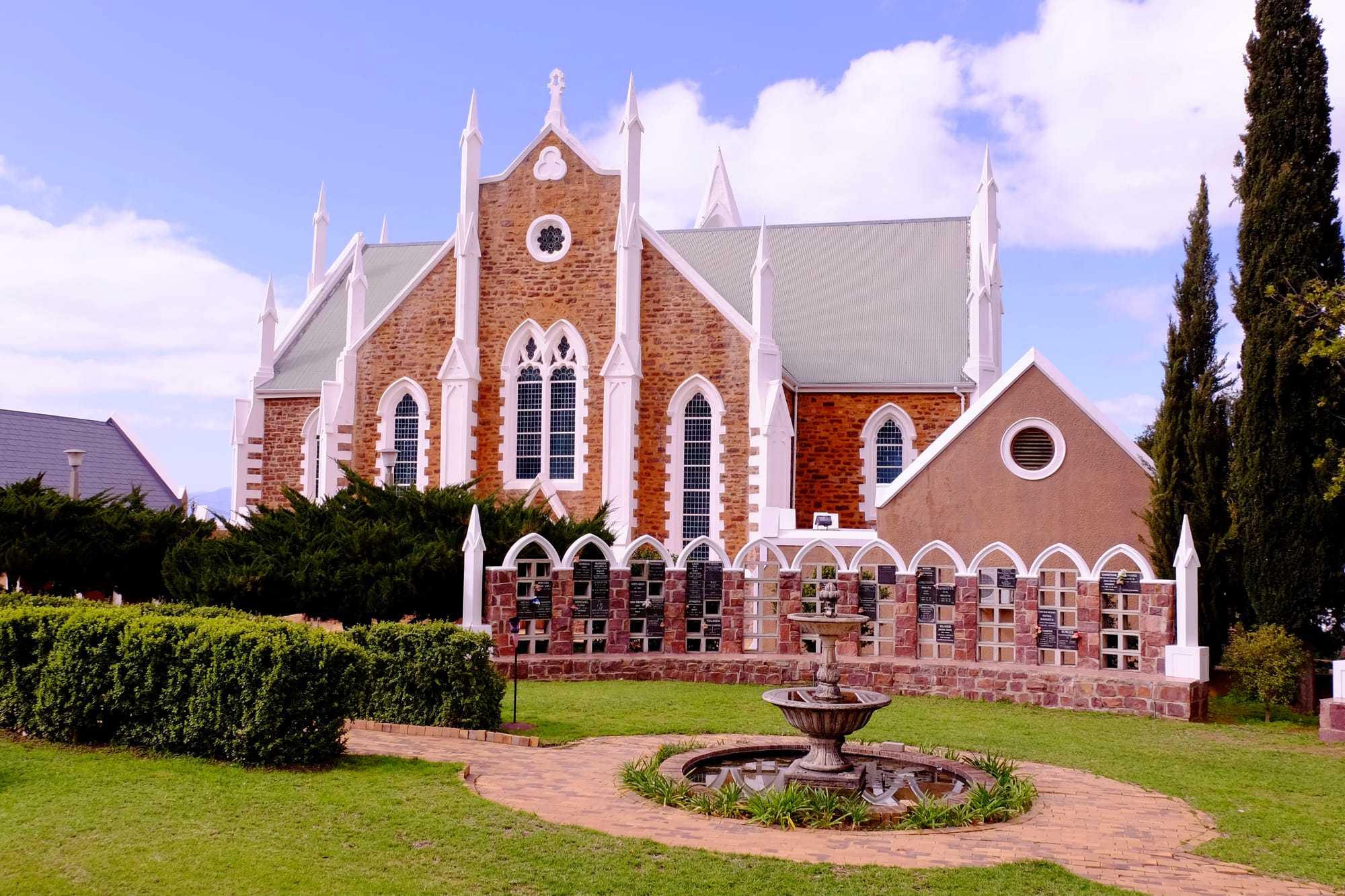
We headed out along the N7 towards the Cederburg mountains north of Cape Town, popping in along the way at Piketberg, a classic Karoo town with retro buildings and an imposing neo-gothic style Dutch Reformed Church.
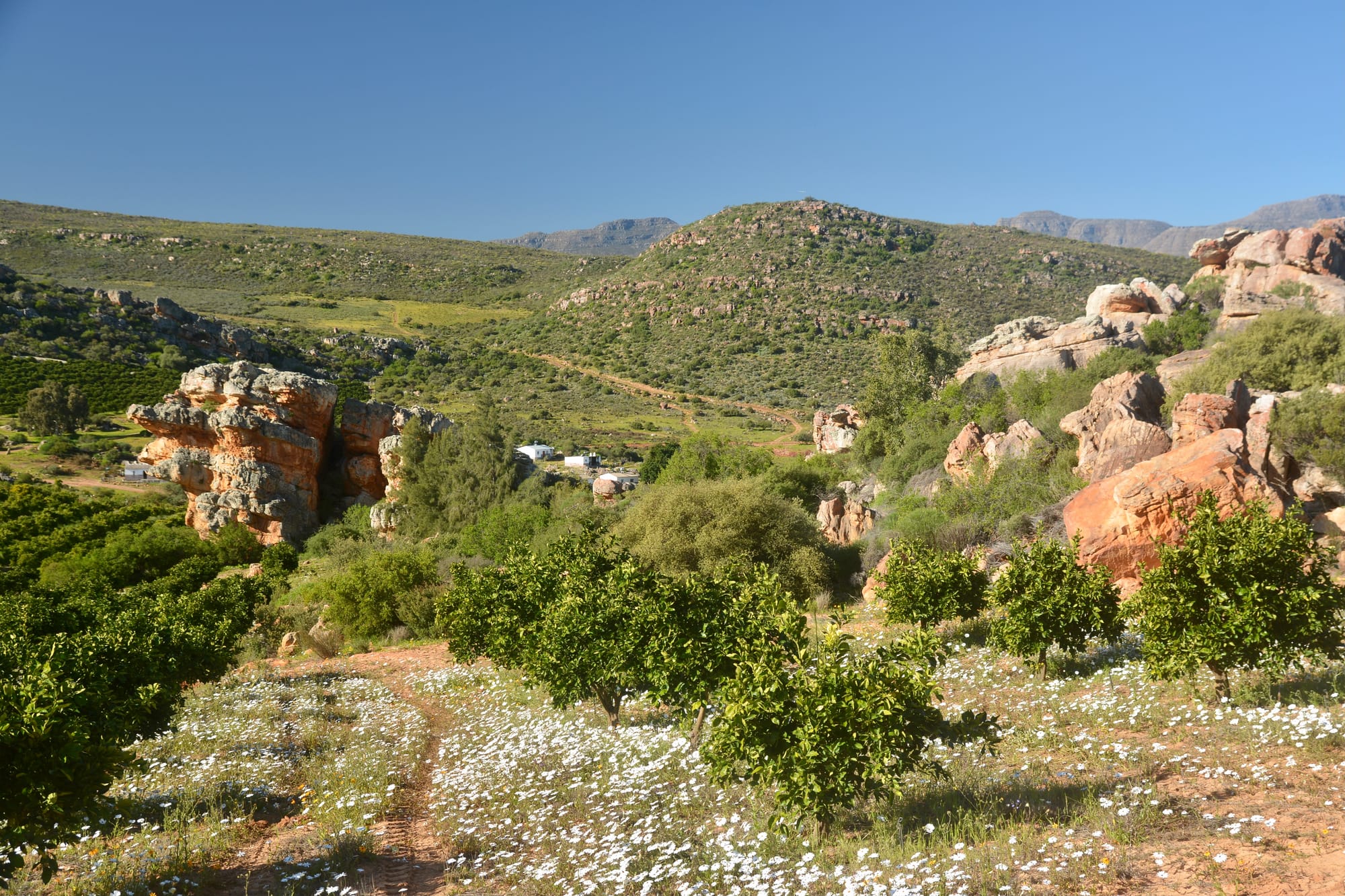
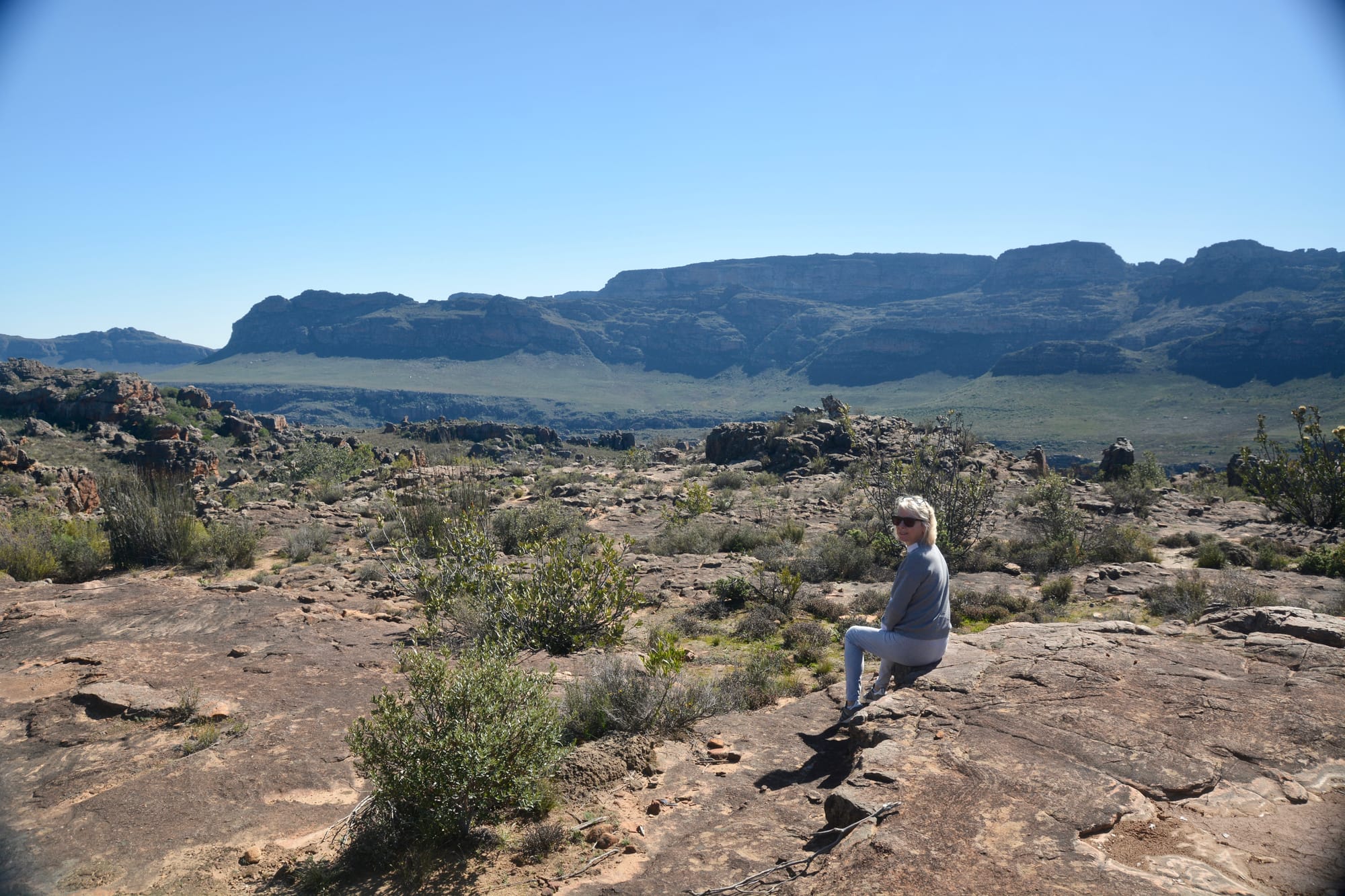
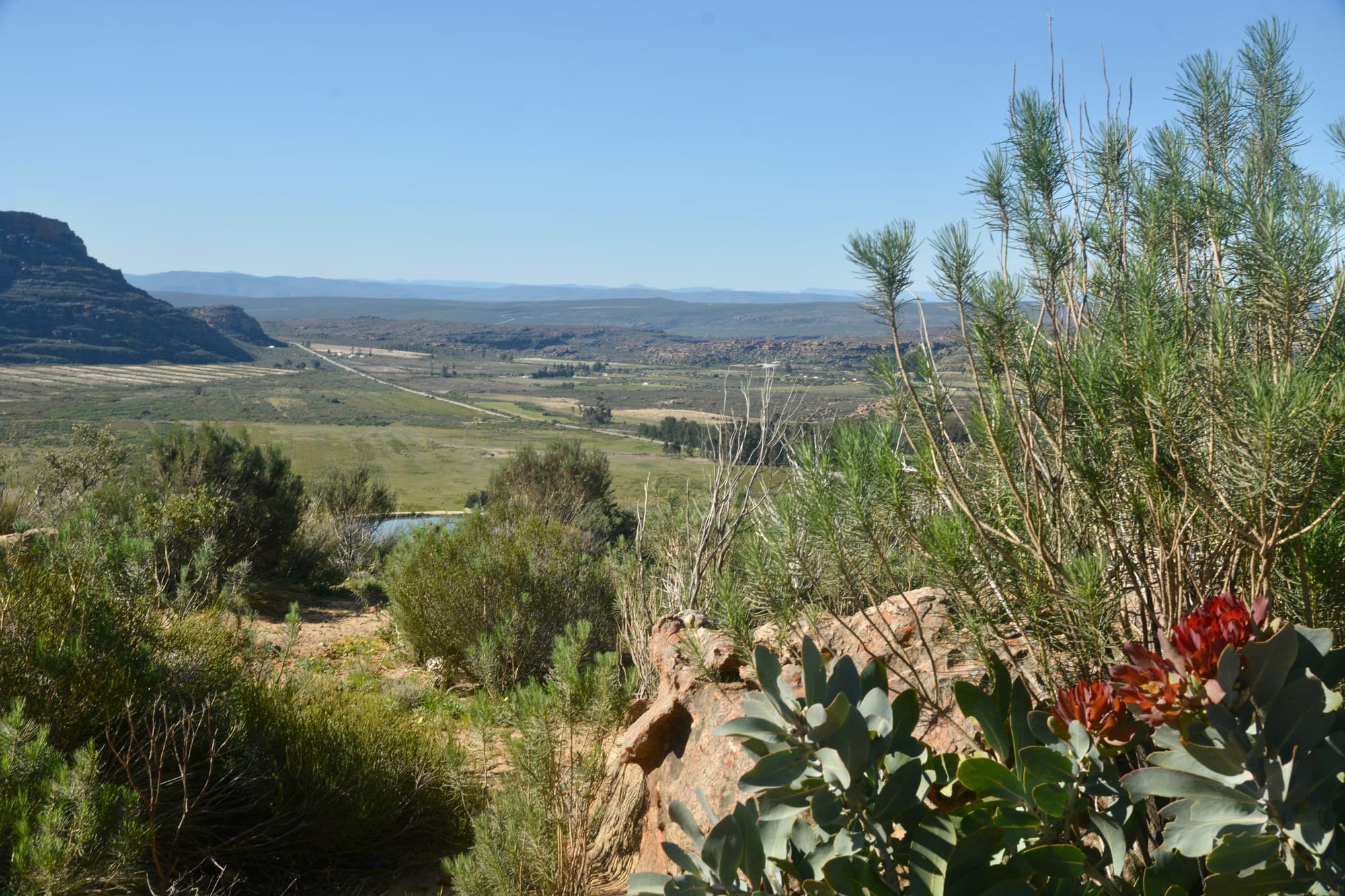
Our first stop for two nights was at Leopard Valley Eco Retreat. What a delightful spot nestled in a valley in the Cederburg mountains. The cabins come from Container Homes and are quite comfortable with a generous deck. Ours was out on its own and even had an innovative wood-fired hot tub! Leopards do roam here - two were recently camera trapped on the slopes - but we drew comfort in the fact that they are shy.
Our first stop for two nights was at Leopard Valley Eco Retreat. What a delightful spot nestled in a valley in the Cederburg mountains. The cabins come from Container Homes and are quite comfortable with a generous deck. Ours was out on its own and even had an innovative wood-fired hot tub! Leopards do roam here - two were recently camera trapped on the slopes - but we drew comfort in the fact that they are shy.
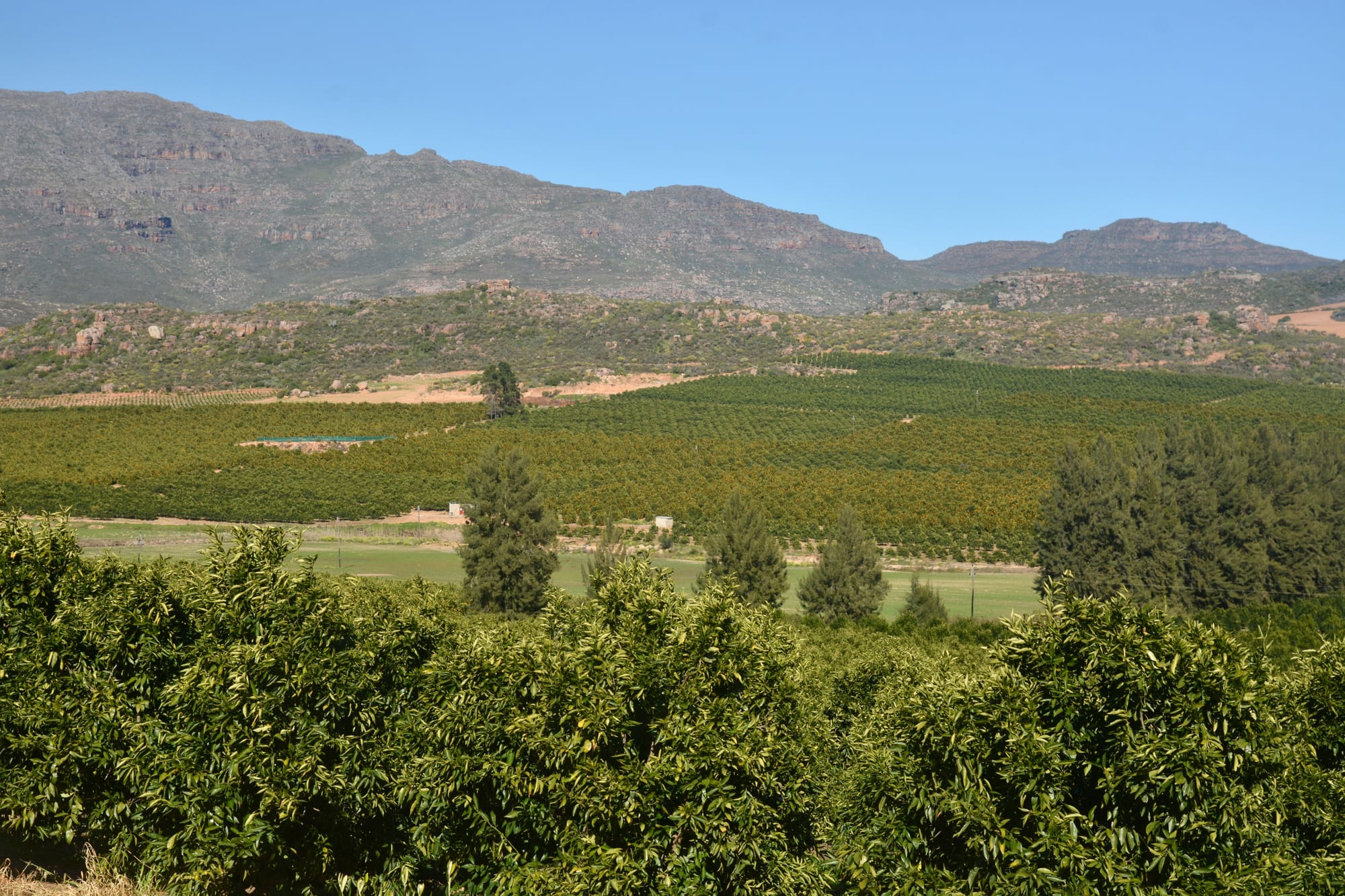
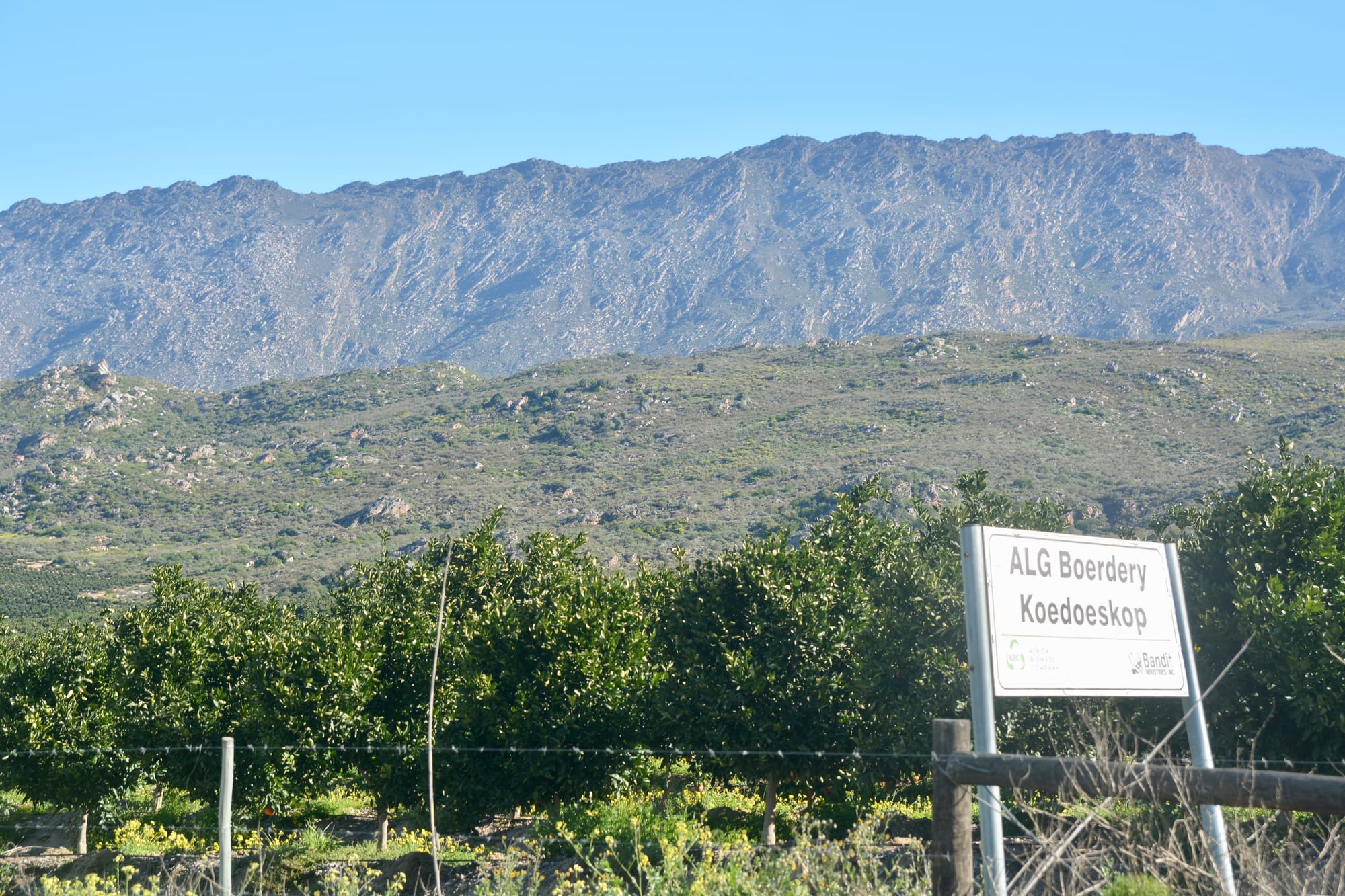
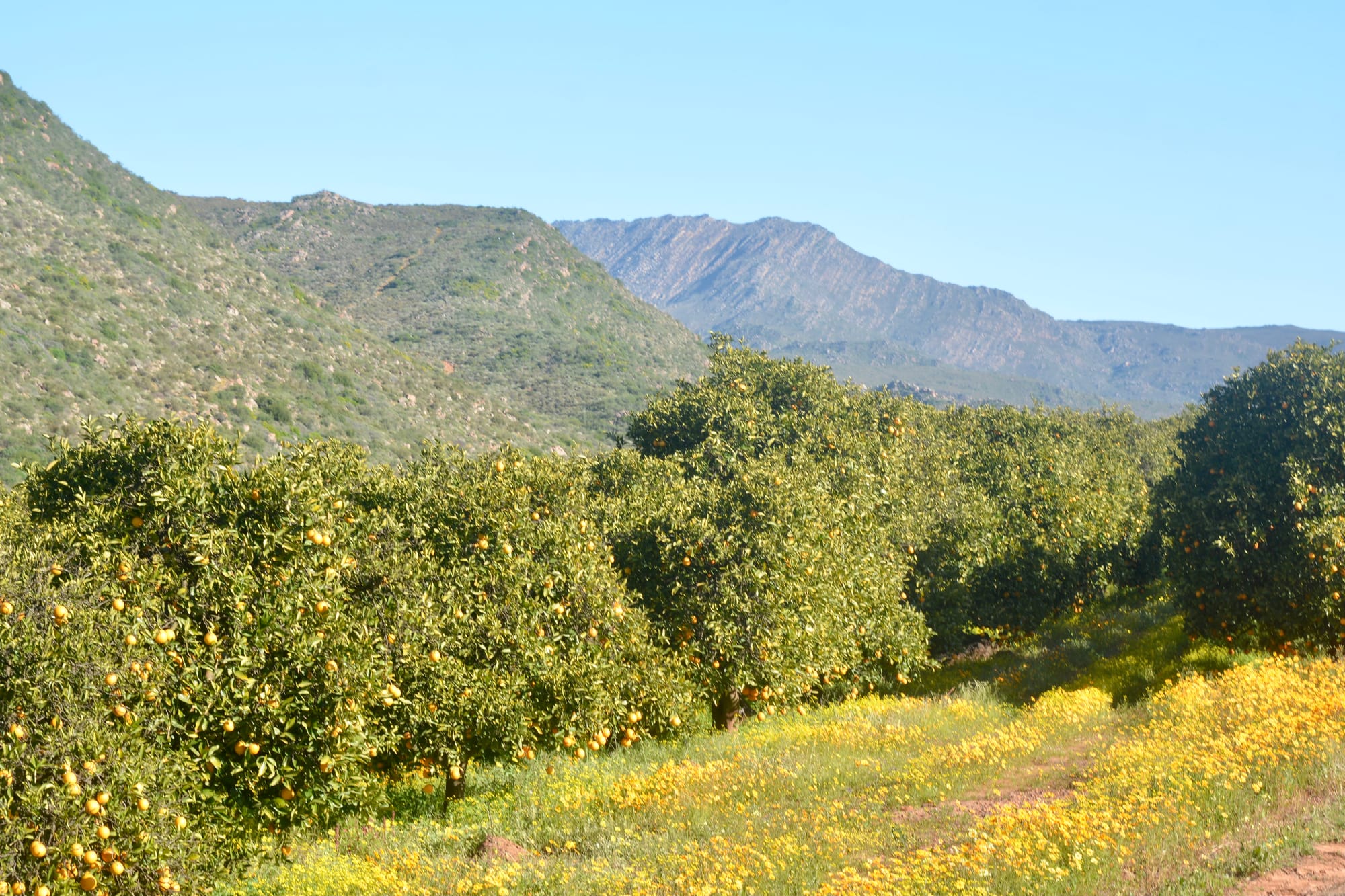
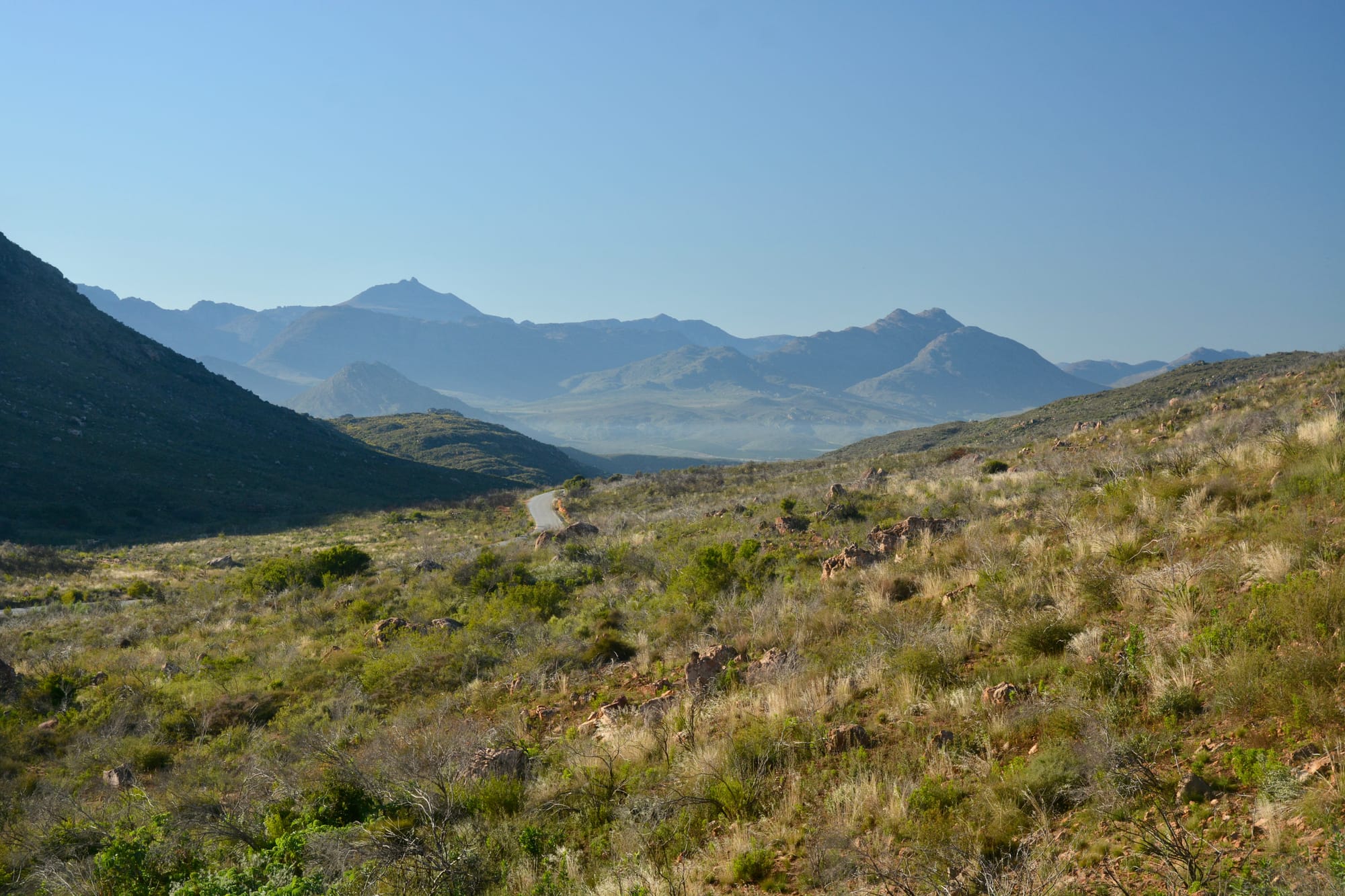
The region is of course a major citrus farming area. The next day we took a trip to Clanwilliam for breakfast, dodging the Rooibos presentation in the Information Center, and then over the truly majestic Cederburg mountains to the Biedouw Valley where we were greeted with a wild flower wonderland.
At night we were treated to a beautiful full moon coming up over the Cederburg mountains in the chrystal clear night skies of this region.
At night we were treated to a beautiful full moon coming up over the Cederburg mountains in the chrystal clear night skies of this region.
Namaqualand
Days 3 and 4
Springbok
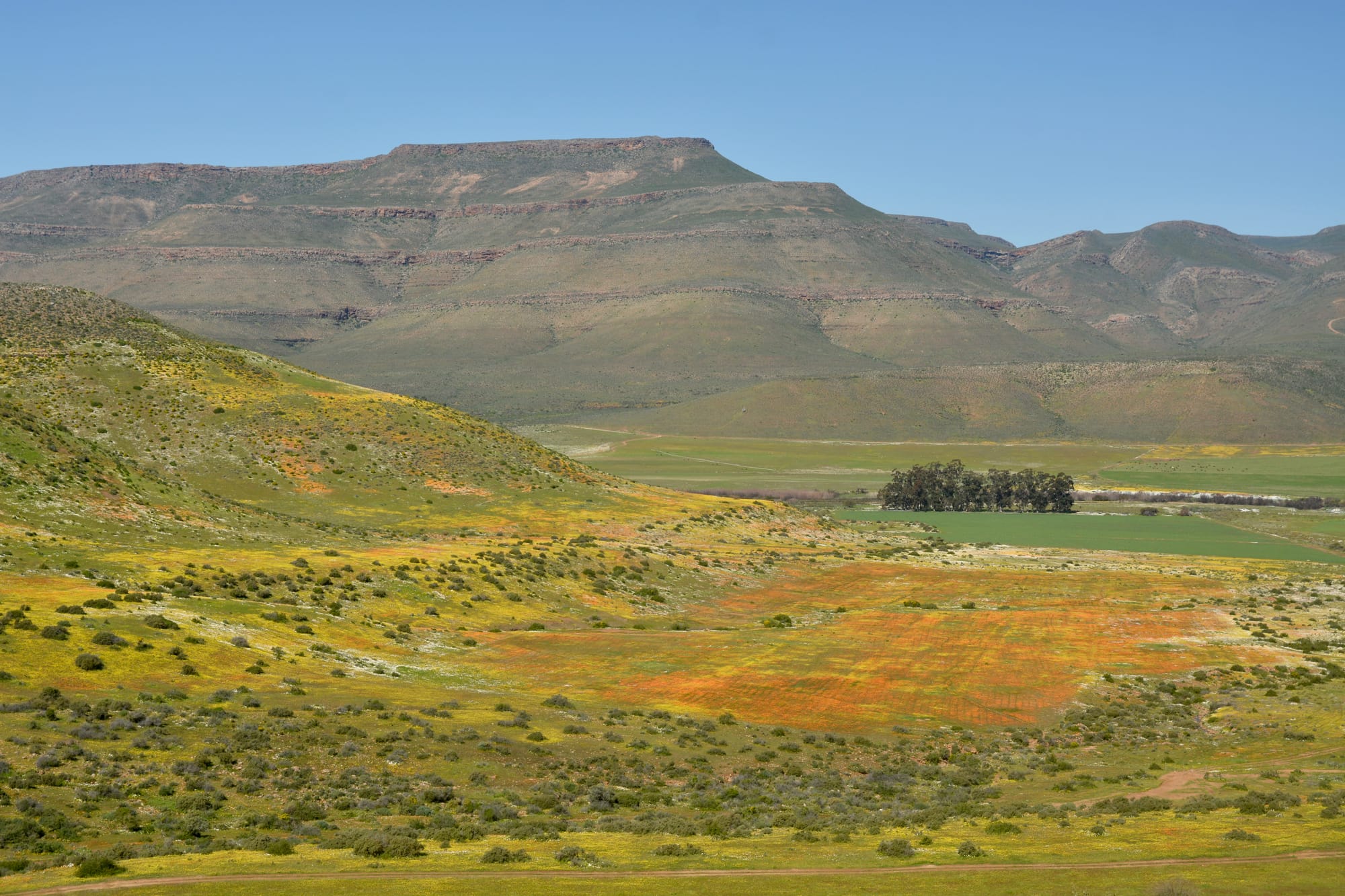
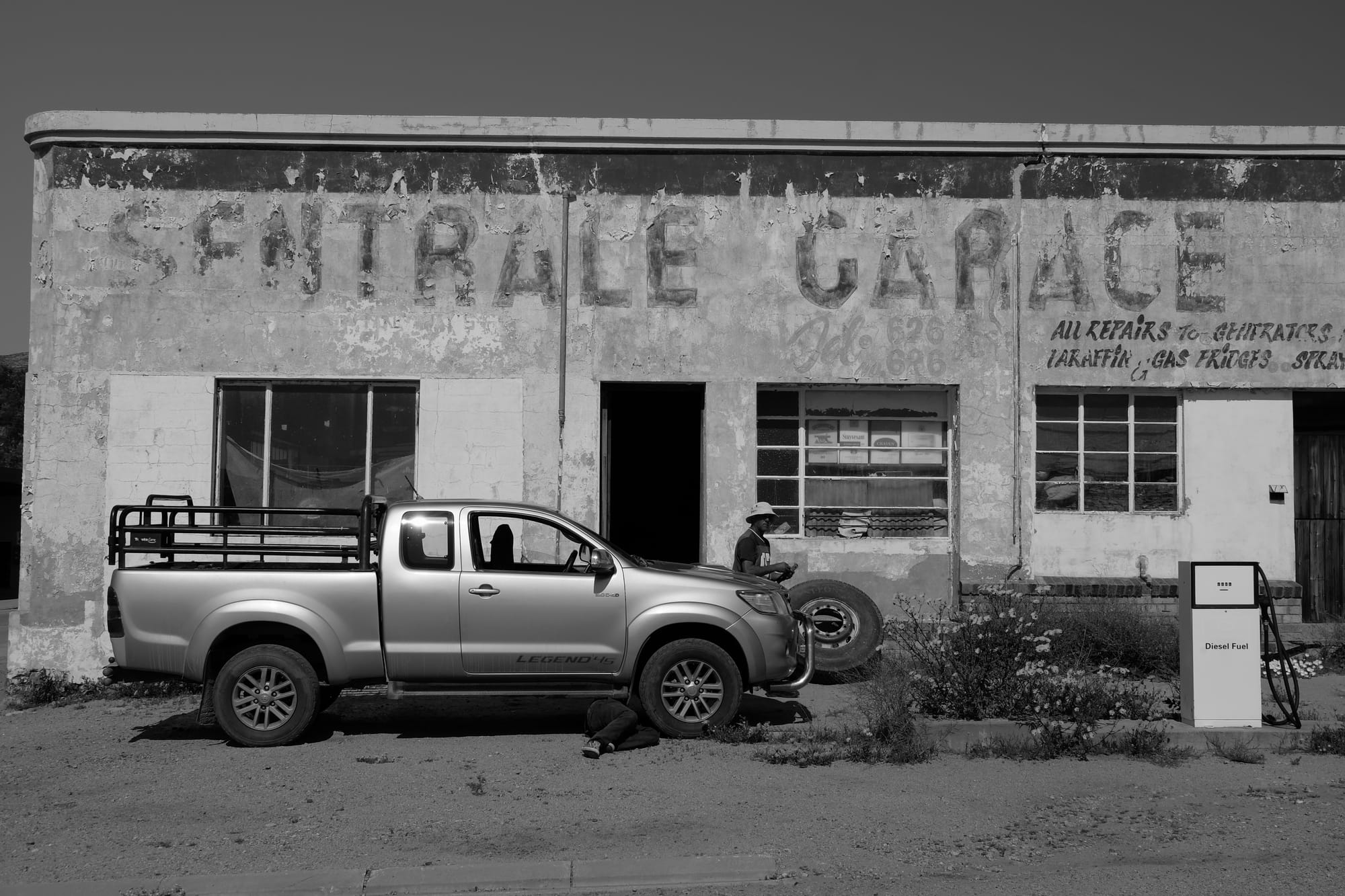
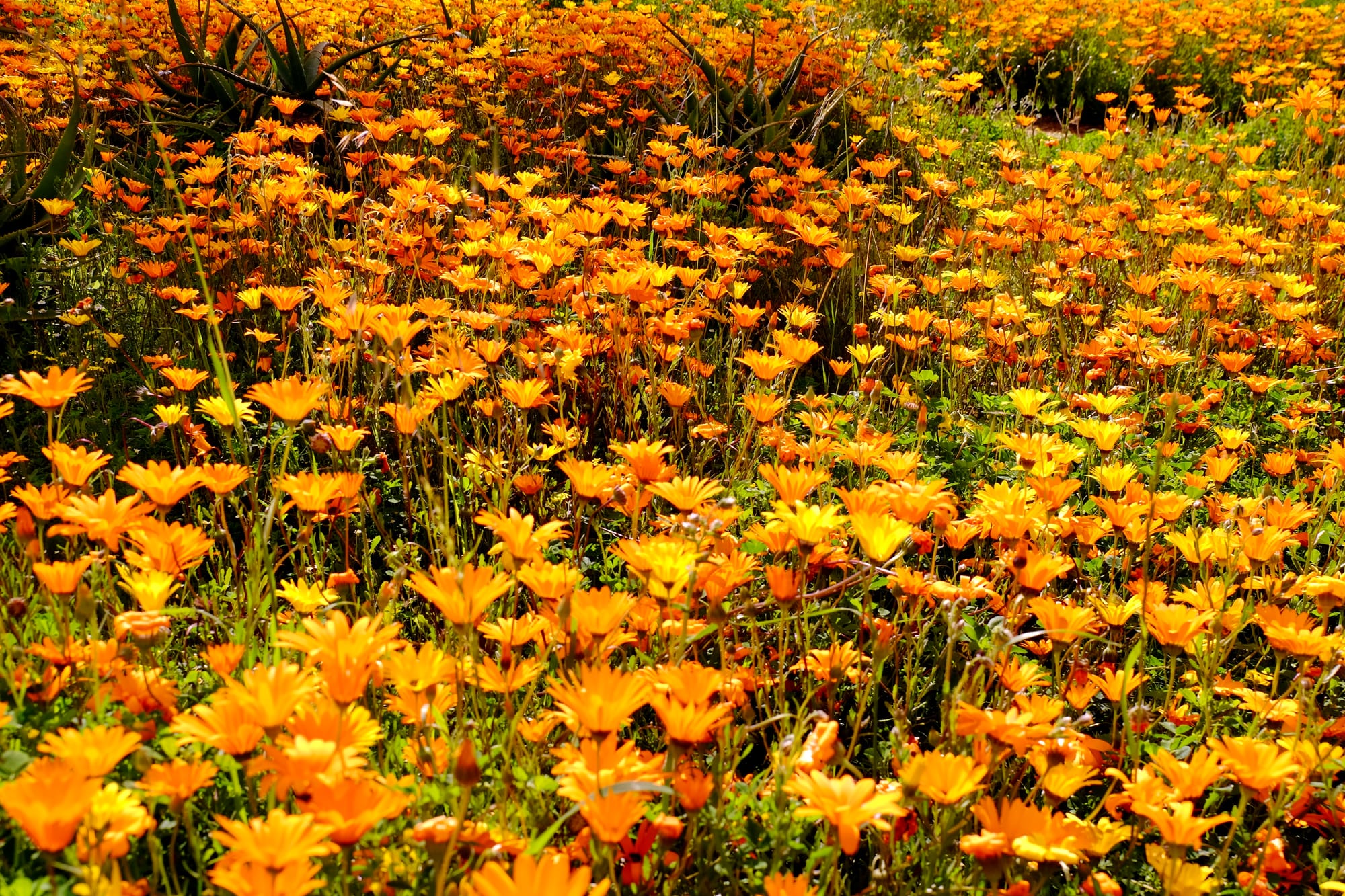
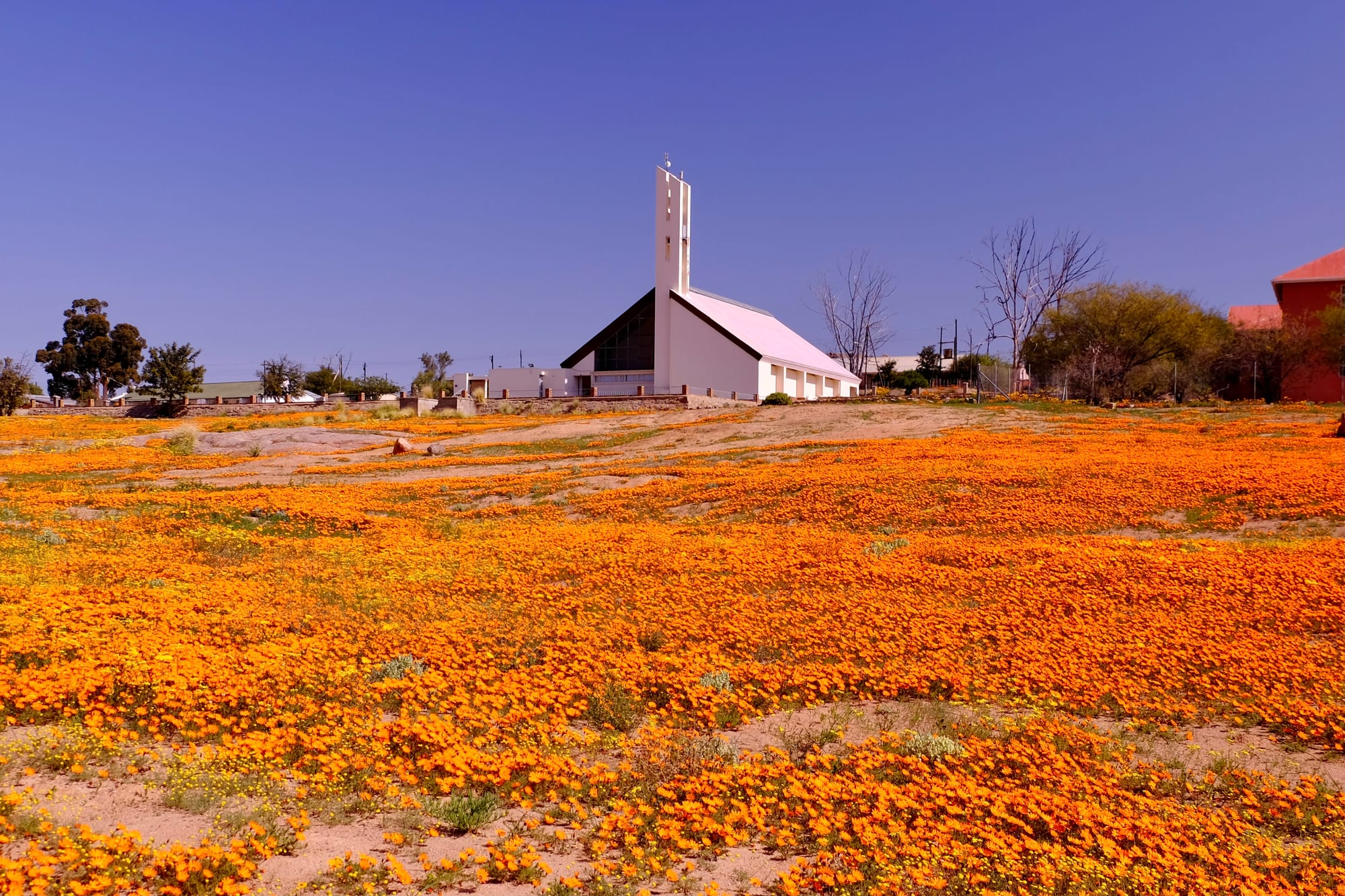
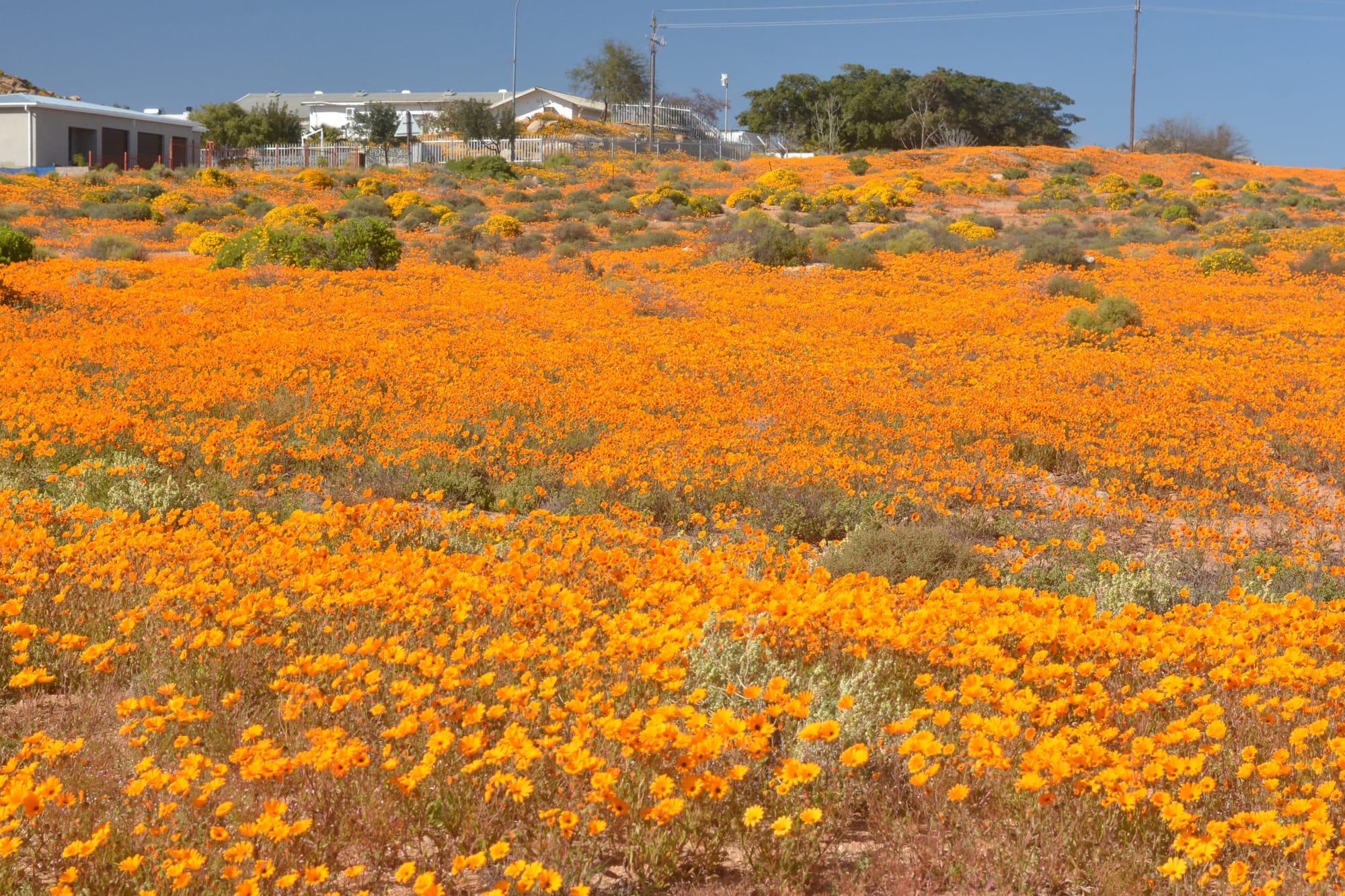
Continuing up the N7 we stopped at the town of Garies for lunch. When in Rome and all that, I ventured into a local mutton pie which was quite good. Exploring the town we discovered it had fields of orange wild daisies everywhere, creating a rather bizarre atmosphere.
We paused on our journey for a two night stay at the Nama White Guesthouse in Springbok and were happy with our choice as the town center is a bit uninspiring, whilst the guesthouse was in a pleasant suburb on the outskirts.
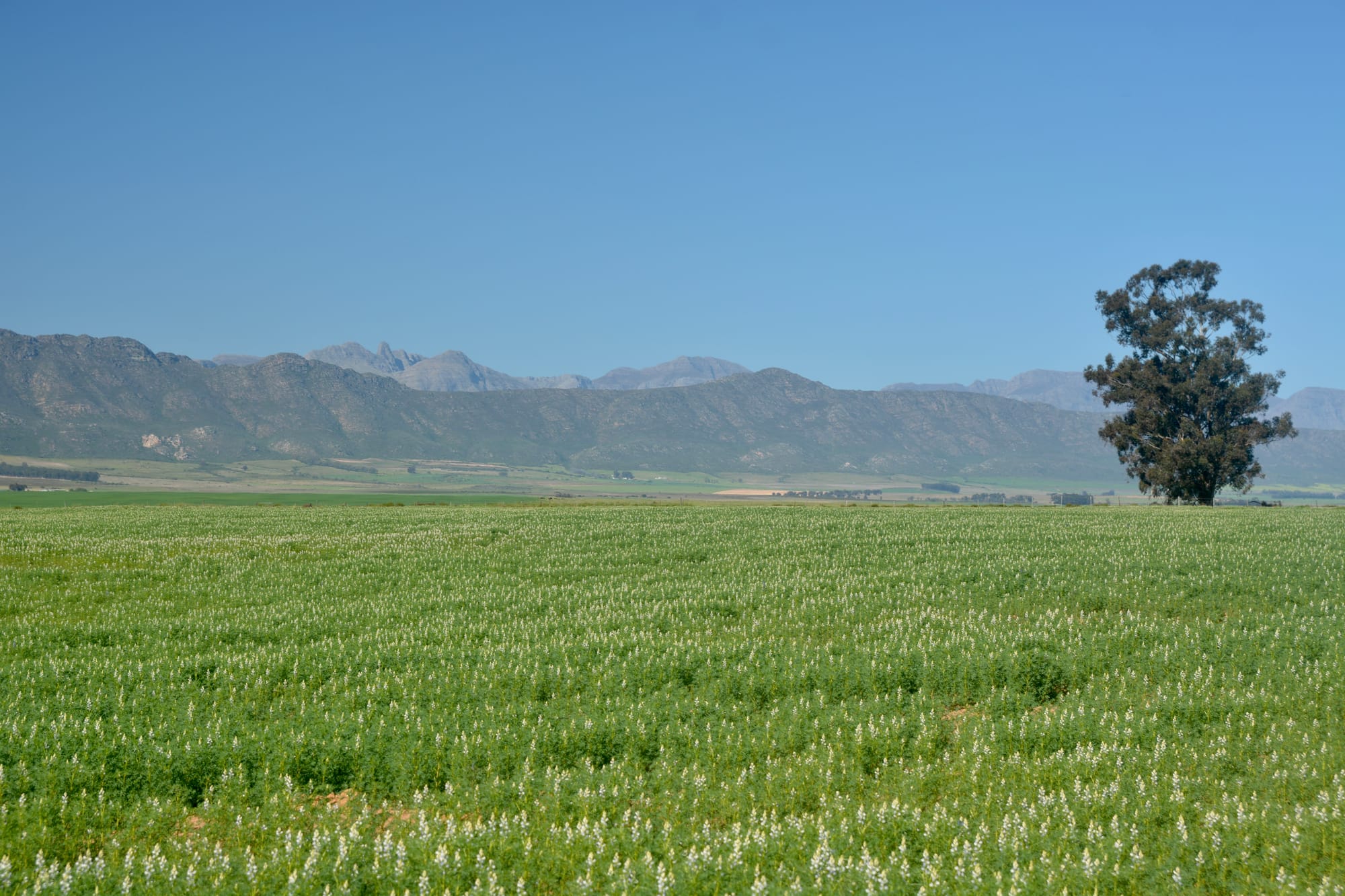
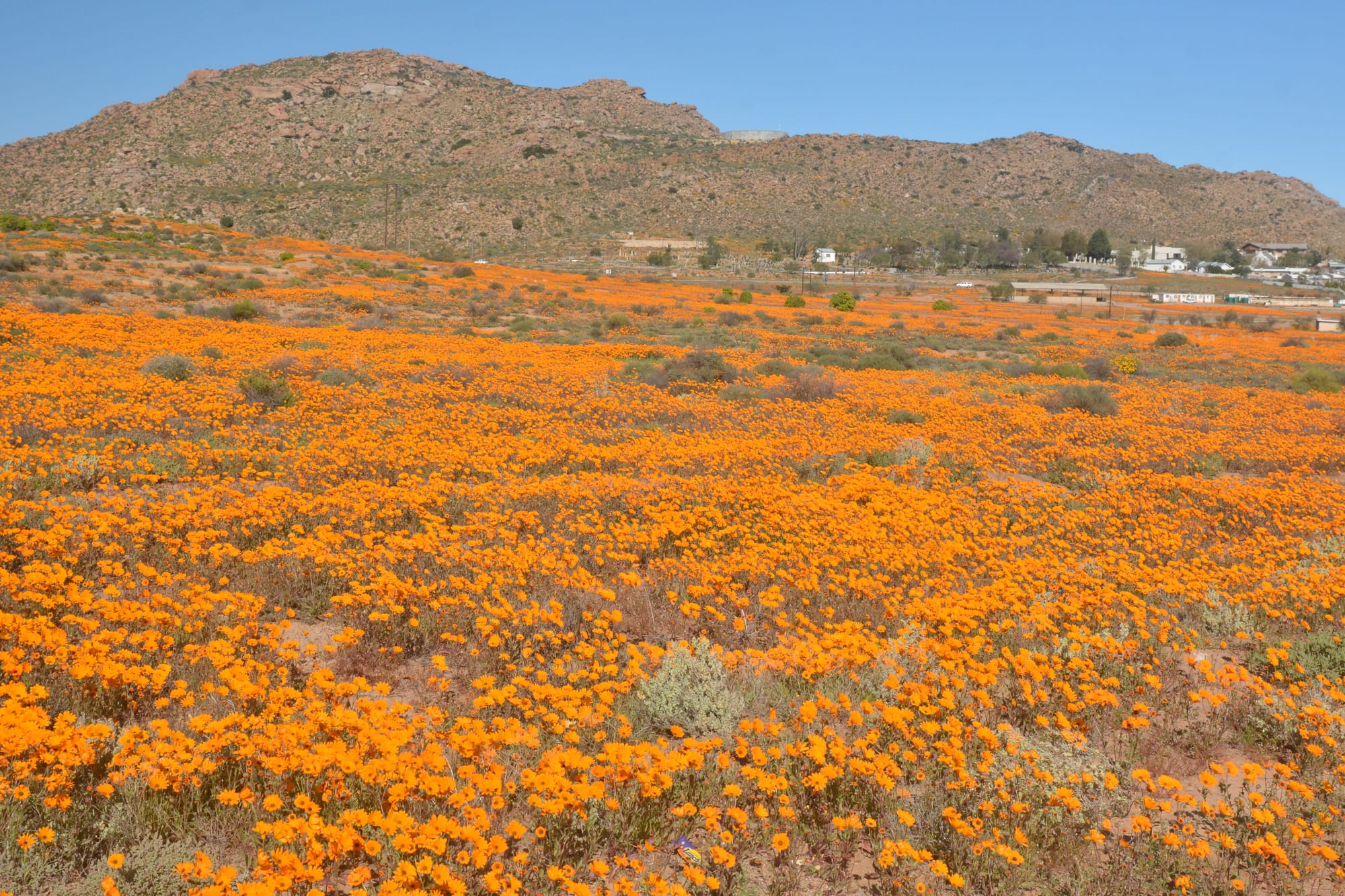
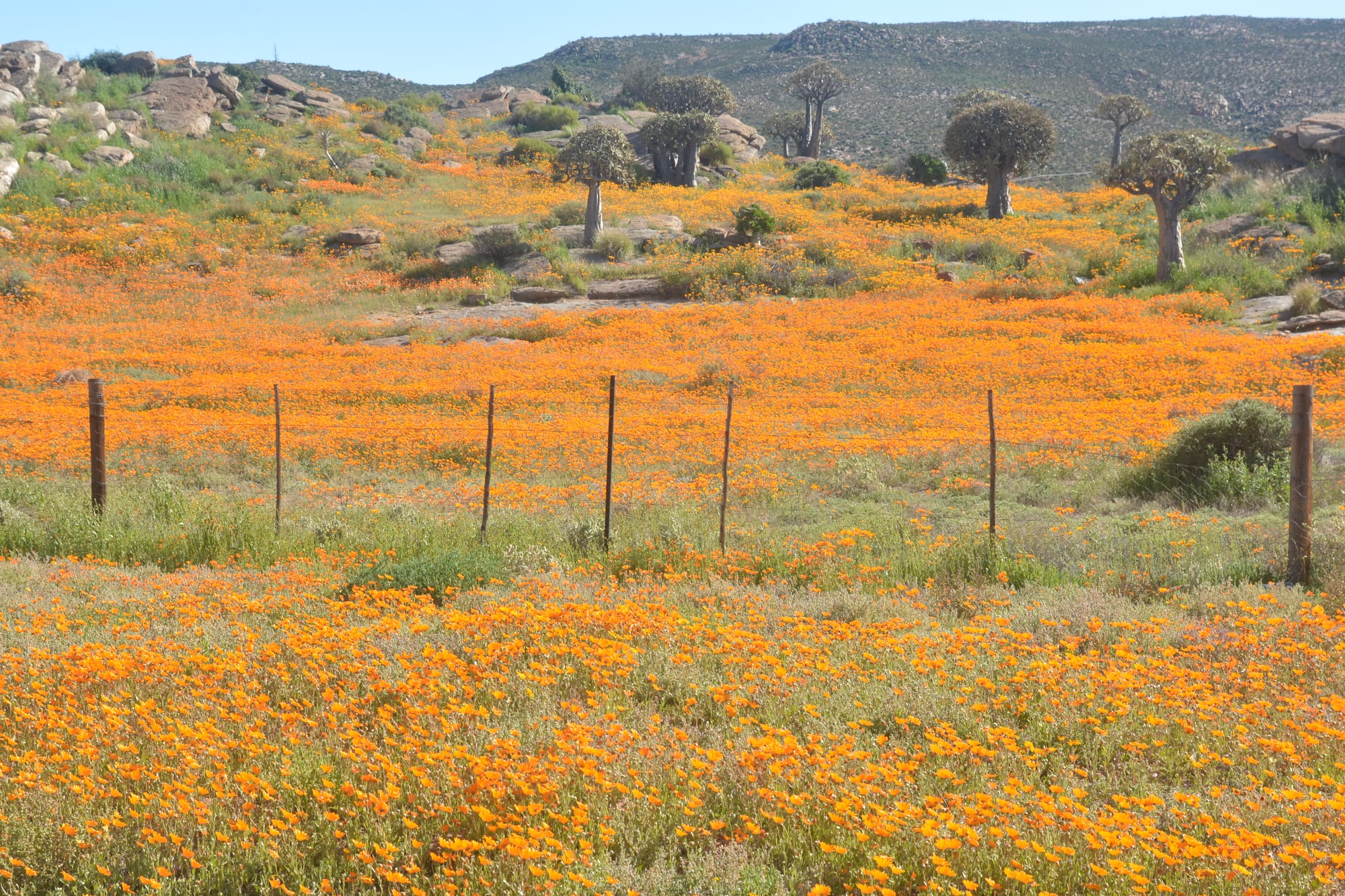
We spent the day exploring the town and surrounding daisy fields. There were massive fields of flowers everywhere - a sight to behold. Springbok locals told us they had never seen the wild flower blooming so prolific.
There is something special about the rocky outcrops in the region - many of the rock faces are sheer, gleaming, and magnificent.
We paused on our journey for a two night stay at the Nama White Guesthouse in Springbok and were happy with our choice as the town center is a bit uninspiring, whilst the guesthouse was in a pleasant suburb on the outskirts.
We spent the day exploring the town and surrounding daisy fields. There were massive fields of flowers everywhere - a sight to behold. Springbok locals told us they had never seen the wild flower blooming so prolific.
There is something special about the rocky outcrops in the region - many of the rock faces are sheer, gleaming, and magnificent.
Fooodie section
We were recommended the Tauren Steakhouse for dinner, which turned out to be so good we went back there the second night. I enjoyed a flambéed fillet and accompaniments, done seared, and it was world class.
Brigi told the staff we were publishing a blog and that we would mention them, whereupon they all insisted on trooping outside for a group photo. A great bunch of people.
We were recommended the Tauren Steakhouse for dinner, which turned out to be so good we went back there the second night. I enjoyed a flambéed fillet and accompaniments, done seared, and it was world class.
Brigi told the staff we were publishing a blog and that we would mention them, whereupon they all insisted on trooping outside for a group photo. A great bunch of people.
Orange River
Days 5 and 6
Orange River Rafting Lodge
Looking for a little bit of adventure in an amazing setting we stayed over at the Orange River Rafting Lodge near Vioolsdrif on the border with Namibia.
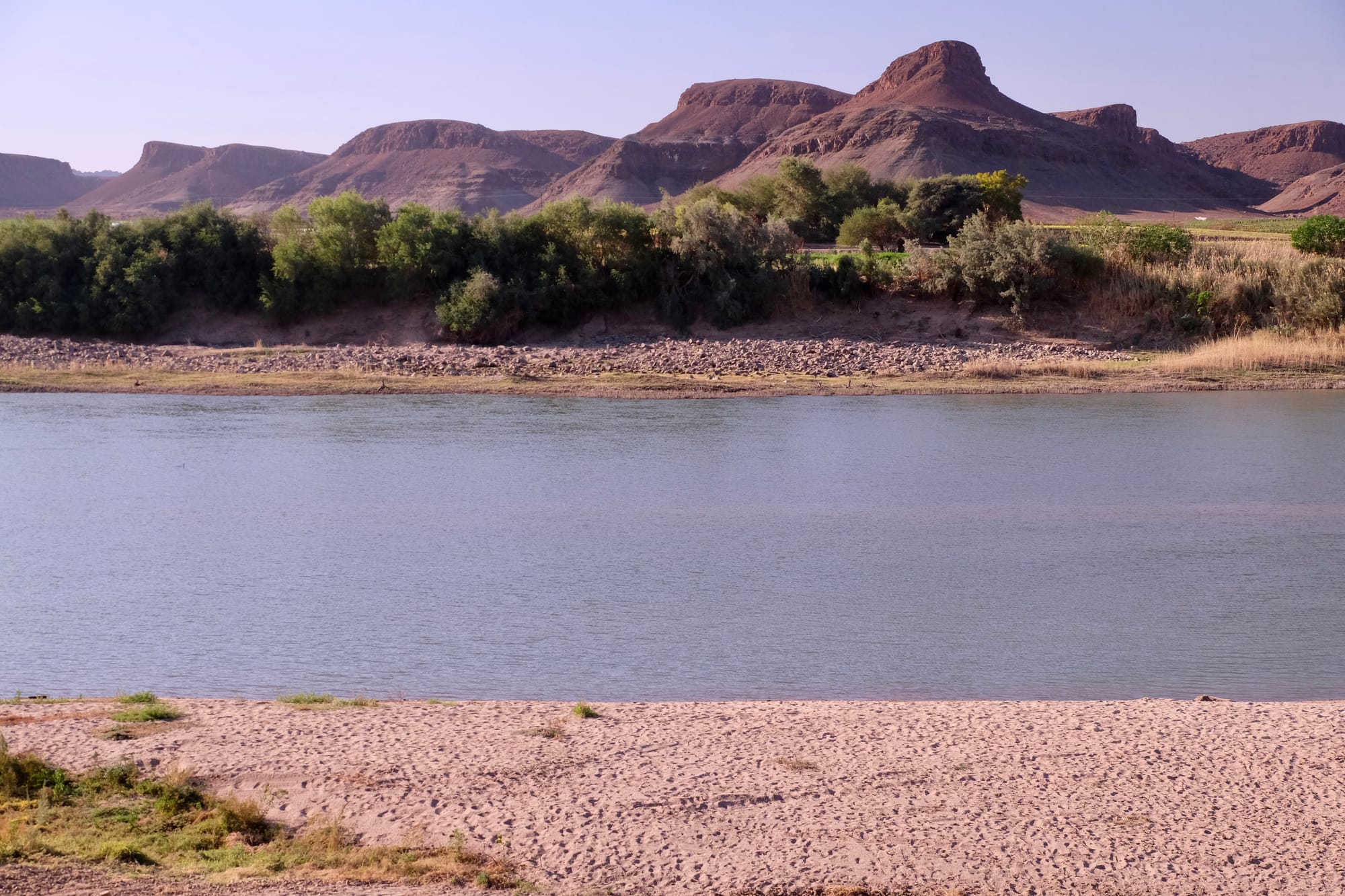
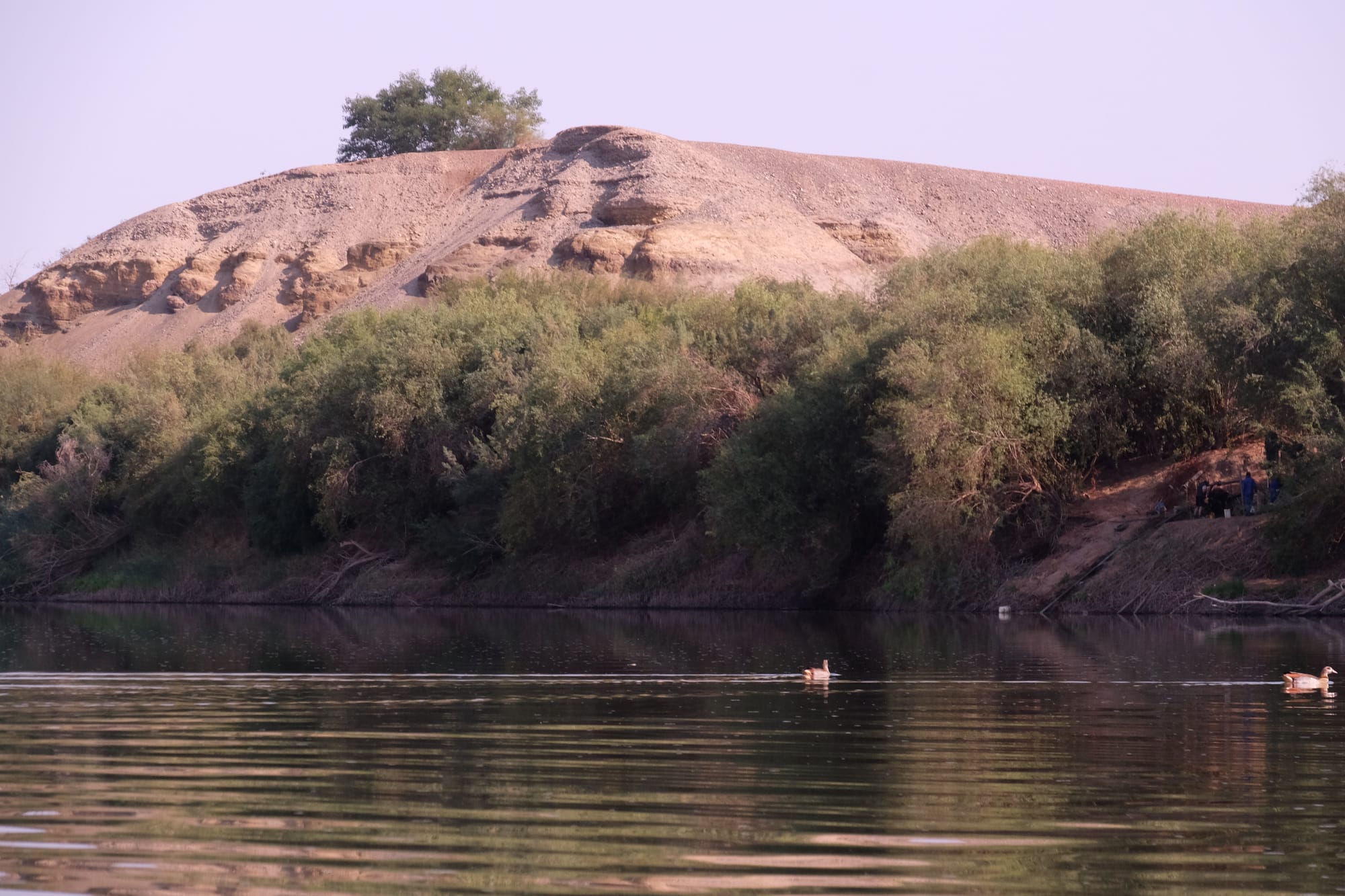
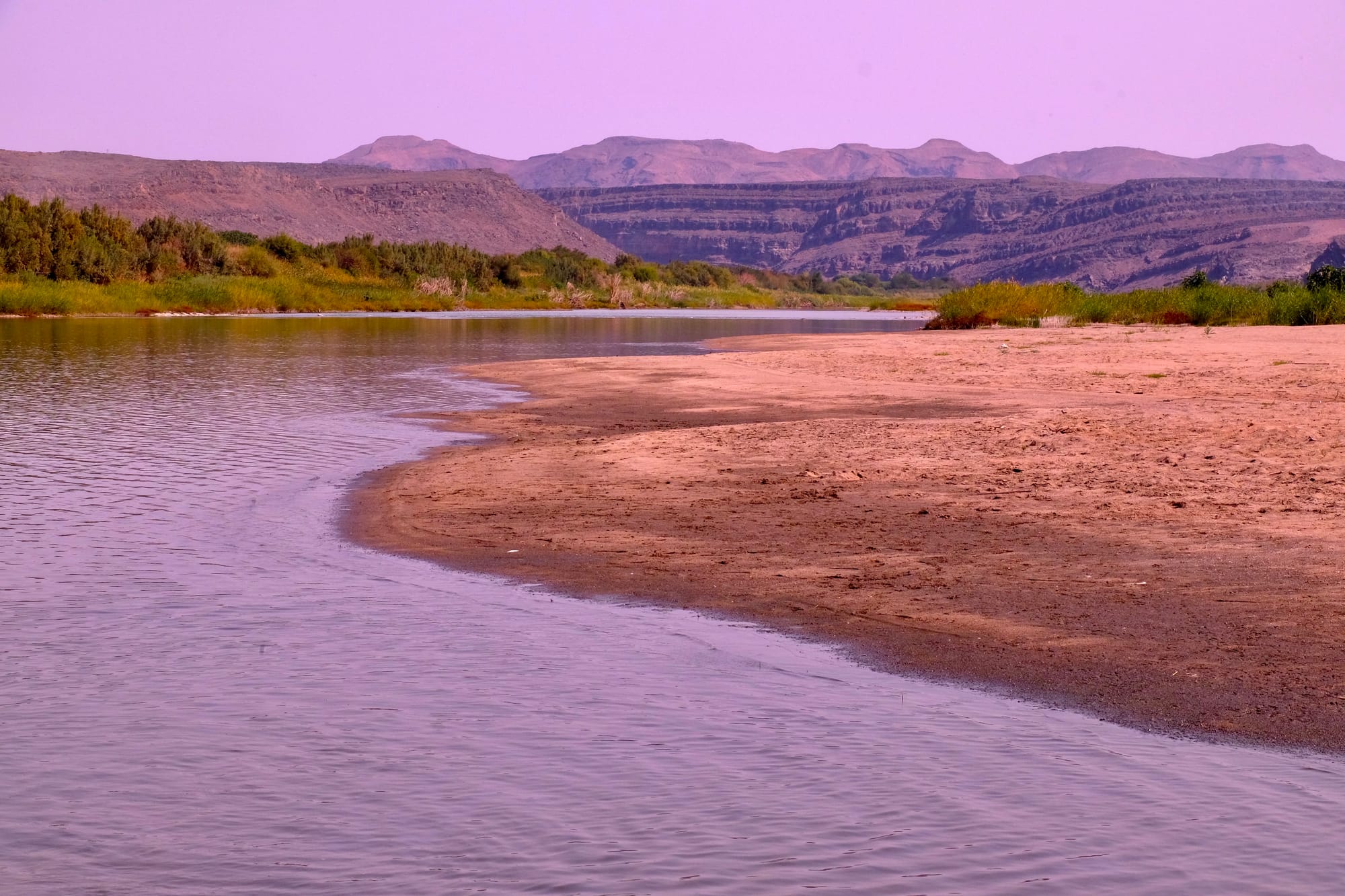
The whole region is so interesting in how the river spawns farms along both banks growing lucerne, herbs, grapes and more. There are also several lodges catering to the likes of us and short stayovers. Our lodge was situated on the banks and we enjoyed several hours taking in the setting and watching the bird life - with a beer in the hand of course.
The whole region is so interesting in how the river spawns farms along both banks growing lucerne, herbs, grapes and more. There are also several lodges catering to the likes of us and short stayovers. Our lodge was situated on the banks and we enjoyed several hours taking in the setting and watching the bird life - with a beer in the hand of course.
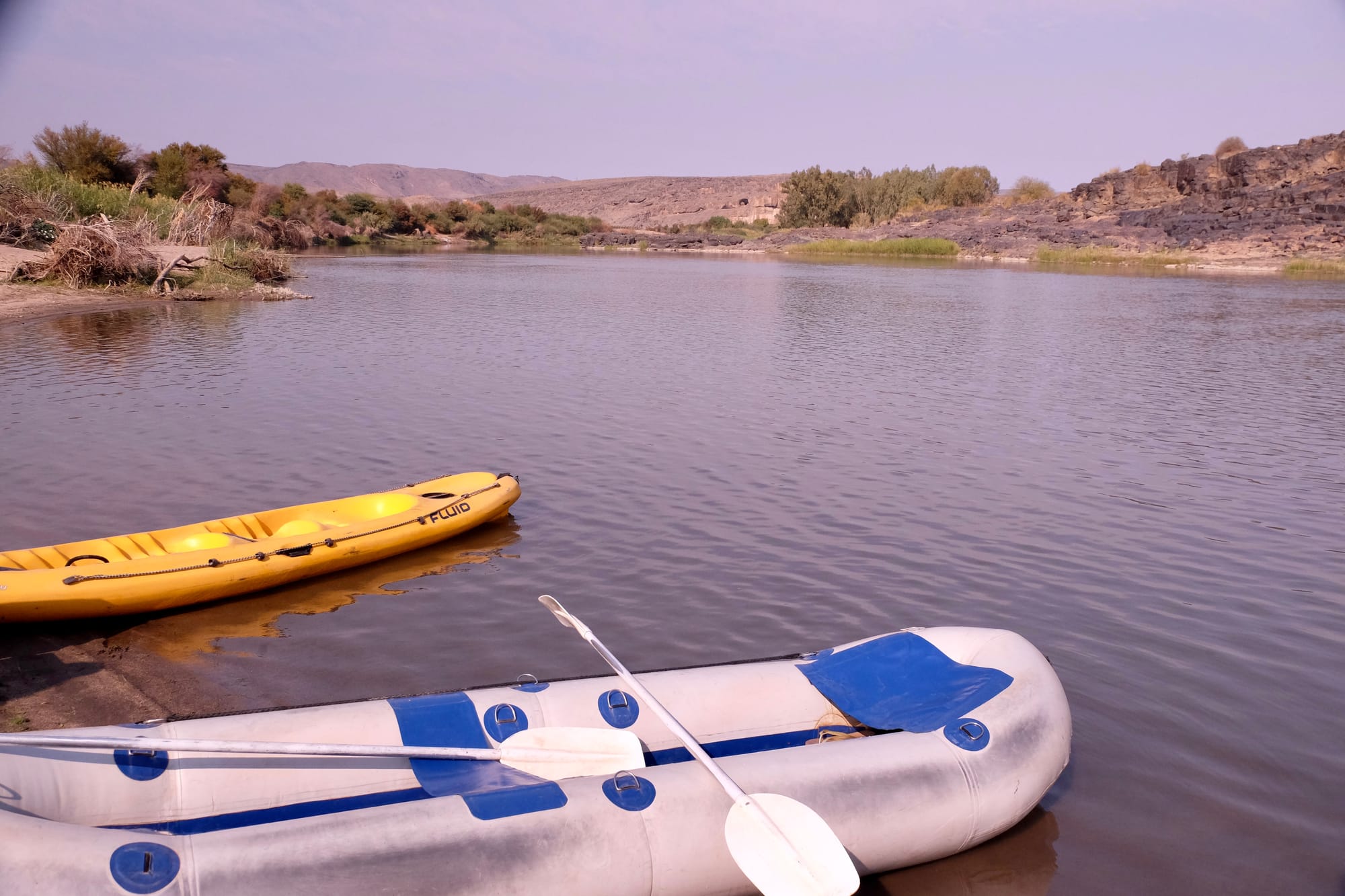
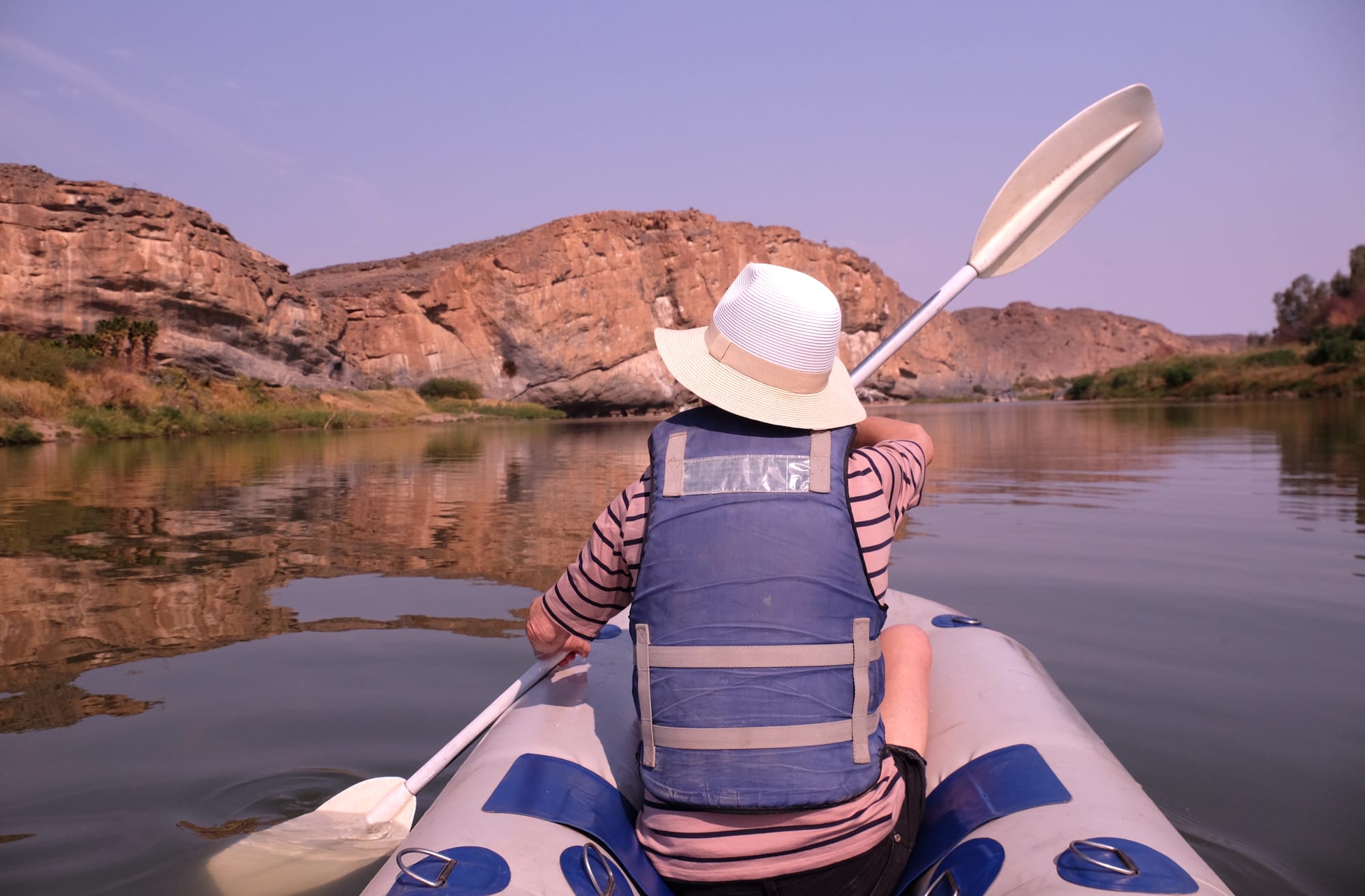
The next morning we clocked in for our safety jackets and a dry bag for cellphones and cameras and, after a safety briefing, jumped in our inflatable canoe. The river was quite low and slow so it was a leisurely 10 km paddle downstream with minor rapids to negotiate.
The scenery was beautiful, with sheer cliffs punctuated with reed beds and trees. The bird life is absolutely stunning and we amassed several 'lifers' (first time seen and identified) including the white breasted cormorant, Western reed heron and the little Orange River white eye - obviously not common in our area.
The scenery was beautiful, with sheer cliffs punctuated with reed beds and trees. The bird life is absolutely stunning and we amassed several 'lifers' (first time seen and identified) including the white breasted cormorant, Western reed heron and the little Orange River white eye - obviously not common in our area.

Luderitz
Days 7 and 8
Luderitz
With great excitement, we crossed the border into Namibia and headed for our first stop - Luderitz. The shortest route from the border crossing as shown by Google Maps was a five hour drive on a gravel 'C' route, so we elected to take the one hour longer 'B' route which is tarred, and it was certainly worth it.
As we got nearer to our destination the terrain began to morph into a distinctly arid desert with rocky outcrops. This scenery has a dramatic beauty of its own. Arriving late afternoon at our accommodation, the excellent Cormorant House on Luderitz Bay, we went looking for a spot to relax and get some sustenance.
As we got nearer to our destination the terrain began to morph into a distinctly arid desert with rocky outcrops. This scenery has a dramatic beauty of its own. Arriving late afternoon at our accommodation, the excellent Cormorant House on Luderitz Bay, we went looking for a spot to relax and get some sustenance.
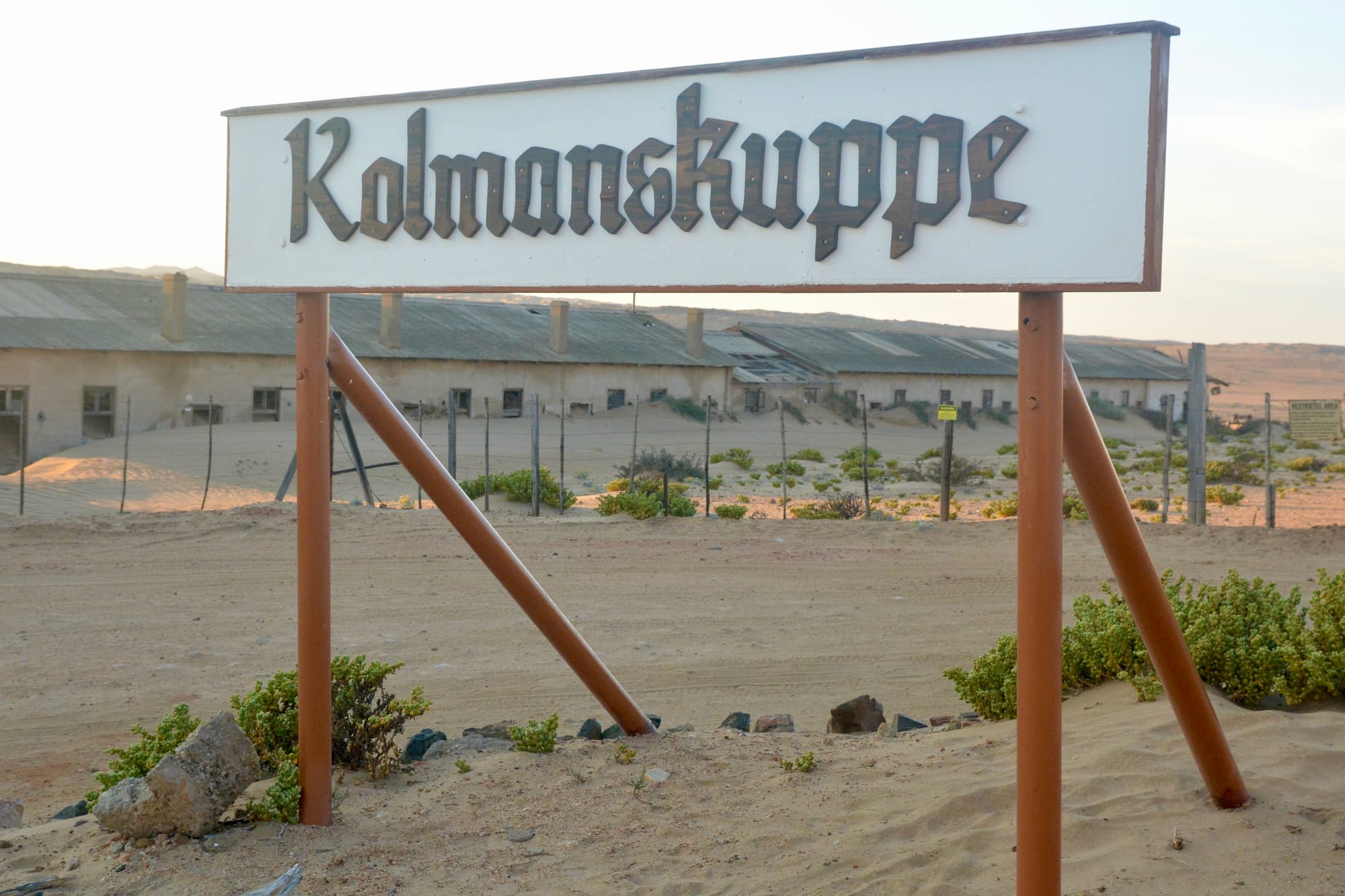
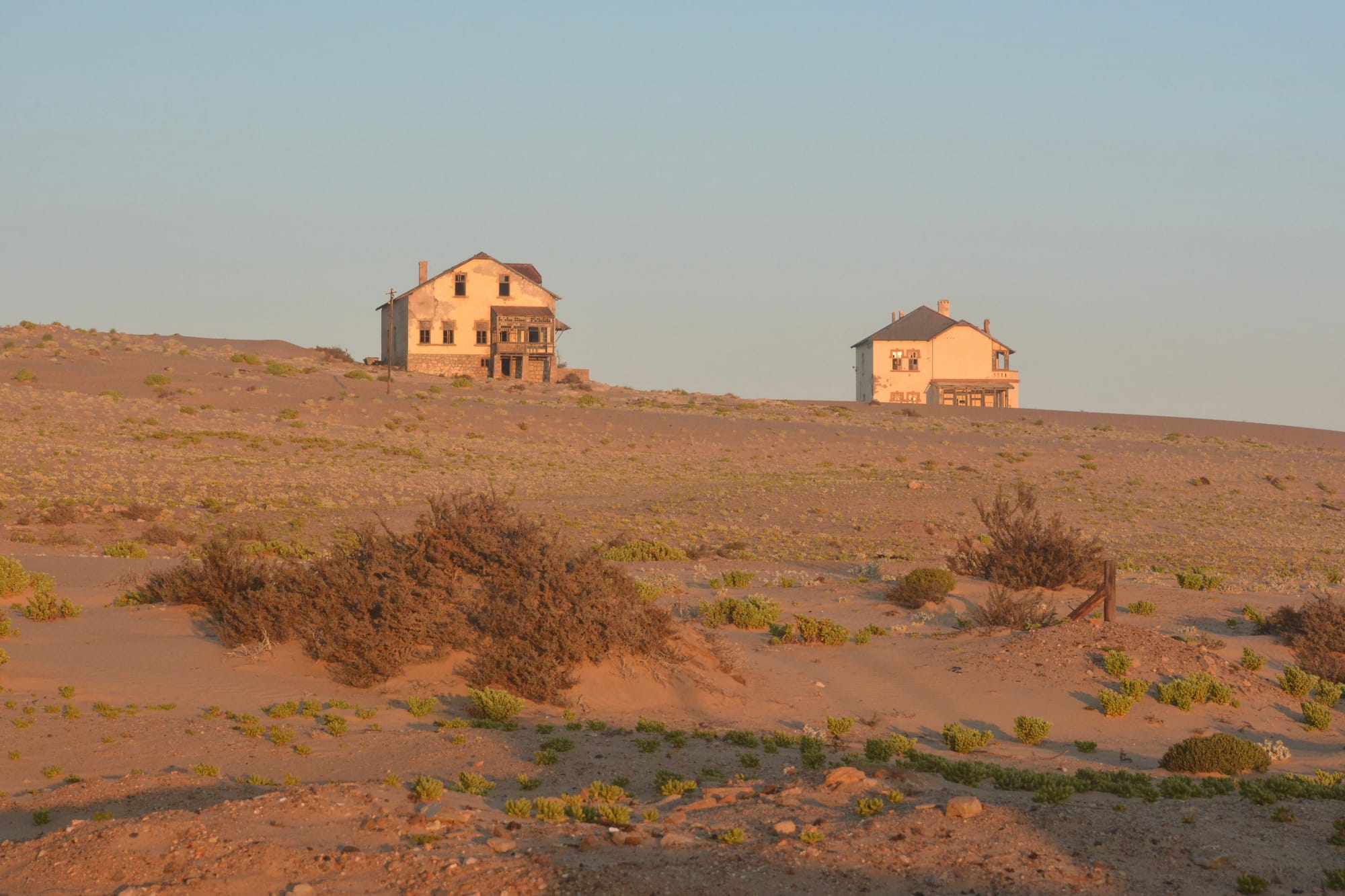
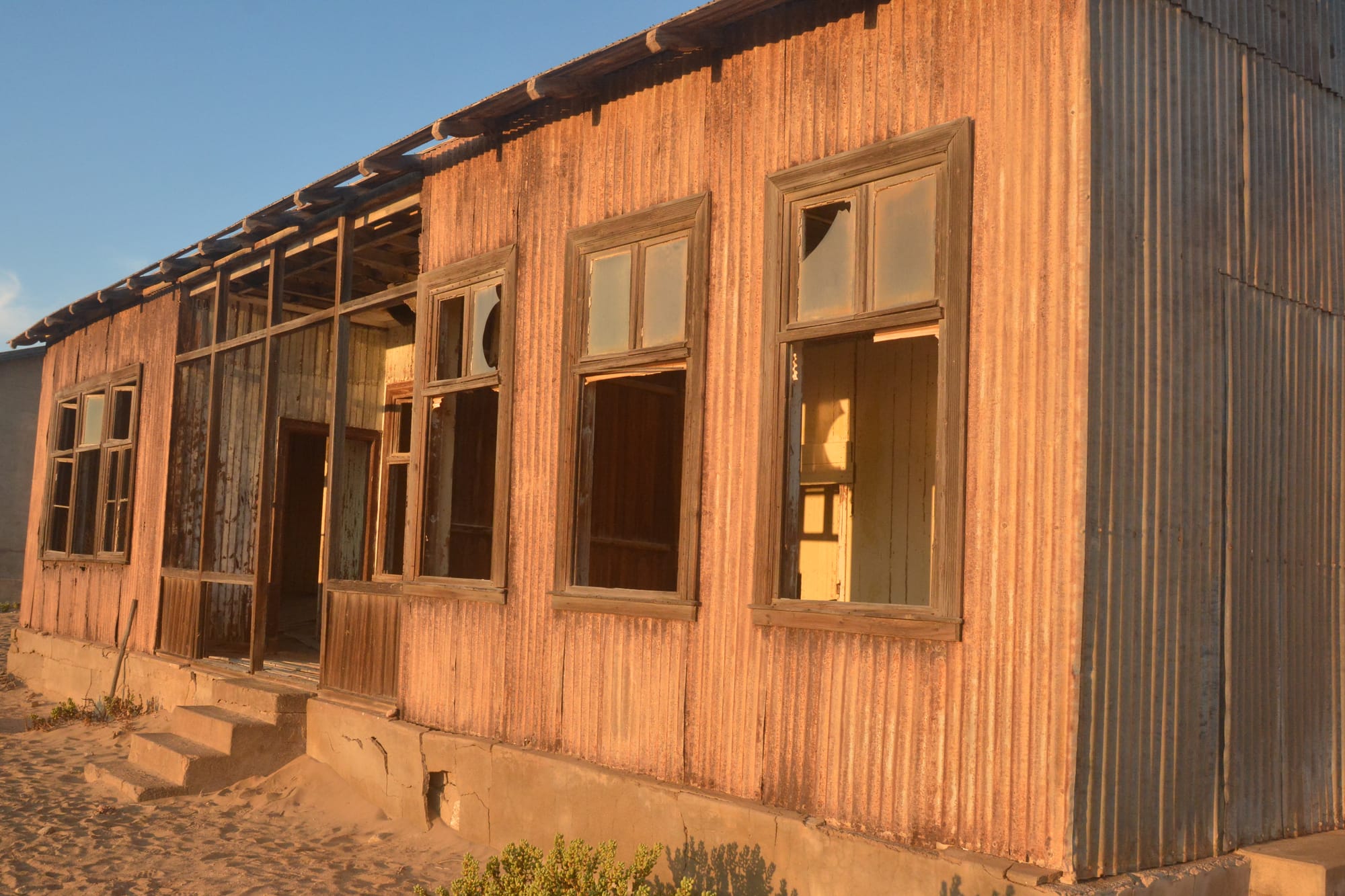
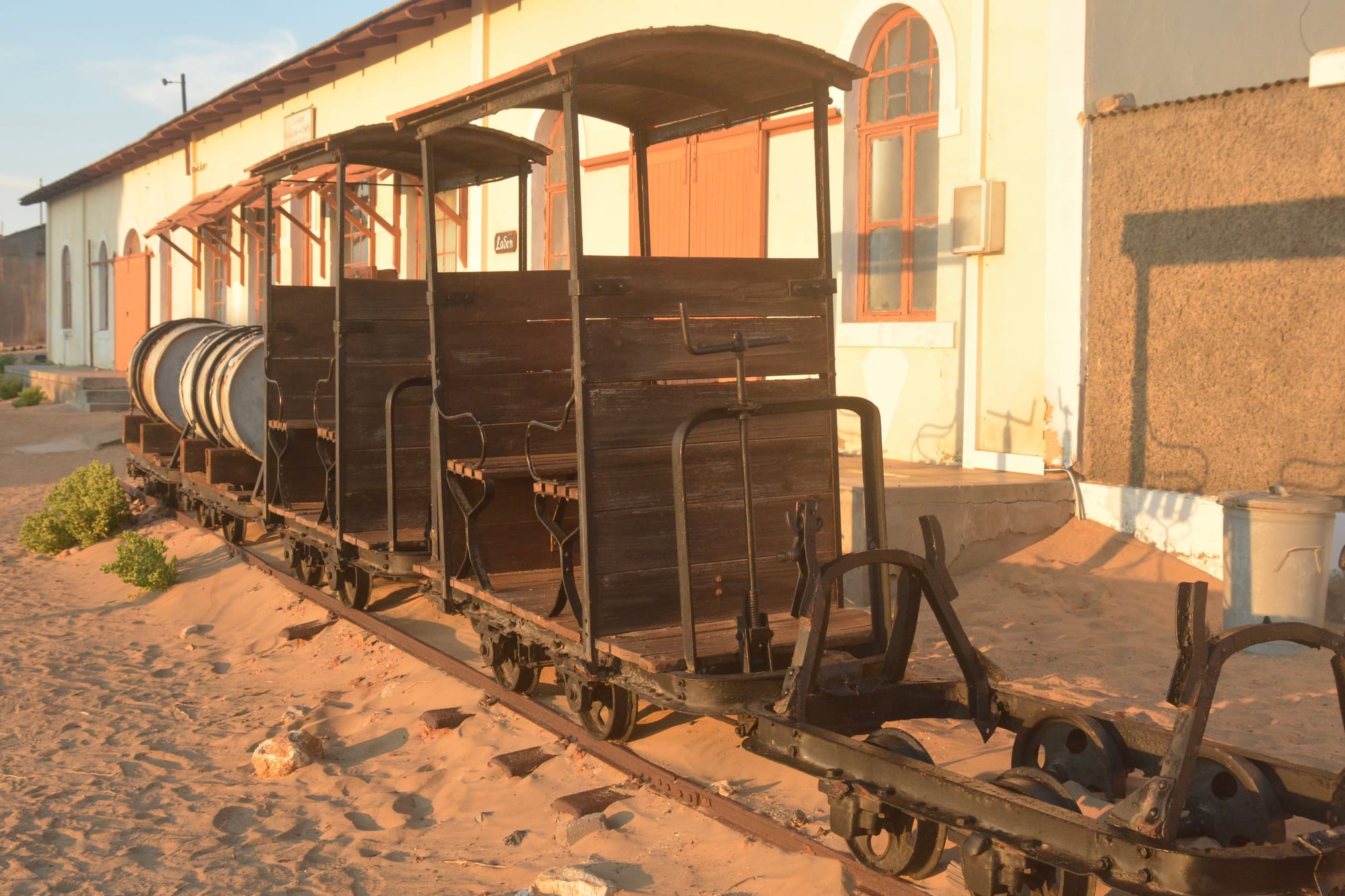
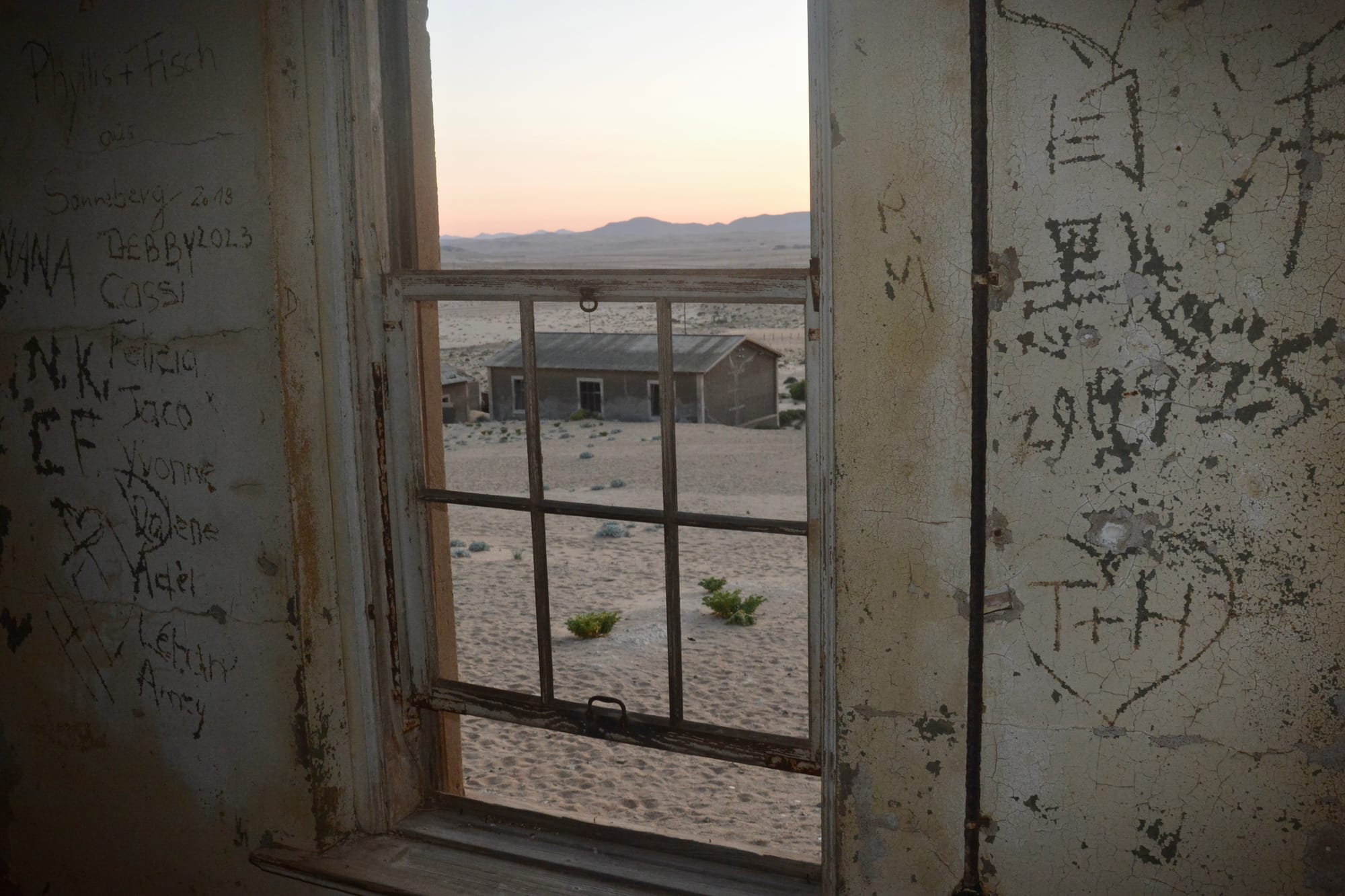
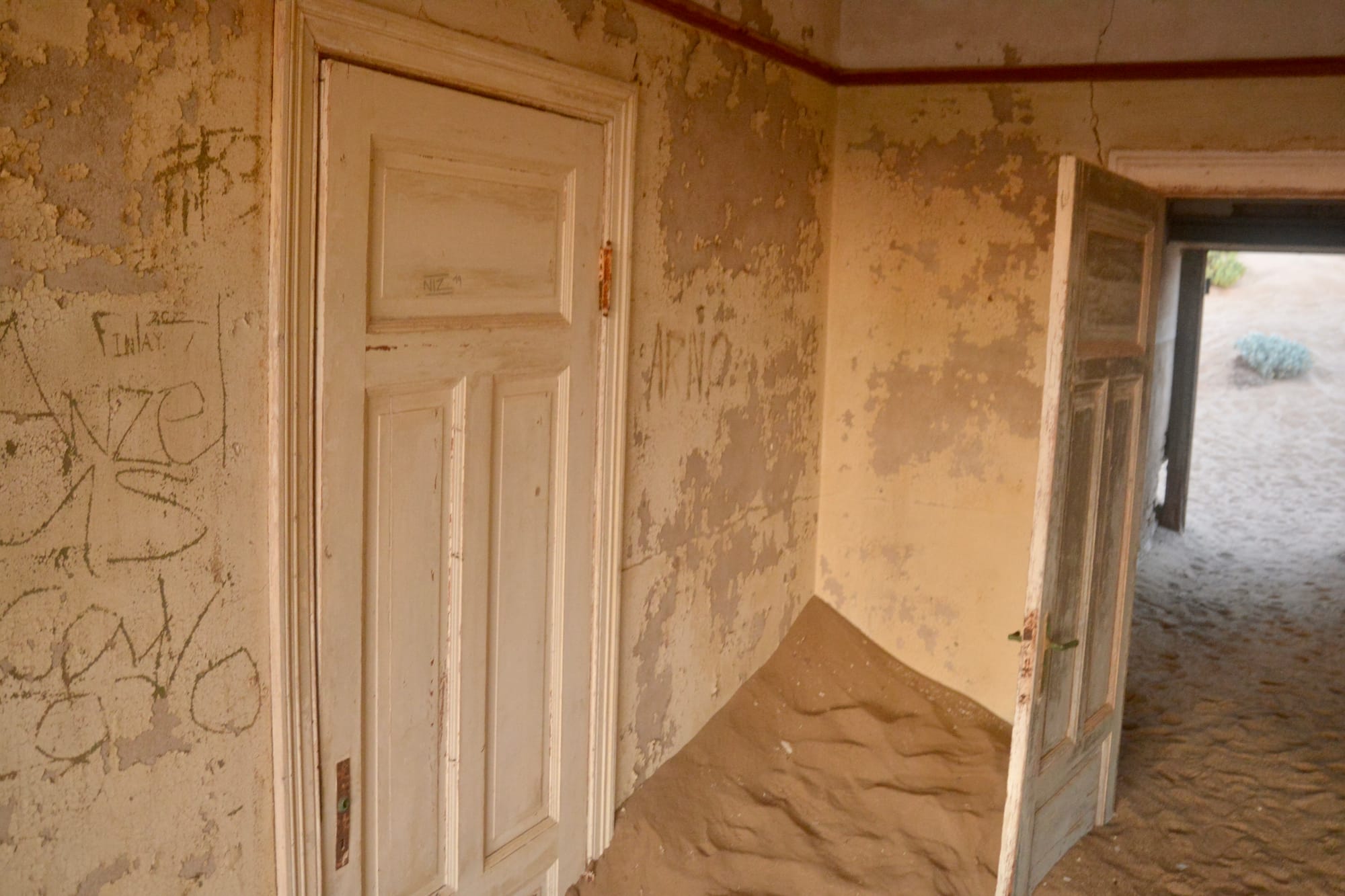
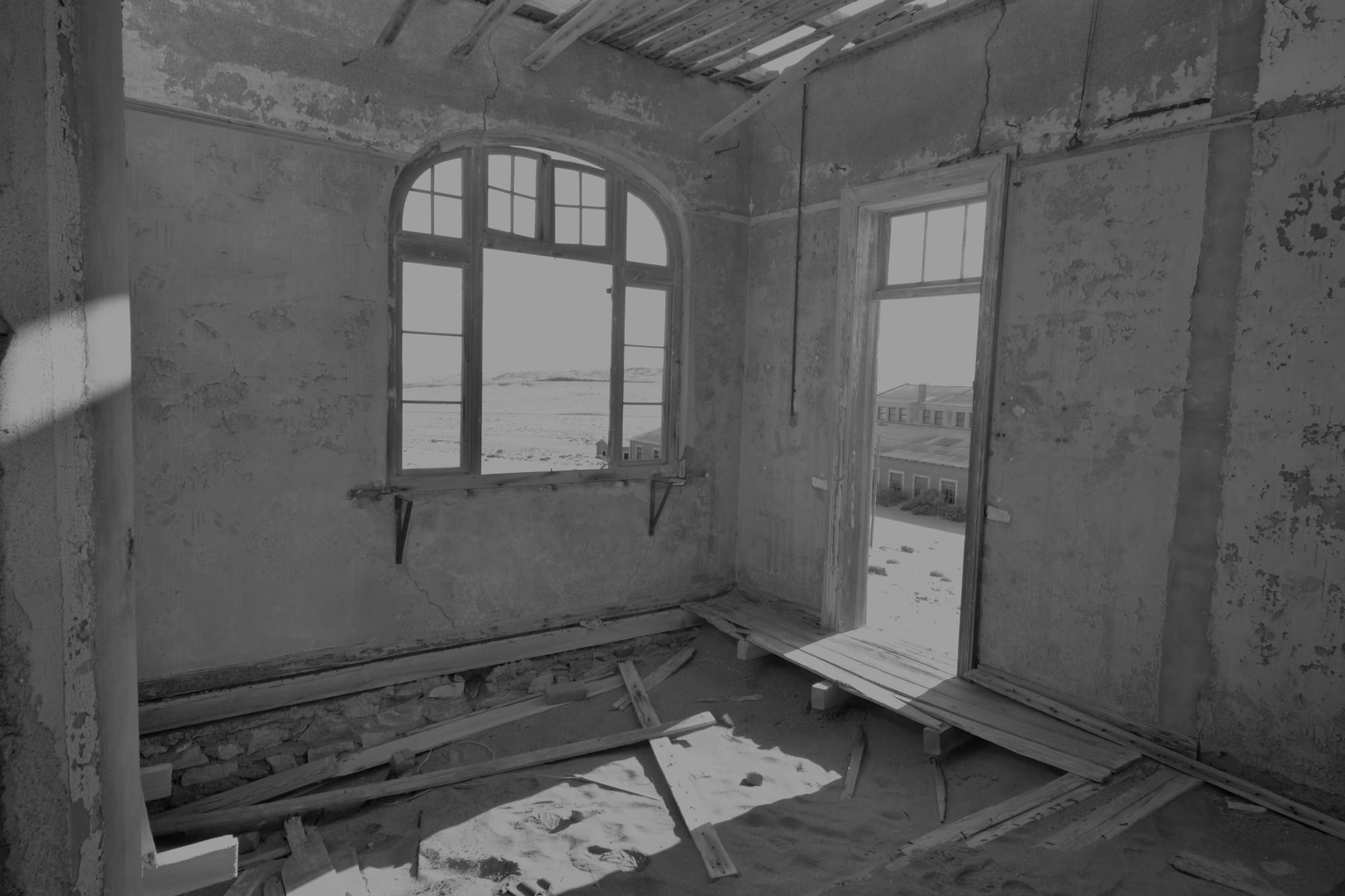
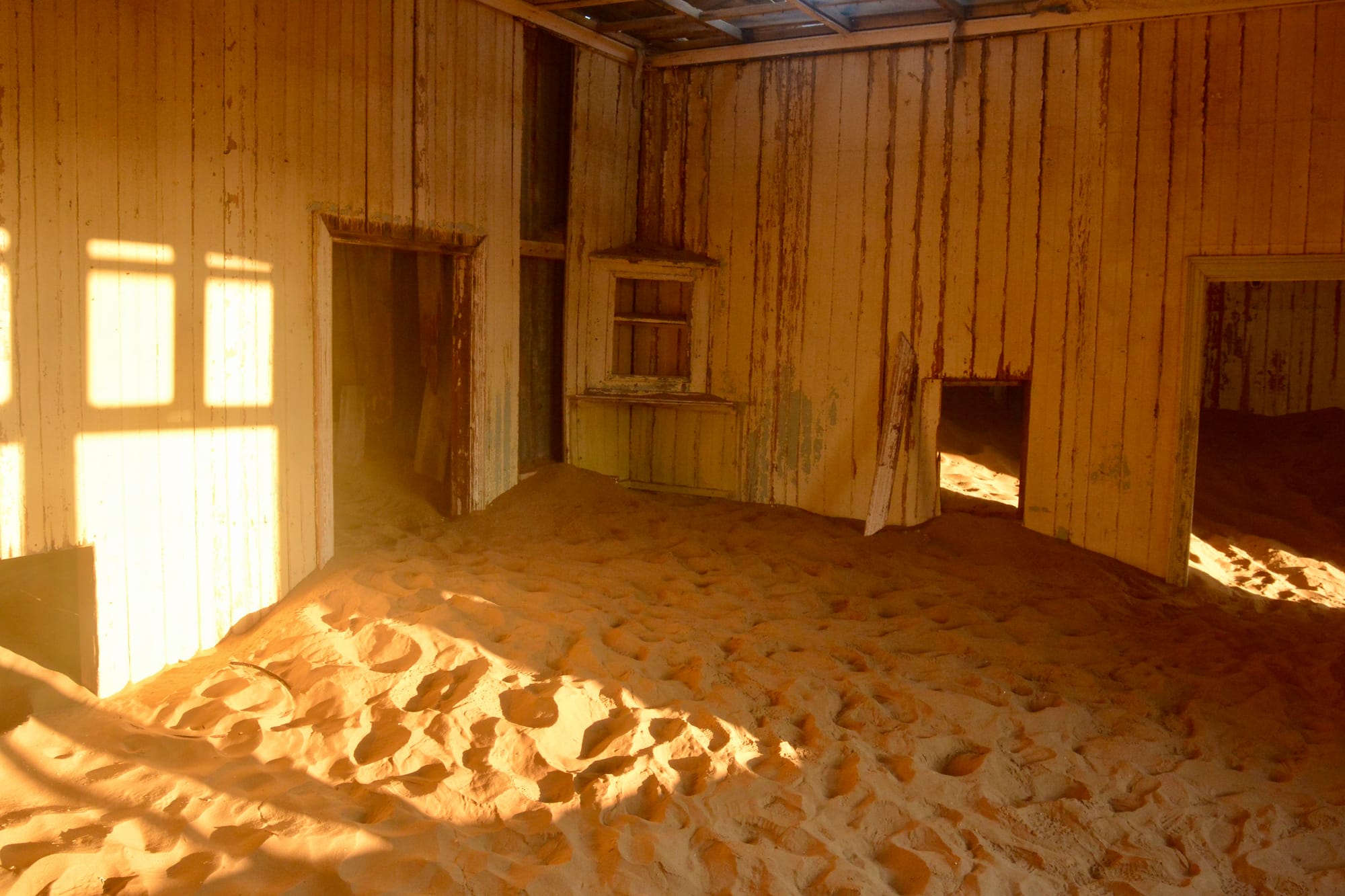
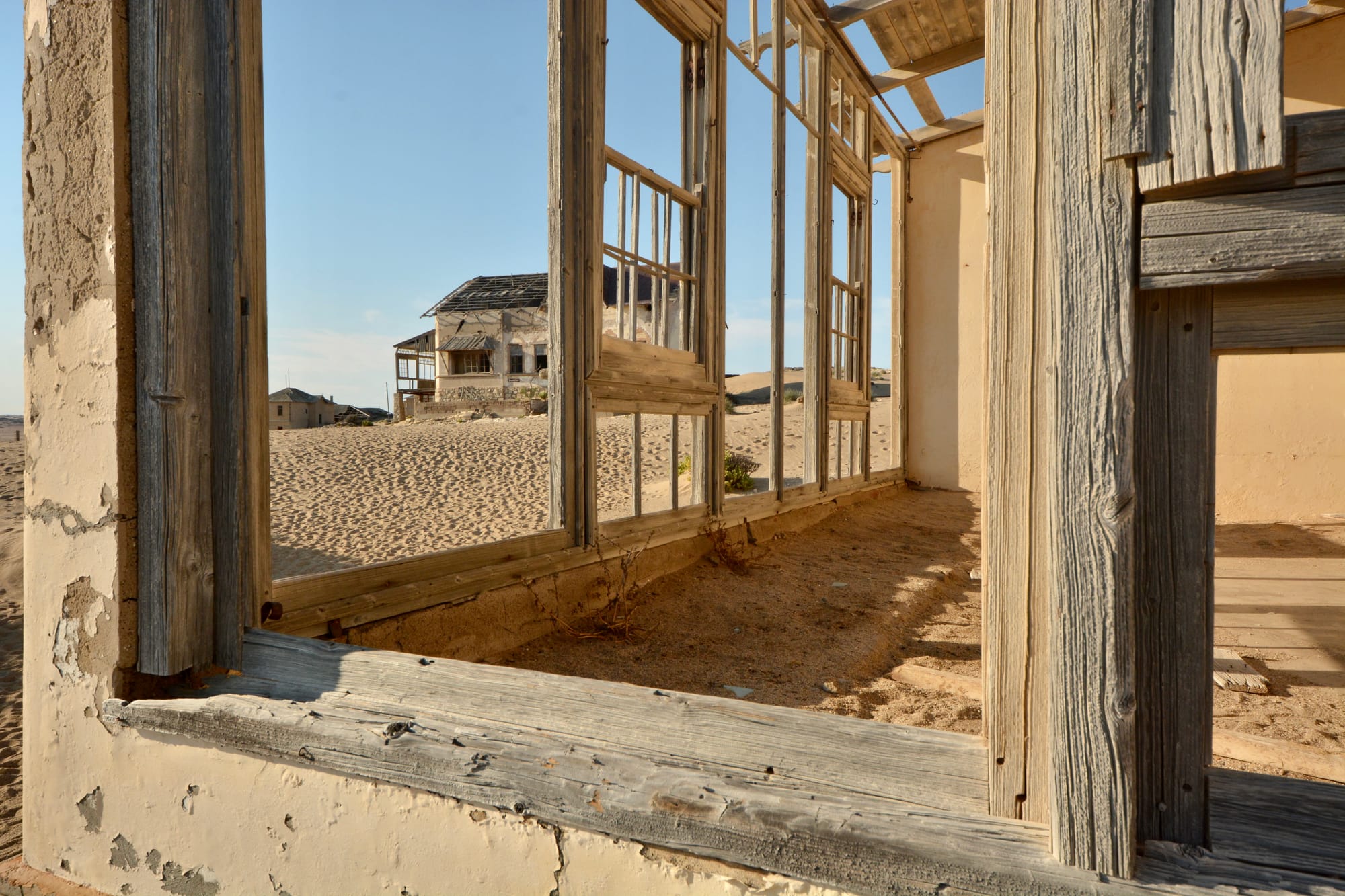
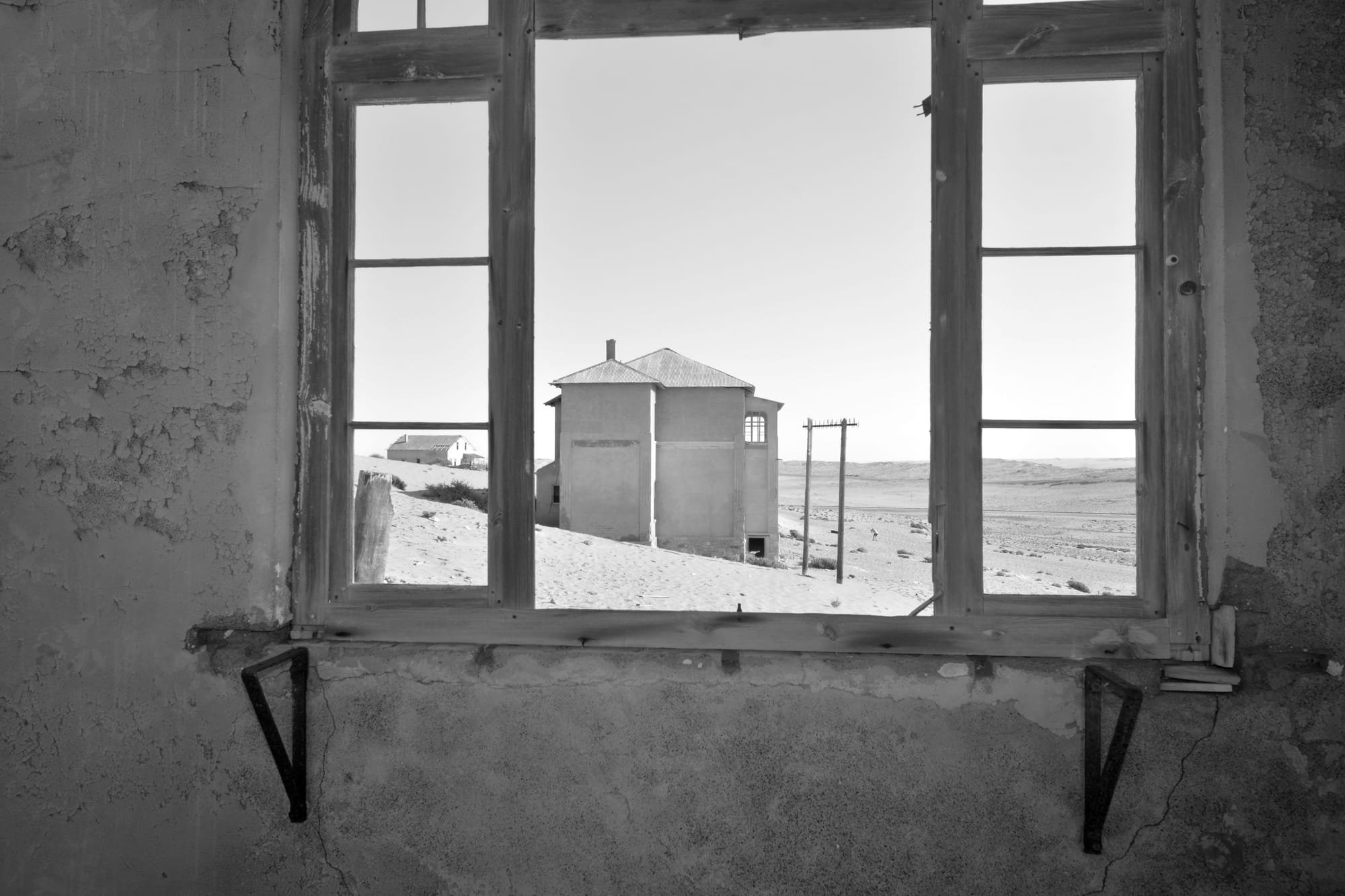
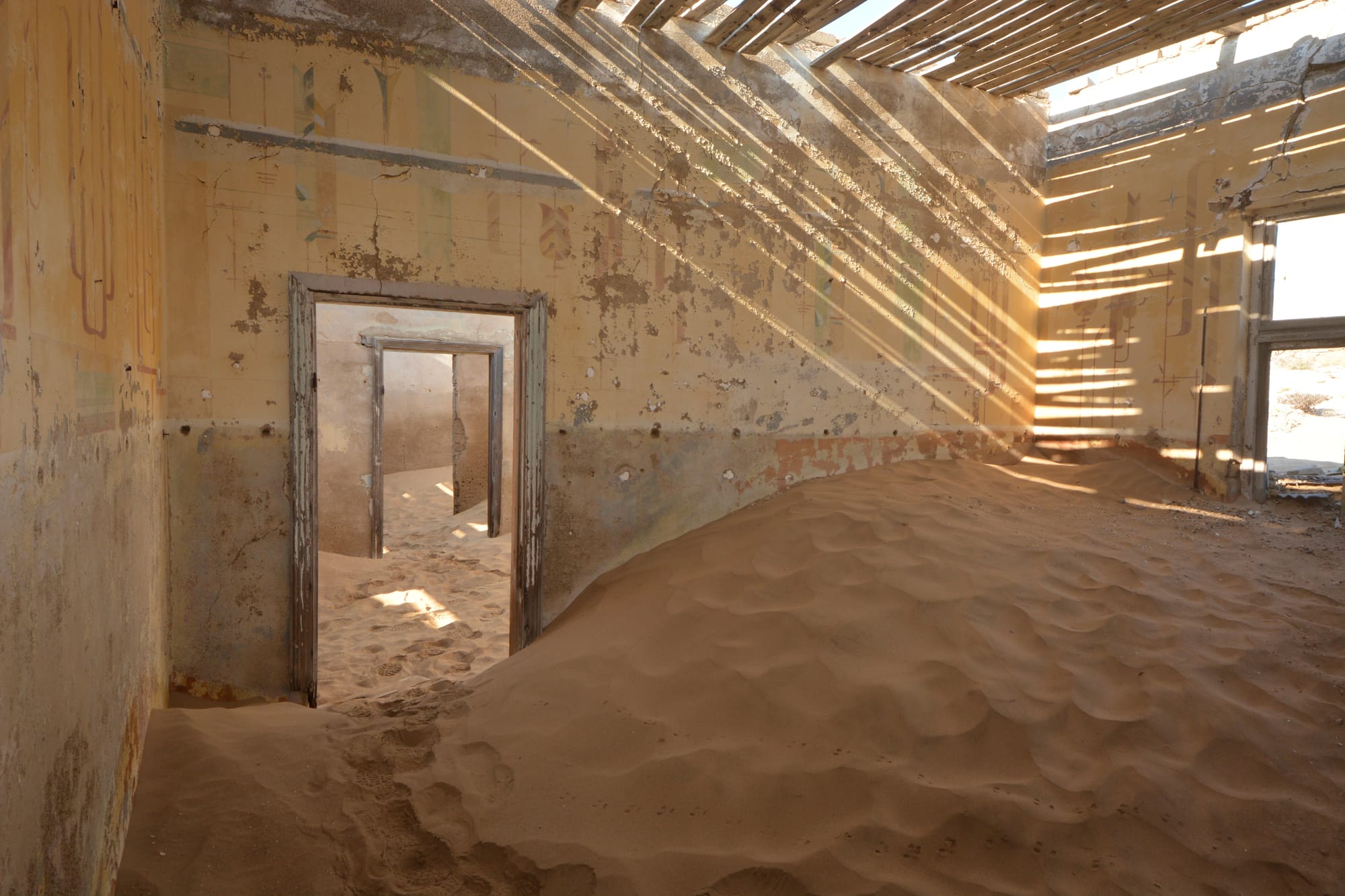
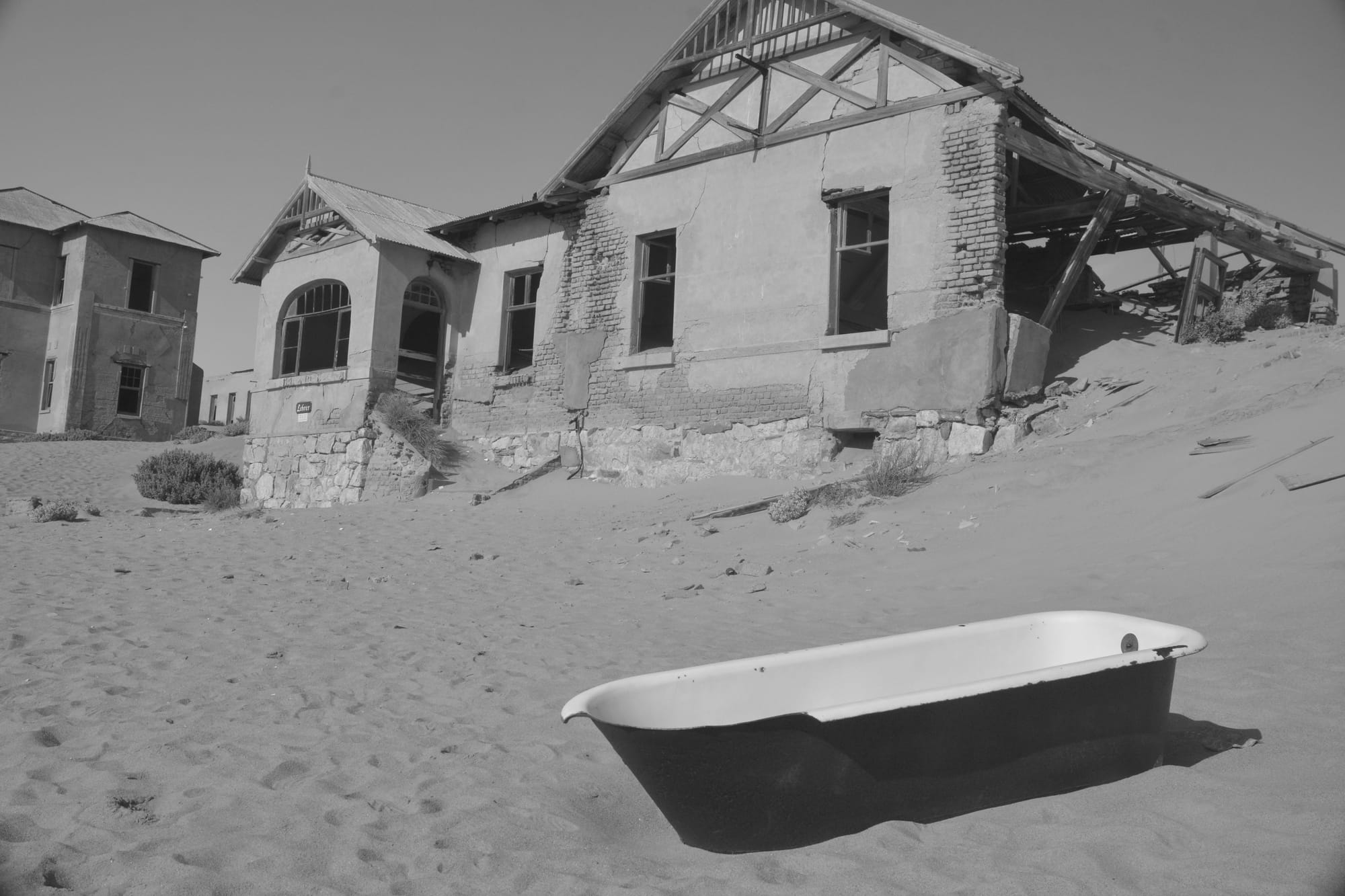
The primary motive for going to Luderitz was to visit the nearby ghost town of Kolmanskop on a life-long photographic ambition. We had obtained a day pass entitling one to visit before dawn to get the sunrise lighting.
The photography proved challenging, as did the scene with a security guard who wanted to have me arrested for straying into a restricted area, but Brigi managed to pacify him so I could continue with my mission to try and get a few decent pictures. I achieved the best results using fill-in flash to balance the outside view of the dunes with the inside lighting.
The photography proved challenging, as did the scene with a security guard who wanted to have me arrested for straying into a restricted area, but Brigi managed to pacify him so I could continue with my mission to try and get a few decent pictures. I achieved the best results using fill-in flash to balance the outside view of the dunes with the inside lighting.
TAKE ACTION NOW
DON'T WAIT ANY LONGER
Foodie section
In our search for a restaurant we stumbled across the most delightful venue - the Portuguese Fisherman, owned and managed by Joel Fontes who came to Namibia as an engineer on the roads and stayed.
The sea food was outstanding, so much so that we went back again the next night (we seem to have a knack for finding the good spots). Joel had us sample a hake tongue dish, which my foodie partner Brigi absolutely raved about. We chose to share a seafood taurine containing crayfish, prawns and other yummy goodies.
In our search for a restaurant we stumbled across the most delightful venue - the Portuguese Fisherman, owned and managed by Joel Fontes who came to Namibia as an engineer on the roads and stayed.
The sea food was outstanding, so much so that we went back again the next night (we seem to have a knack for finding the good spots). Joel had us sample a hake tongue dish, which my foodie partner Brigi absolutely raved about. We chose to share a seafood taurine containing crayfish, prawns and other yummy goodies.
Sossusvlei and surround
Days 9, 10 and 11
Garub
The next sector of our journey was a relatively short one as our primary destination in the Sossusvlei desert was Namib Sky Ballooning, but we had planned to break it up with a stop in Aus (go figure with the name of the town), and we picked the Bahnhof Hotel - Hobson's choice really - not the greatest, WiFi only available near reception (typical of remote locations we found), but clean sheets and pleasant staff.
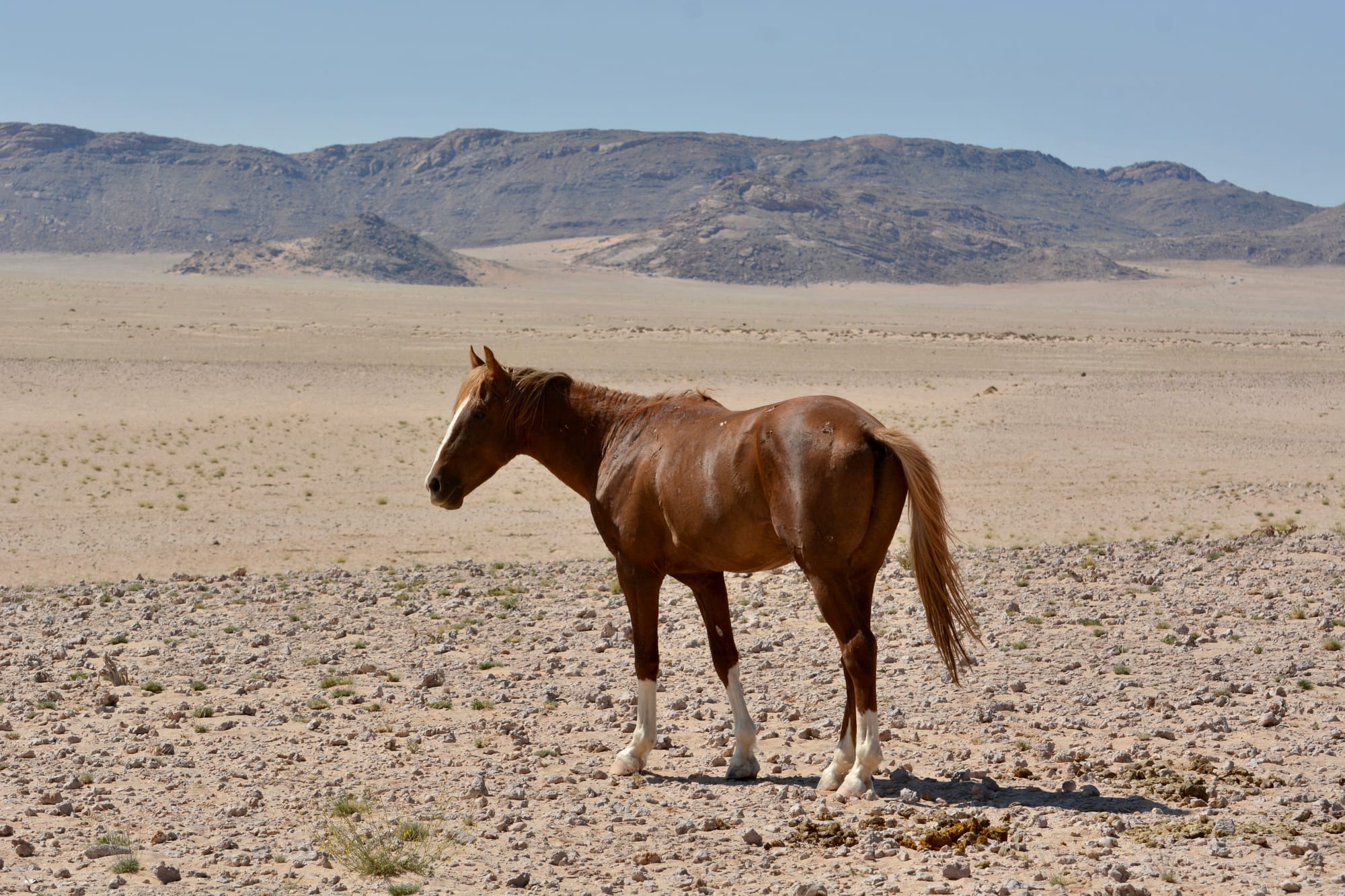
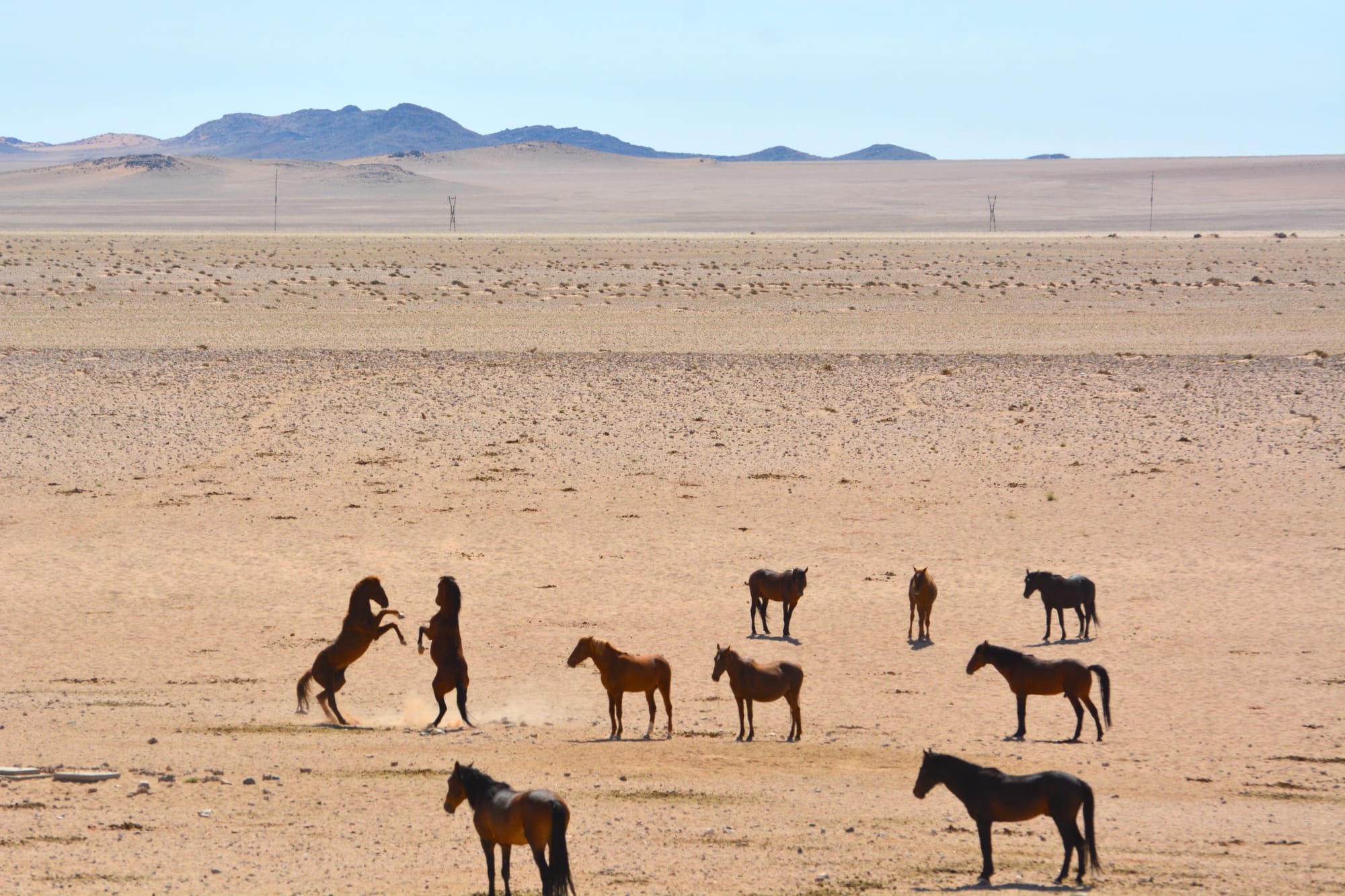
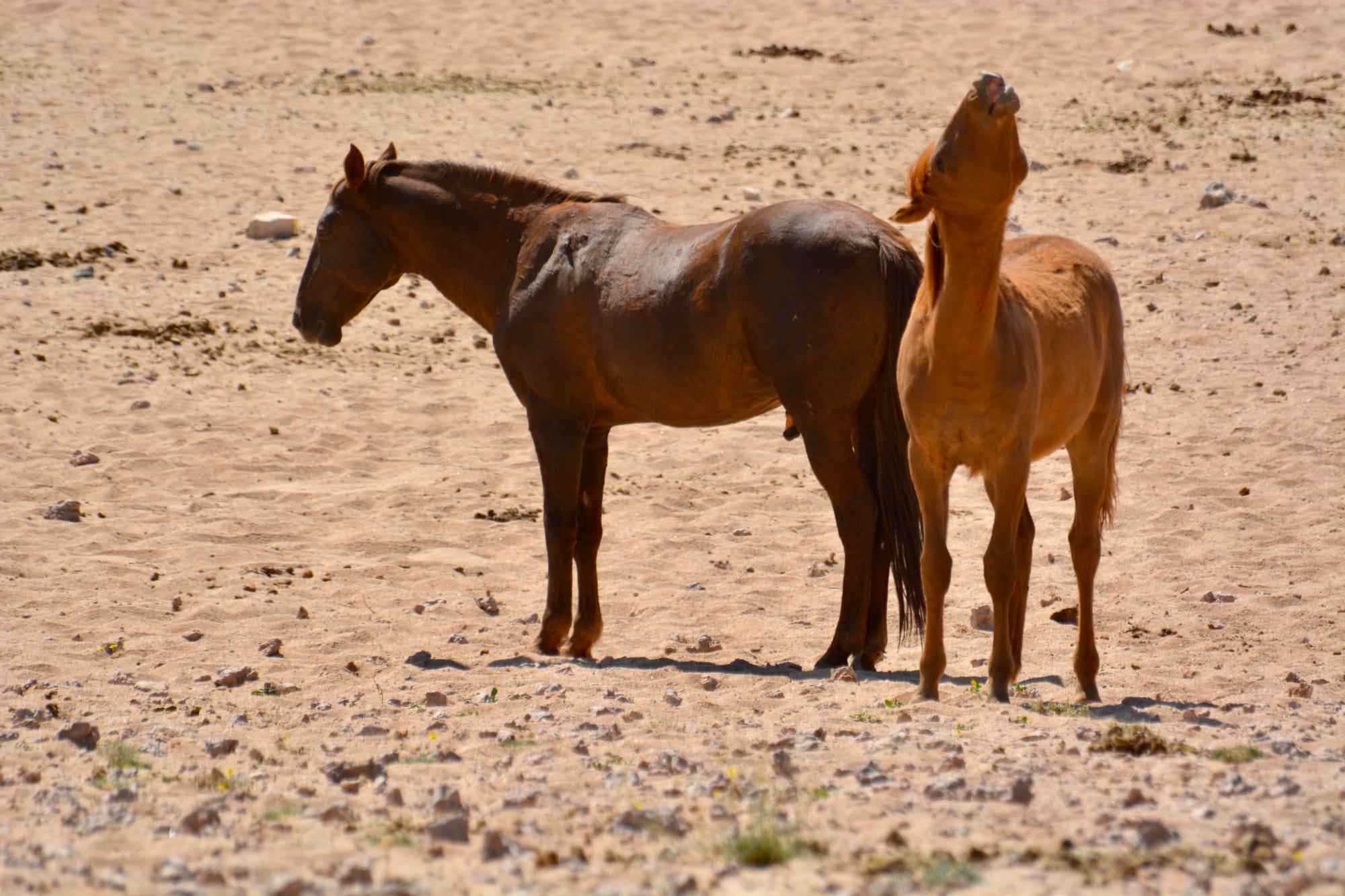
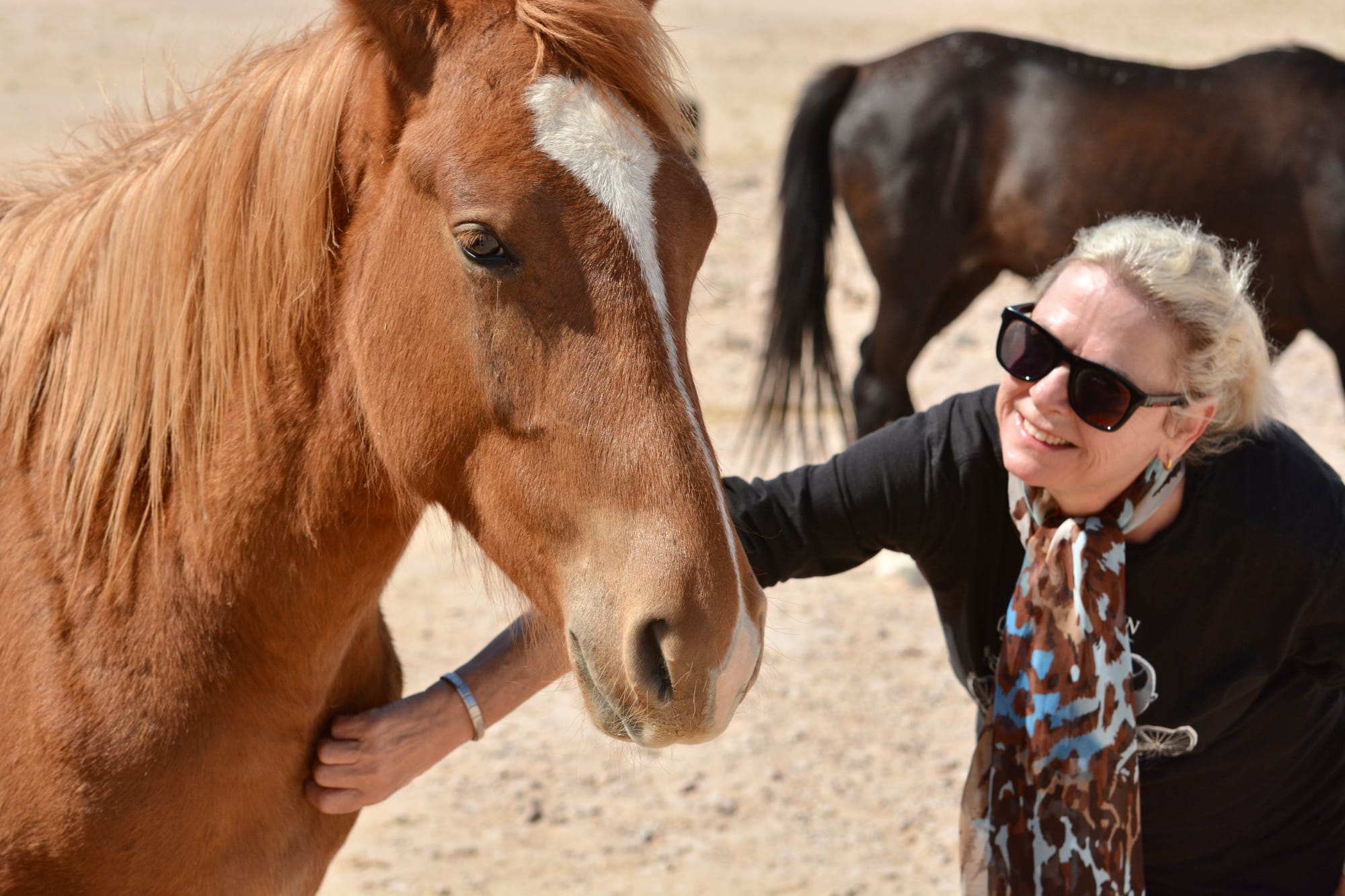
The attraction on this sector is the wild horses of Garub, which we were lucky to find down a turnoff. They are reputed to be descended from the colonising German cavalry. Brigi was of course in her 'nyofies' and, being her horse whisperer self, was stroking and loving them. A great experience. Check out the rearing stallions in the gallery, probably defending mare rights.
The attraction on this sector is the wild horses of Garub, which we were lucky to find down a turnoff. They are reputed to be descended from the colonising German cavalry. Brigi was of course in her 'nyofies' and, being her horse whisperer self, was stroking and loving them. A great experience. Check out the rearing stallions in the gallery, probably defending mare rights.
Sossusvlei
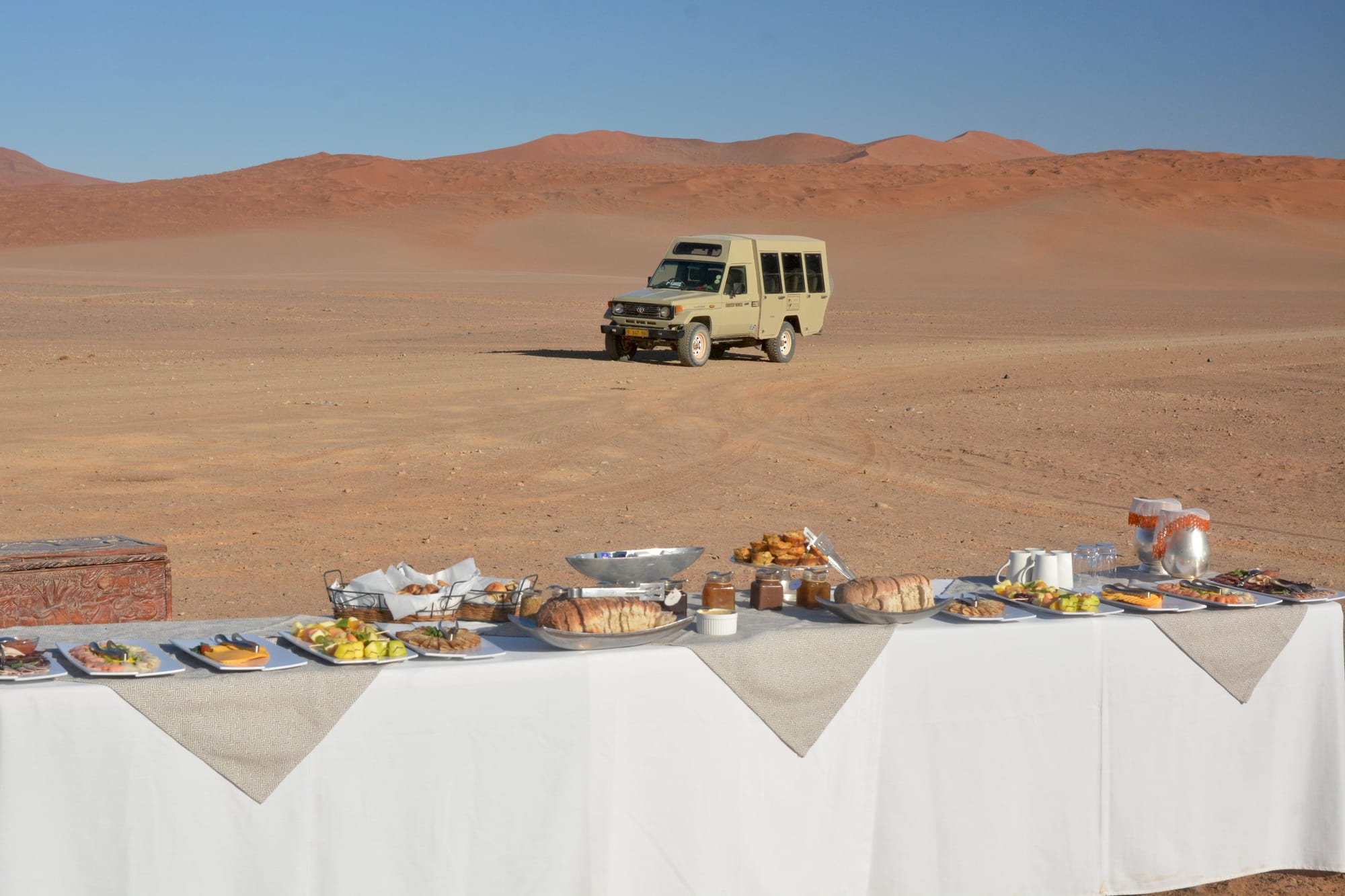
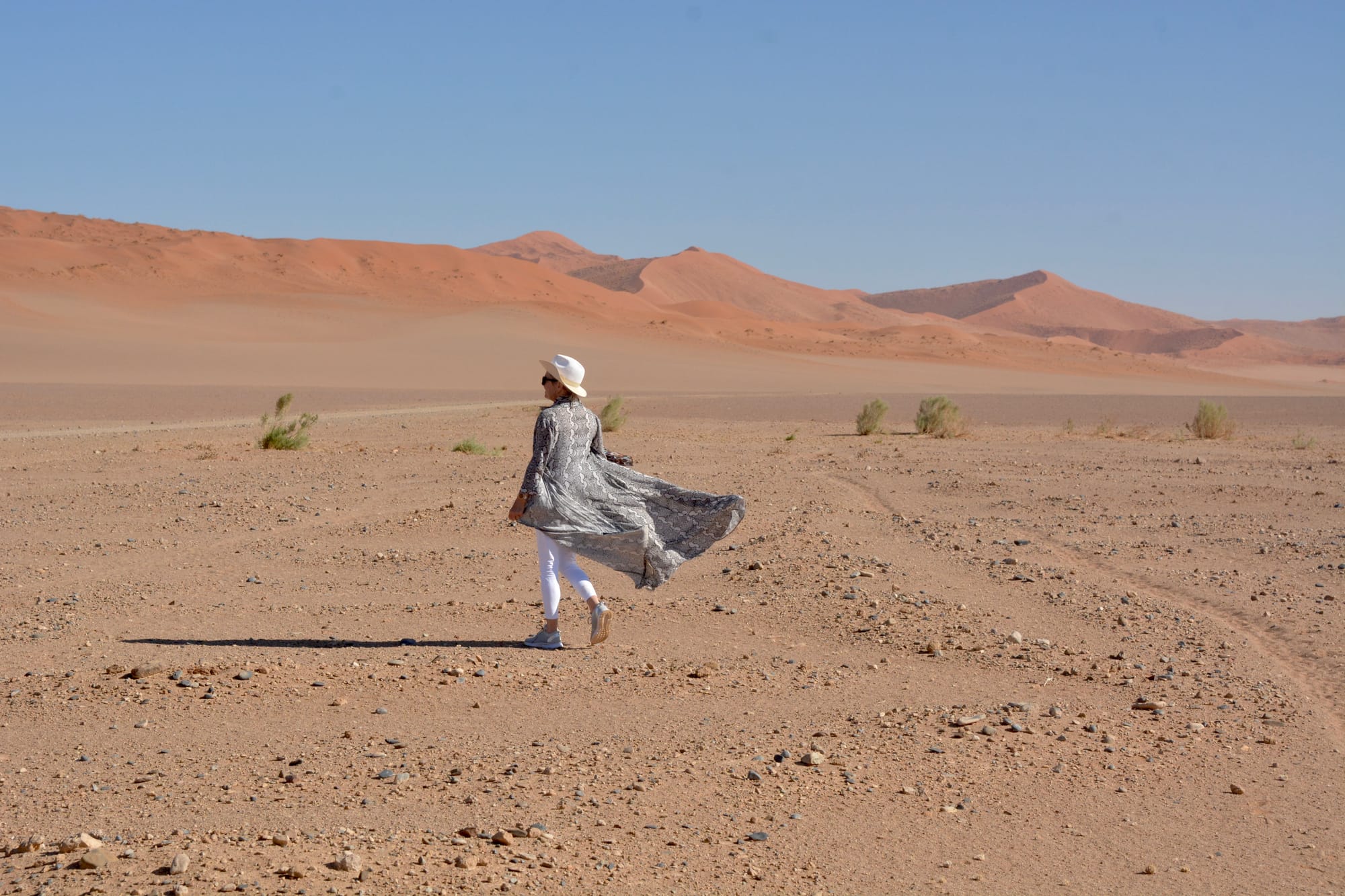
The choice of the Le Mirage Desert Lodge for our next stop being virtually next door to the Namib Sky Ballooning setup, was a no-brainer, especially as we had to be at the ballooning establishment by 5 am. A stunning Moroccan style building in the middle of the desert, the lodge provides 5-star accommodation including a wonderful set menu dinner.
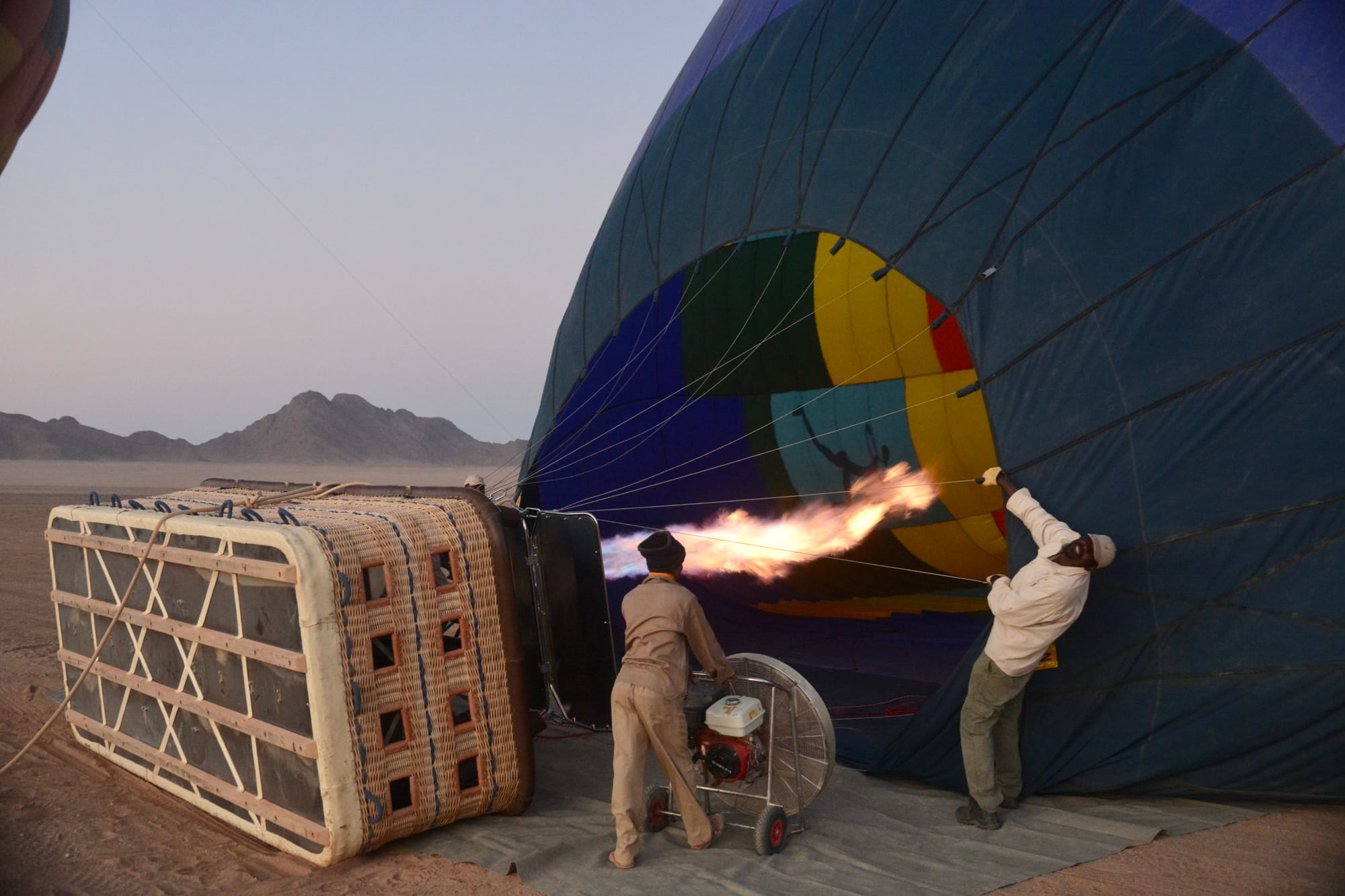
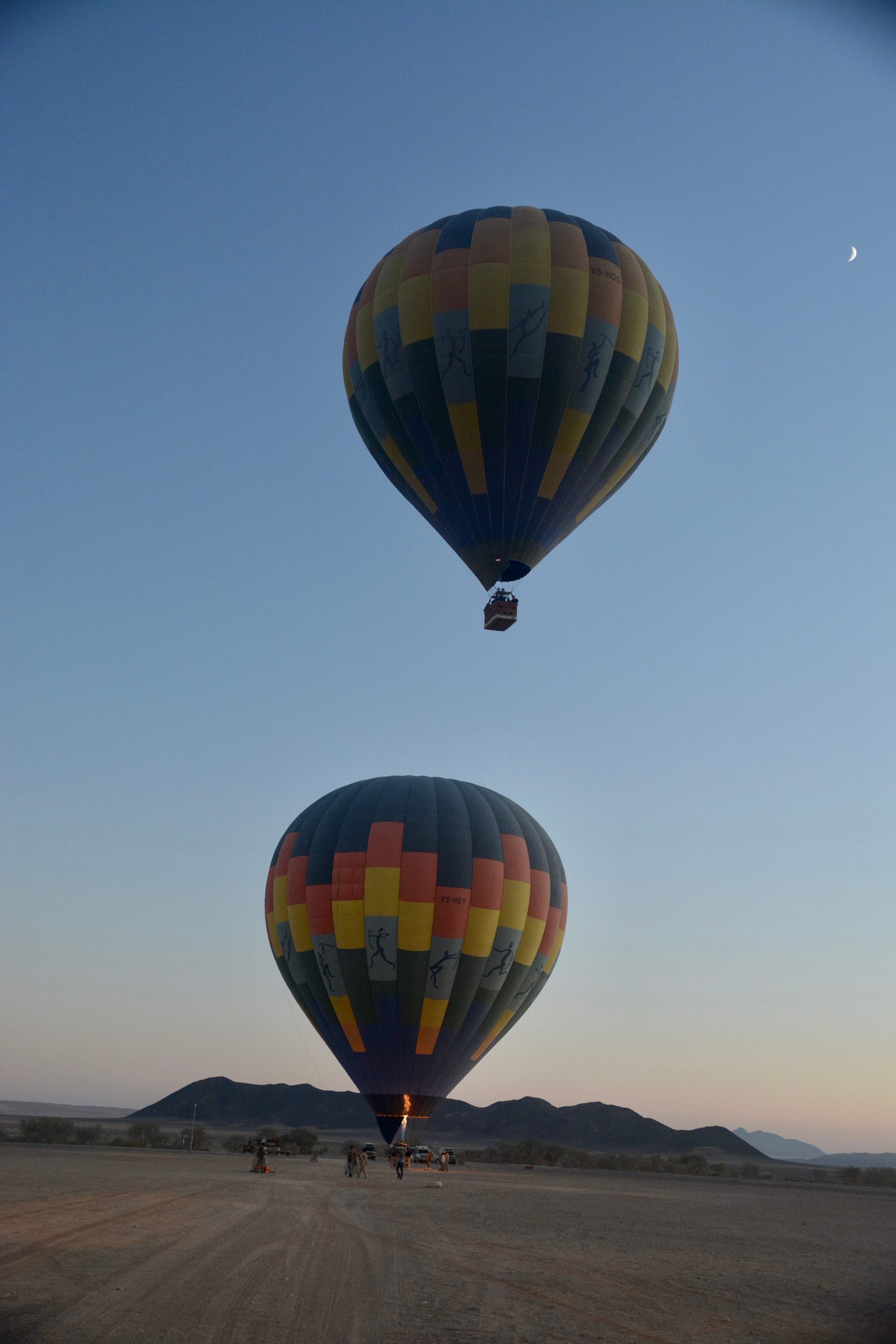
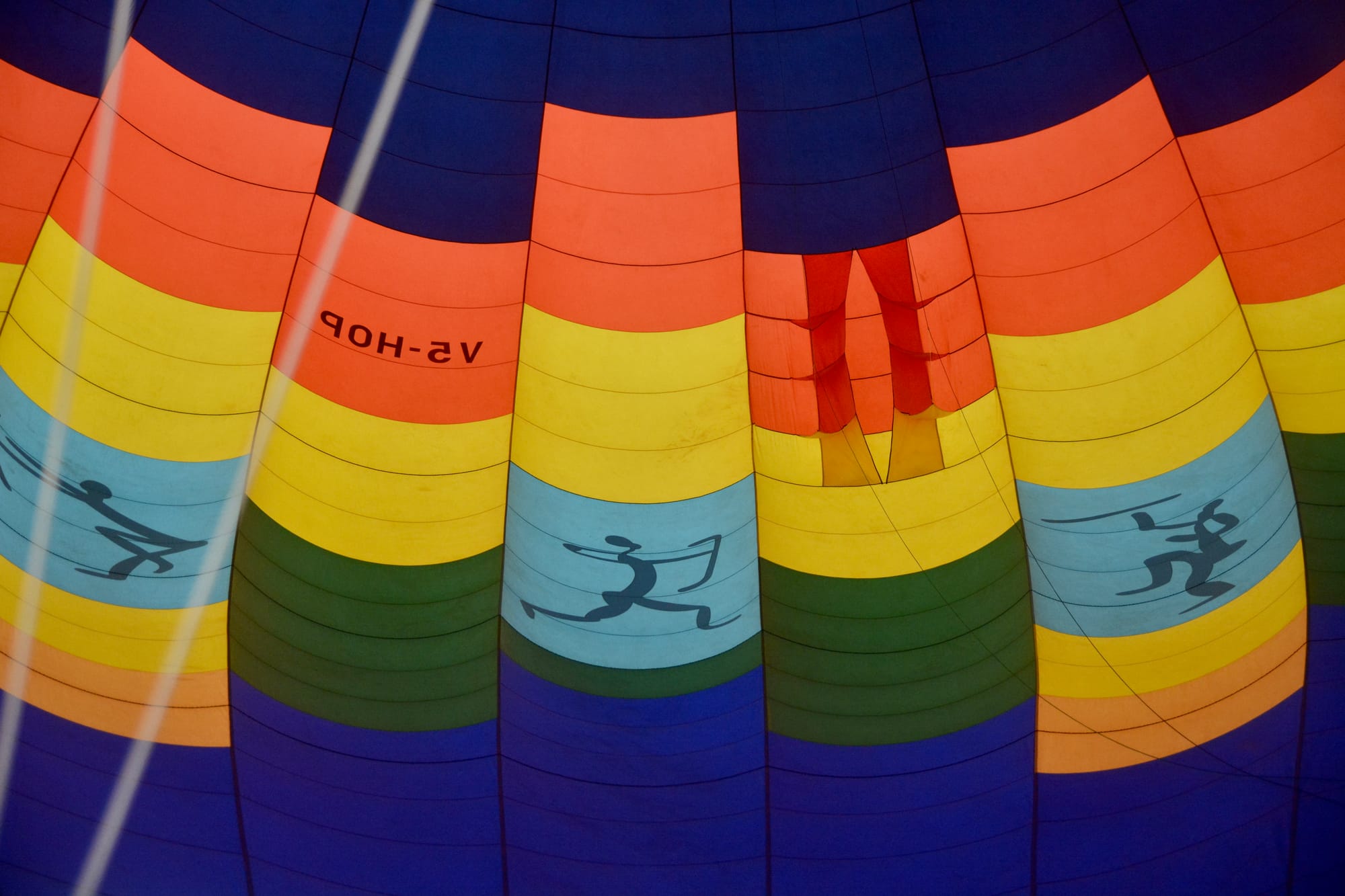
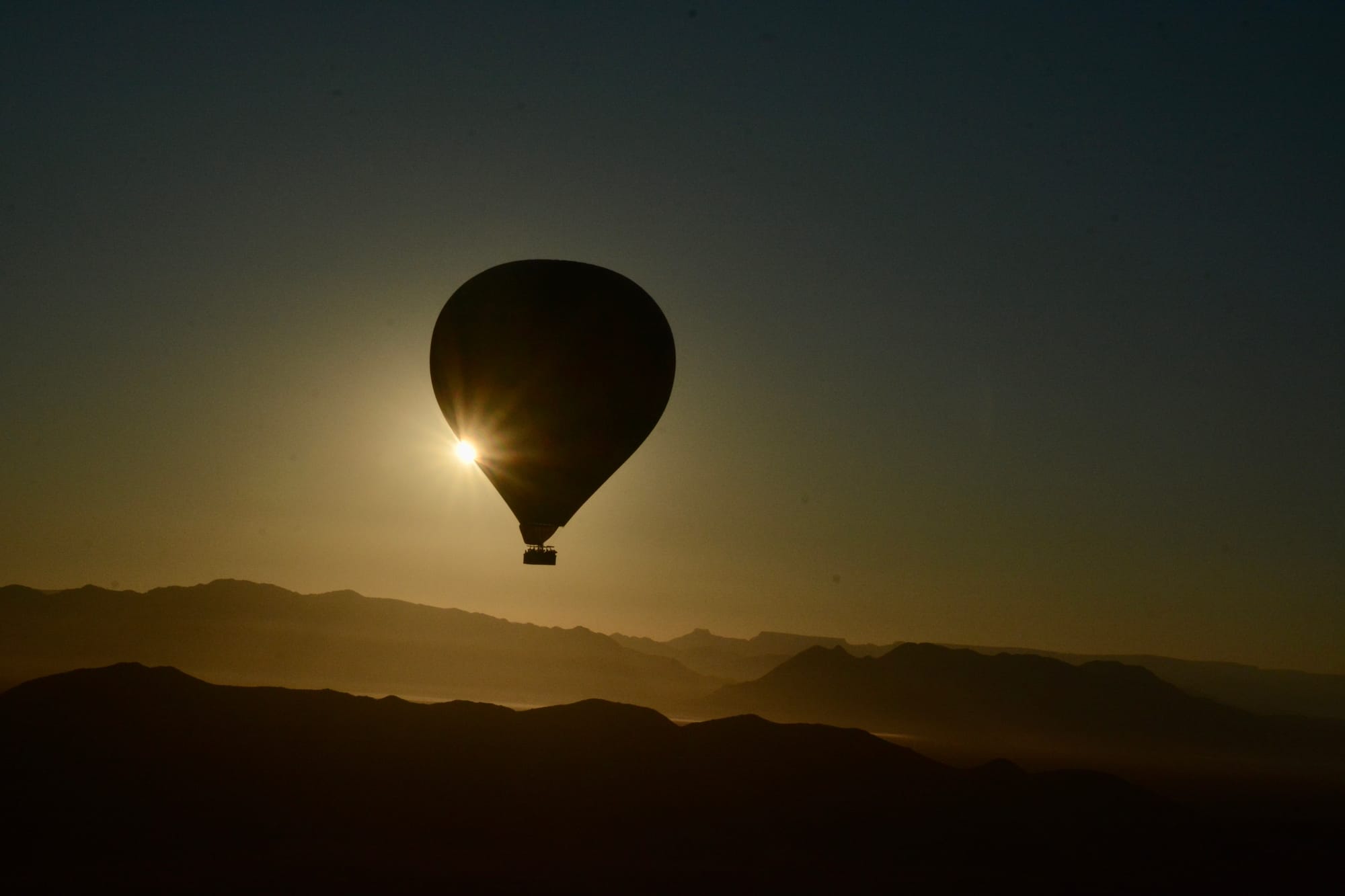
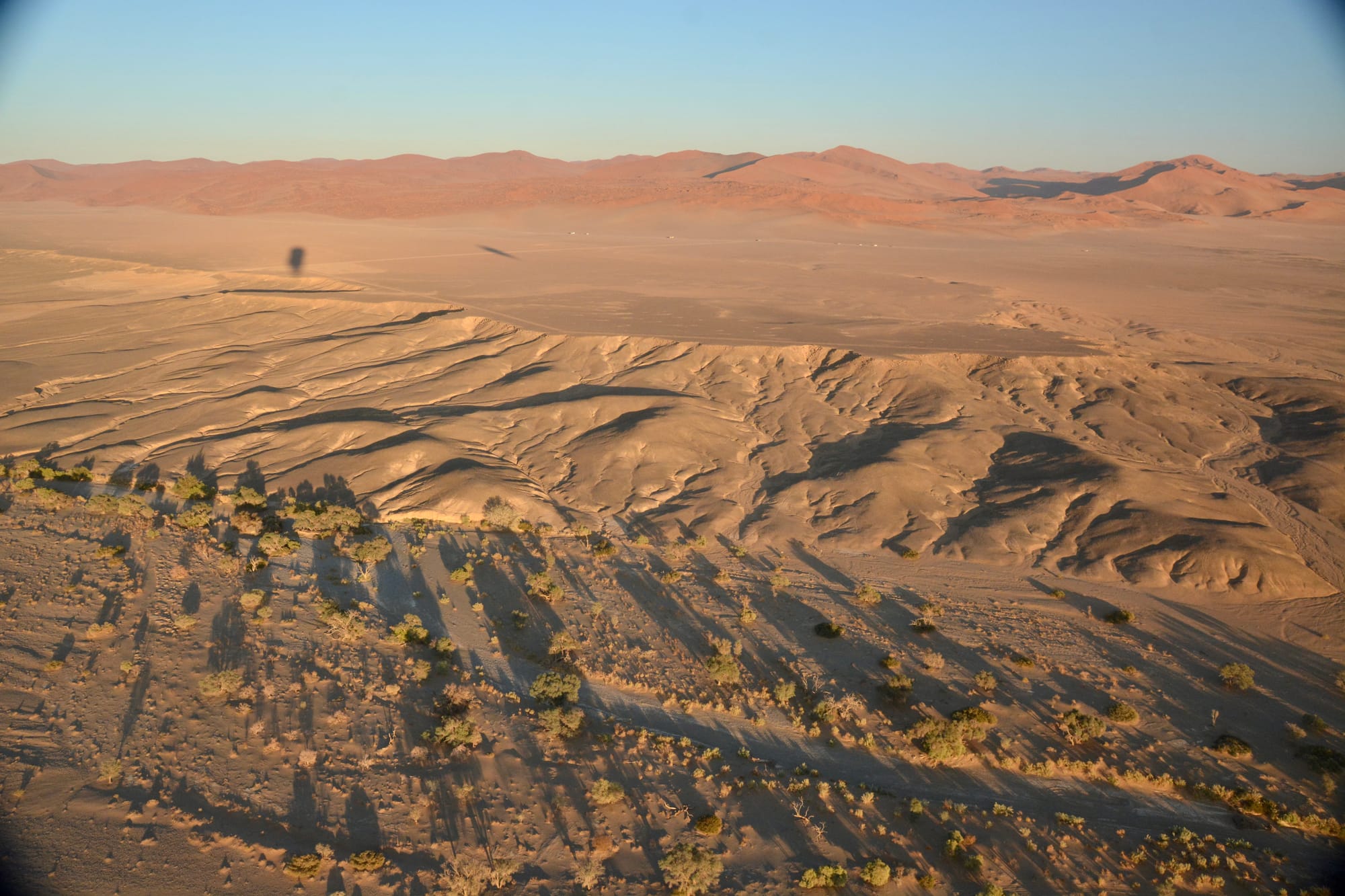
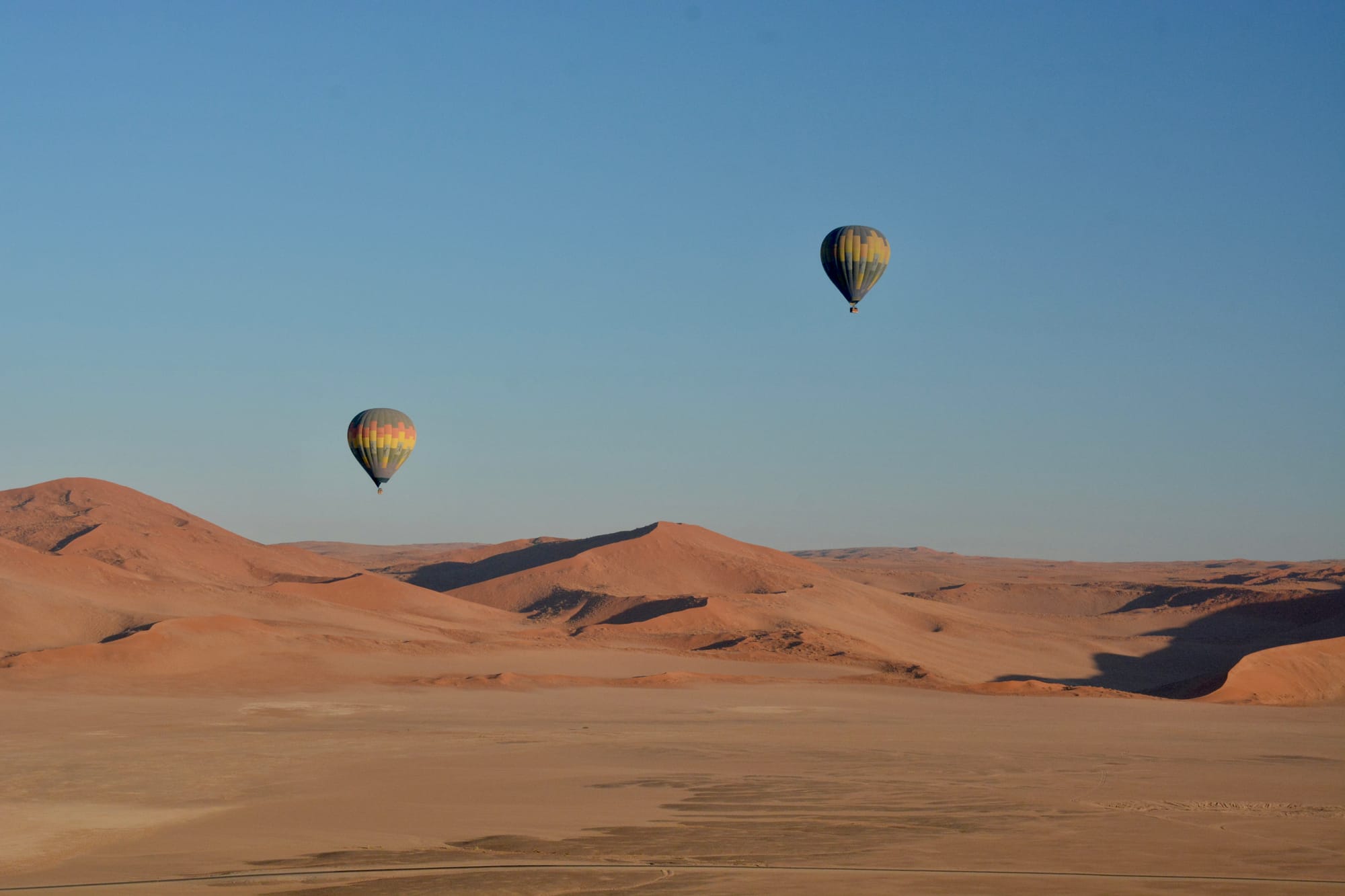
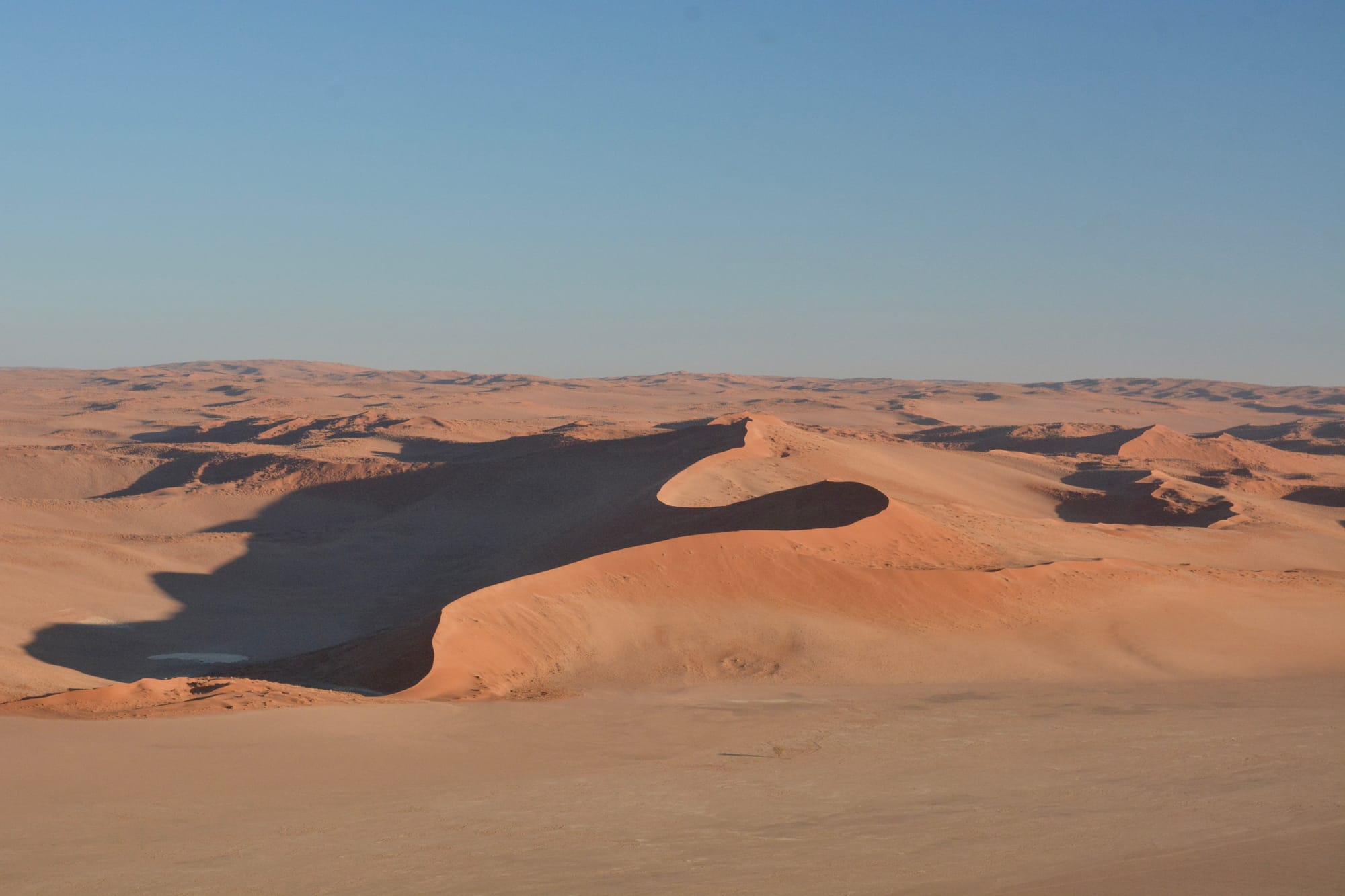
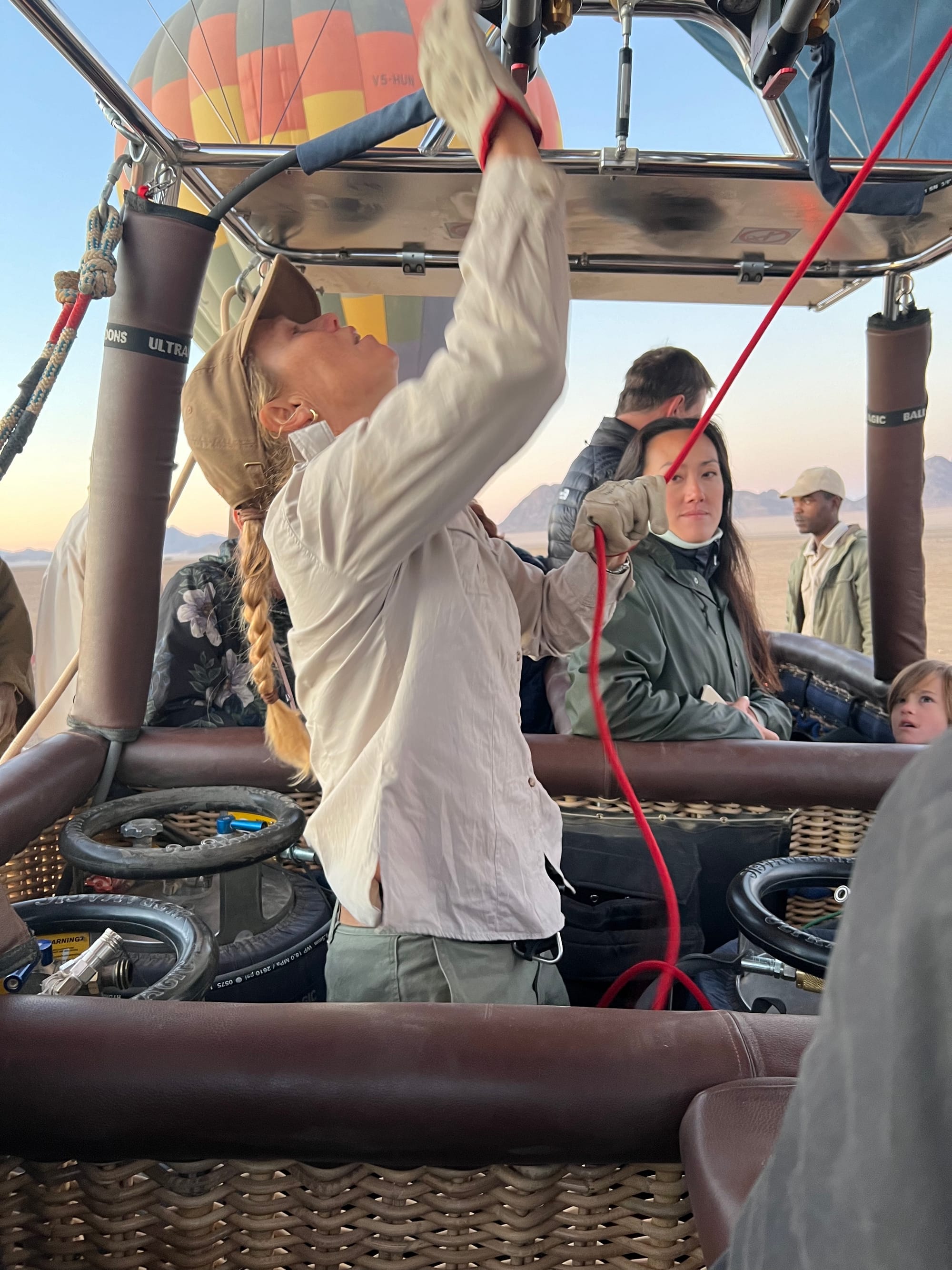
The ballooning experience was simply incredible, with breathtaking views over the Sossusvlei desert. It turned out that our pilot Ellie was the same pilot that flew us on a balloon trip over the Masai Mara many years ago. We recognised each other and exchanged memories of spotting leopards in the clearings below as we flew over.
The ballooning experience was simply incredible, with breathtaking views over the Sossusvlei desert. It turned out that our pilot Ellie was the same pilot that flew us on a balloon trip over the Masai Mara many years ago. We recognised each other and exchanged memories of spotting leopards in the clearings below as we flew over.
Rostock
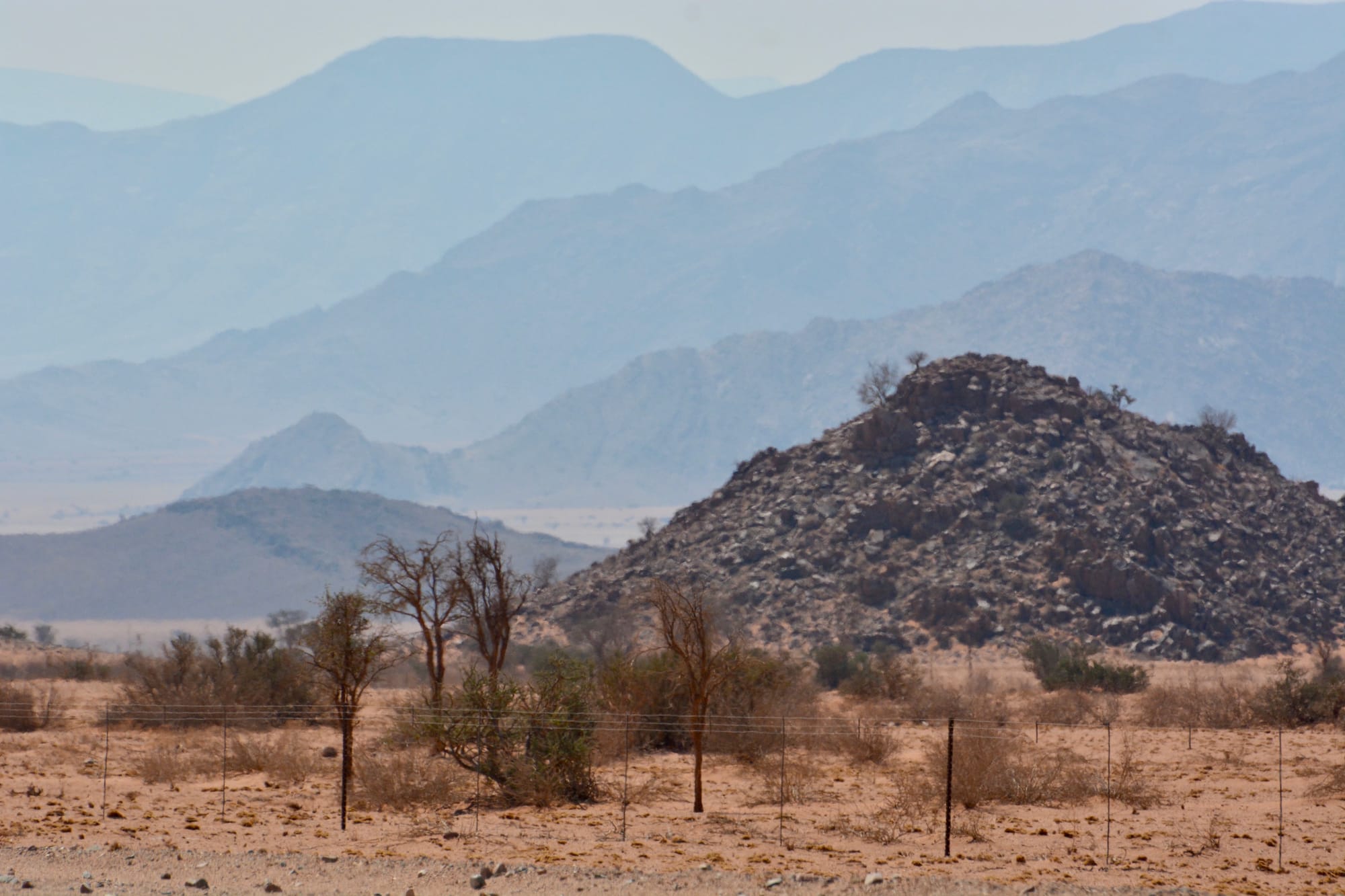
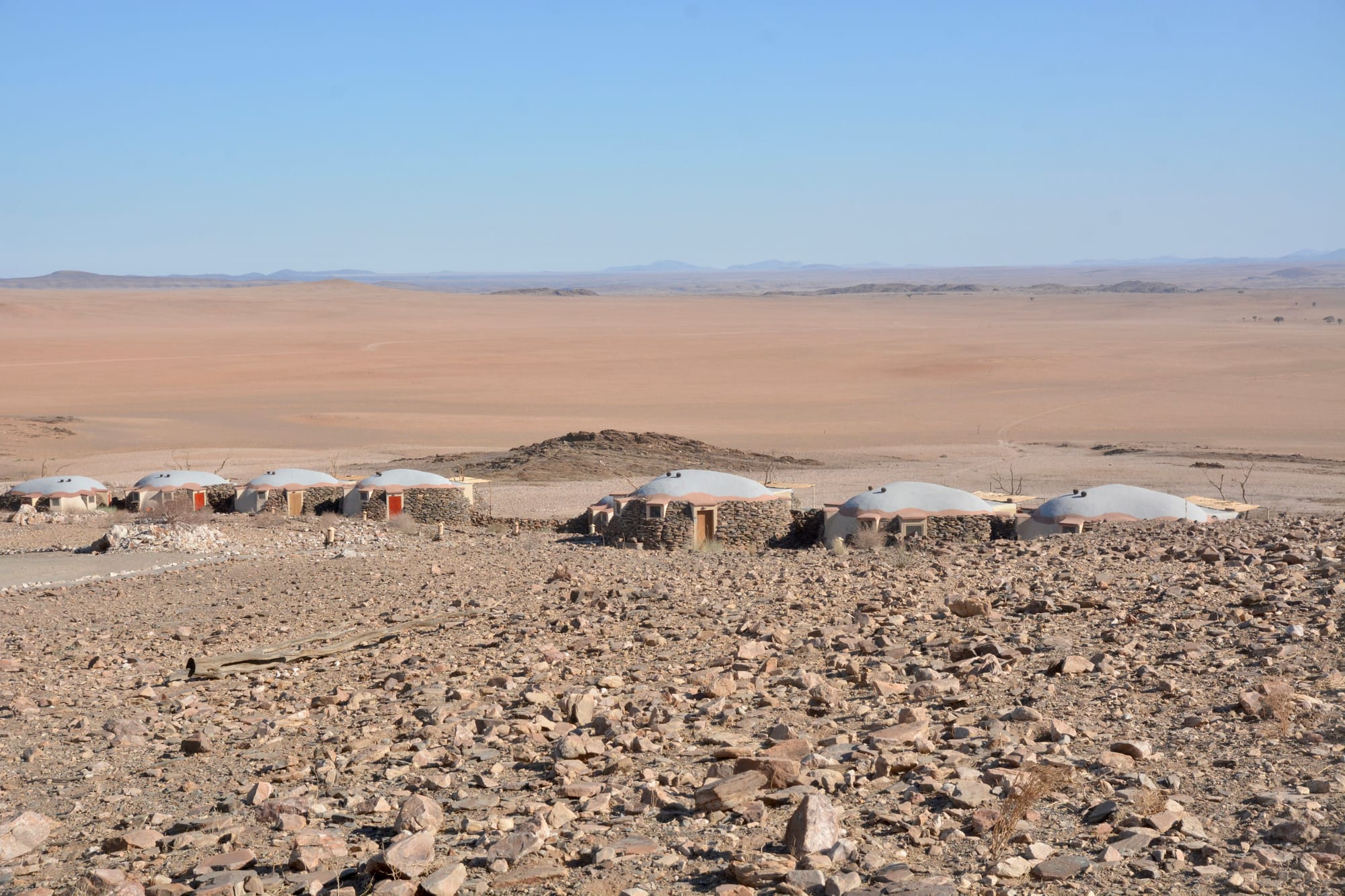
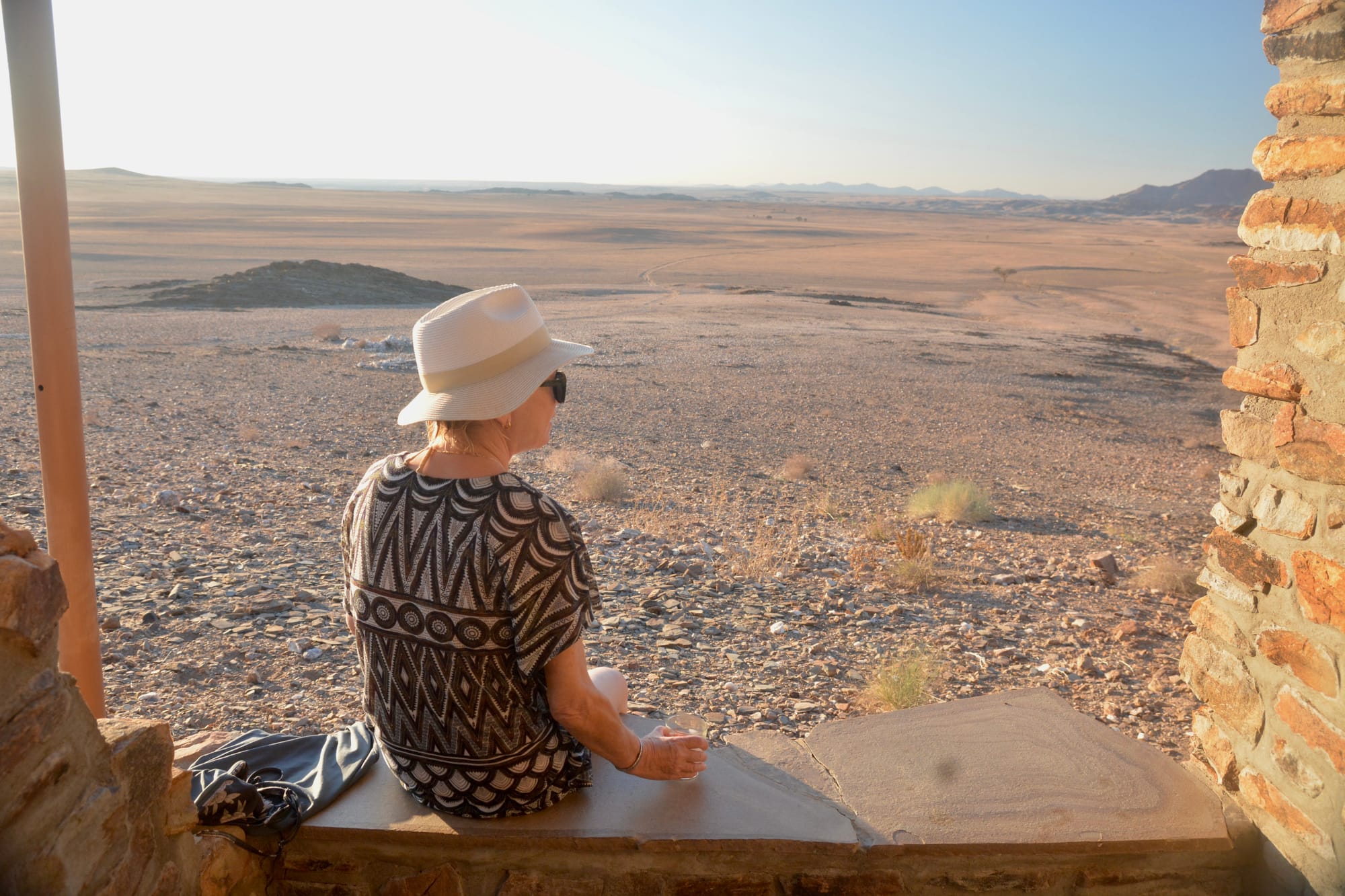
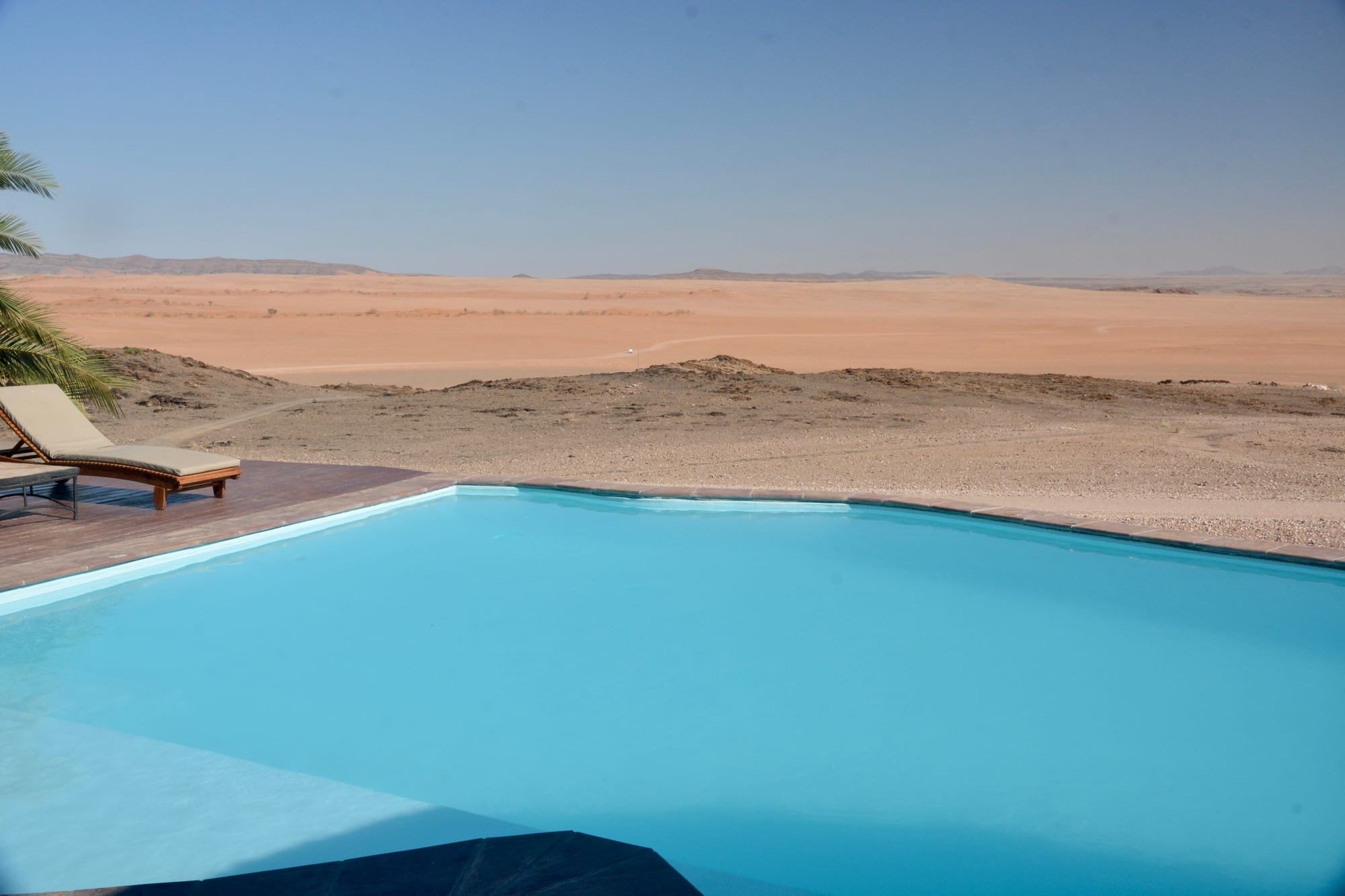
Again breaking up our next sector trip to Walvis Bay we stayed over at the Rostock Ritz Desert Lodge with its quirky stone cottages. The main characteristic of the lodge is the beautiful views over the desert.
We had a swim in the lodge pool but didn't stay in for very long (somewhat chilly - nights are cold in the desert), and later enjoyed a G&T sitting on the balcony. The rooms were very comfortable despite no aircon as the big ceiling fan worked well.
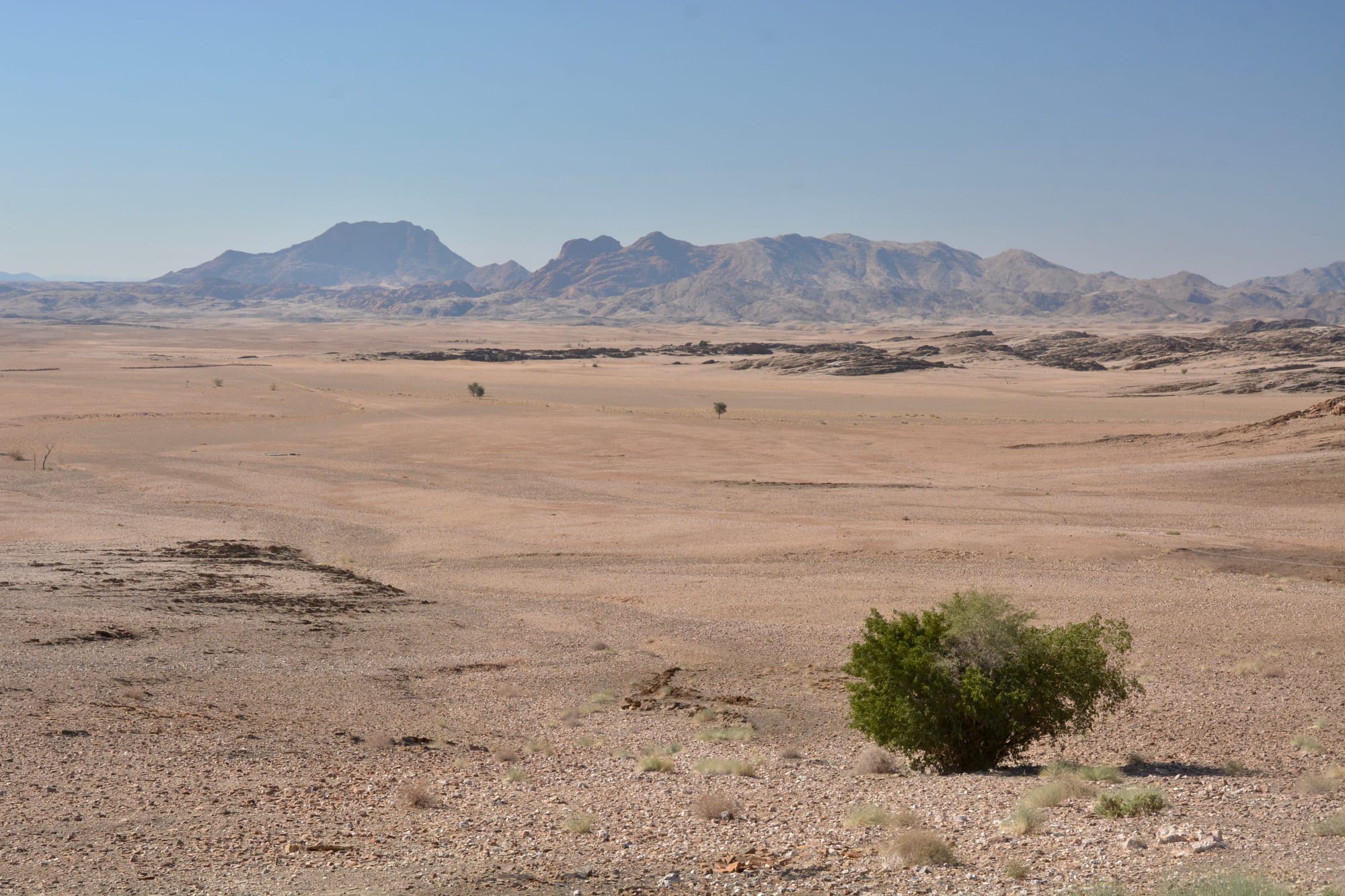
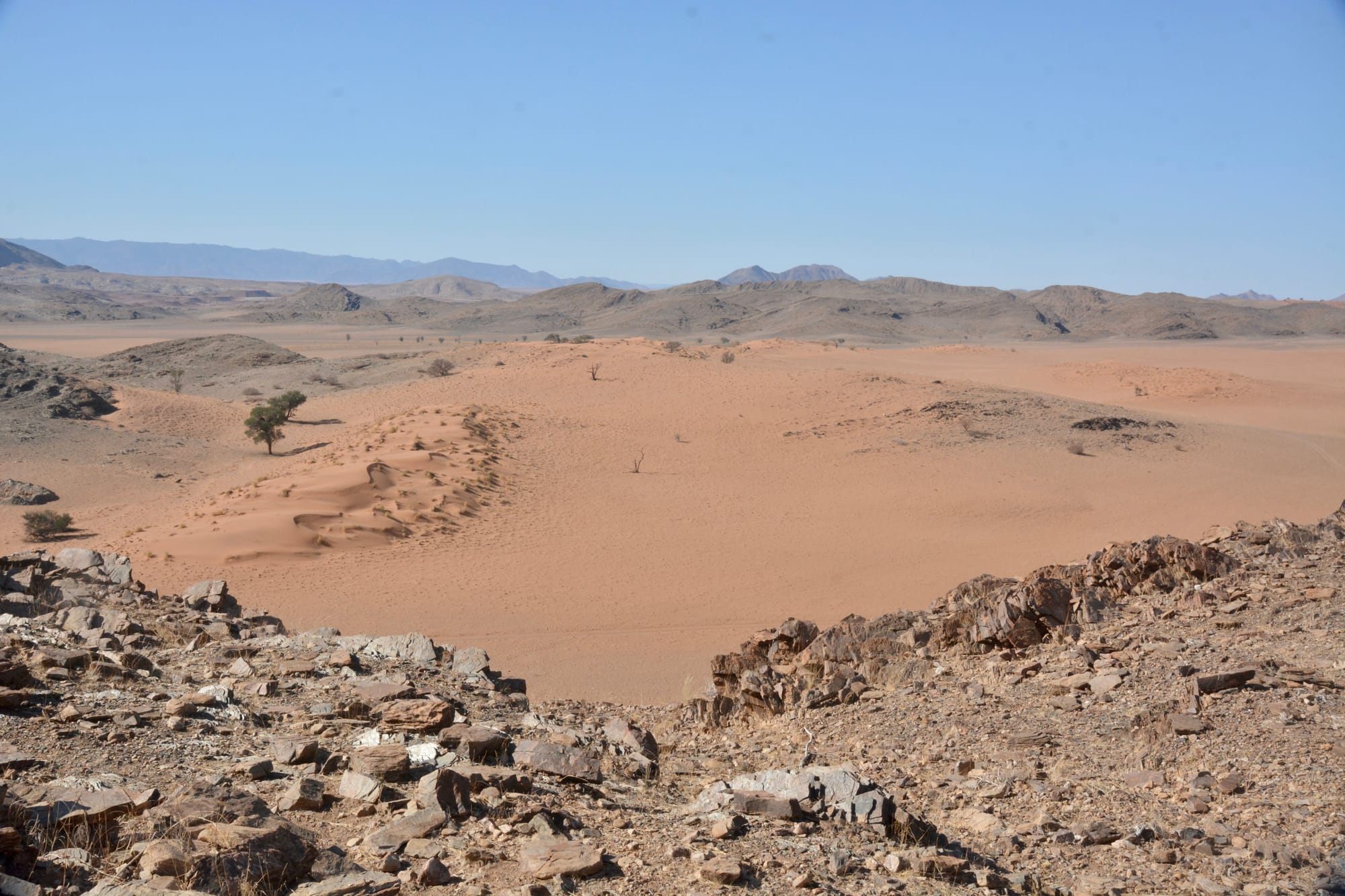
In the morning I clambered up the rocky hill behind the lodge to be greeted by more scenes of desert interspersed with rocky mountains - very beautiful.
We had a swim in the lodge pool but didn't stay in for very long (somewhat chilly - nights are cold in the desert), and later enjoyed a G&T sitting on the balcony. The rooms were very comfortable despite no aircon as the big ceiling fan worked well.
In the morning I clambered up the rocky hill behind the lodge to be greeted by more scenes of desert interspersed with rocky mountains - very beautiful.
Walvis Bay and Swakopmund
Days 12 to 17
Walvis Bay
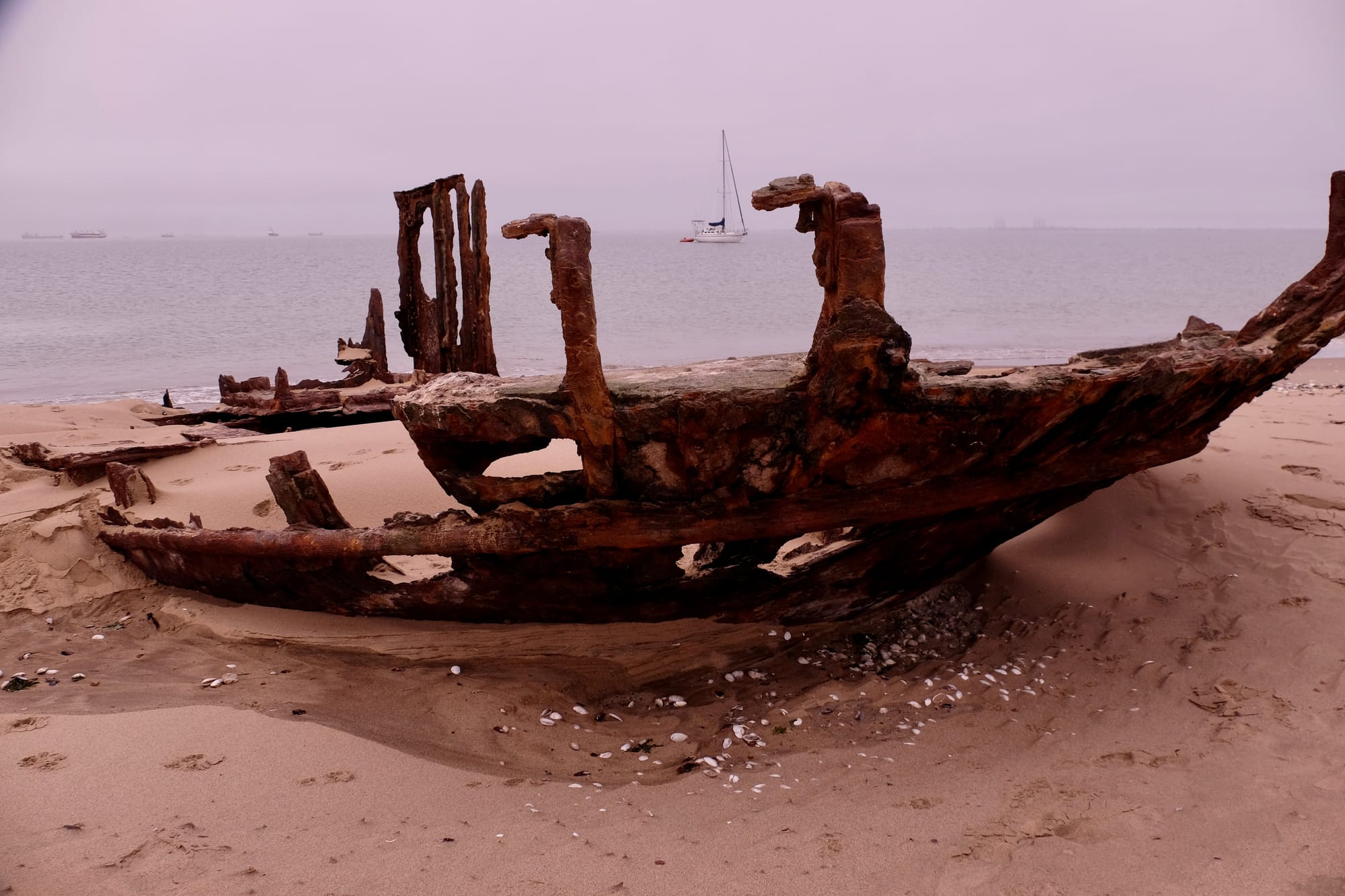
We were somewhat relieved to get out of the desert and into town. We settled into the Oyster Box Hotel on the waterfront, recommended by my friend Jeff. Not in the same league as our Umhlanga namesake hotel, but very comfortable.
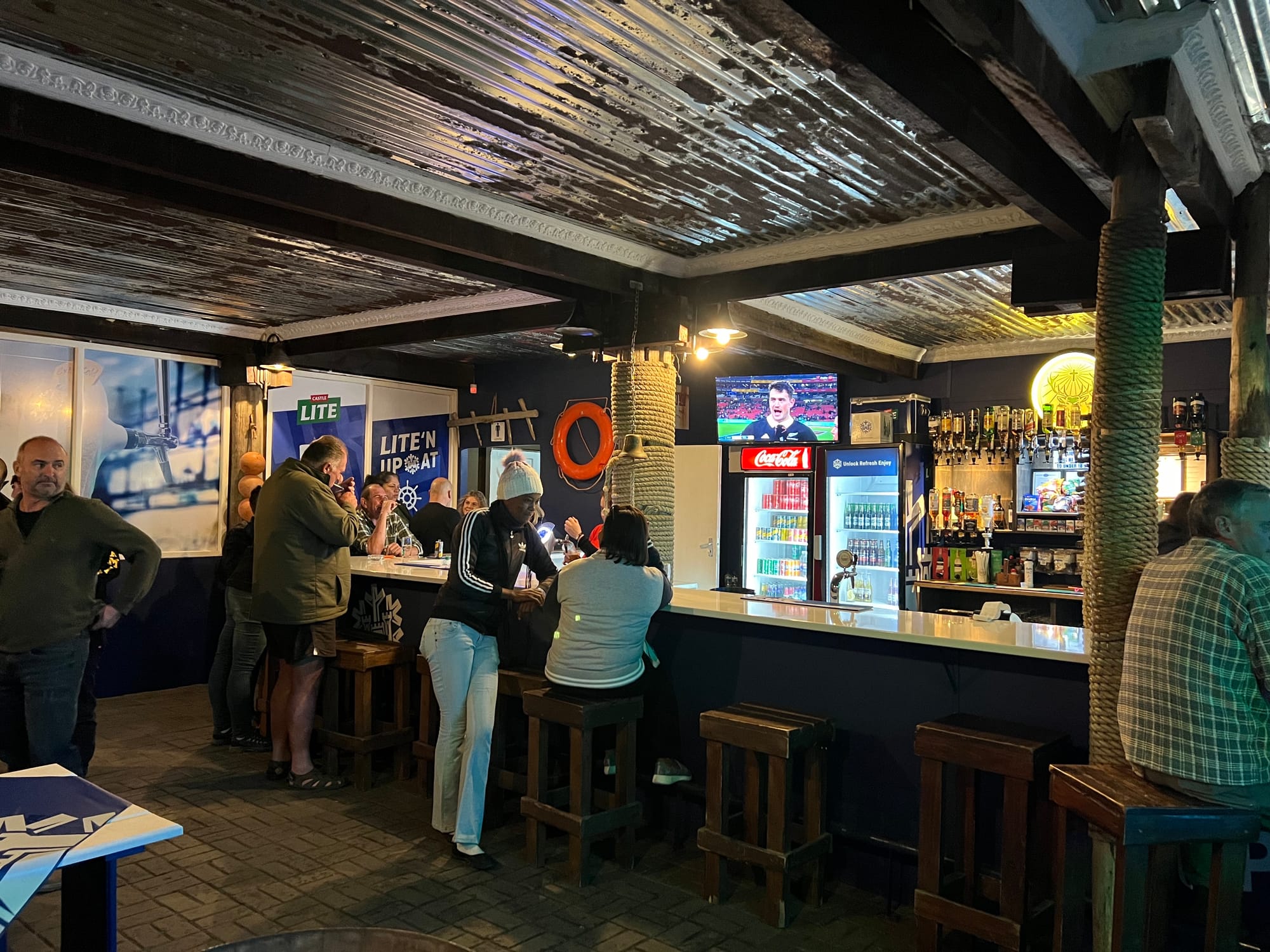
Our first priority was to find somewhere to watch the Kiwi test rugby the next evening, and secondly to confirm our tour for the next day. The Mola Mola Safaris office was on the waterfront, a pub with a TV next door to the one side, and the Anchor restaurant on the other side. What a win!!
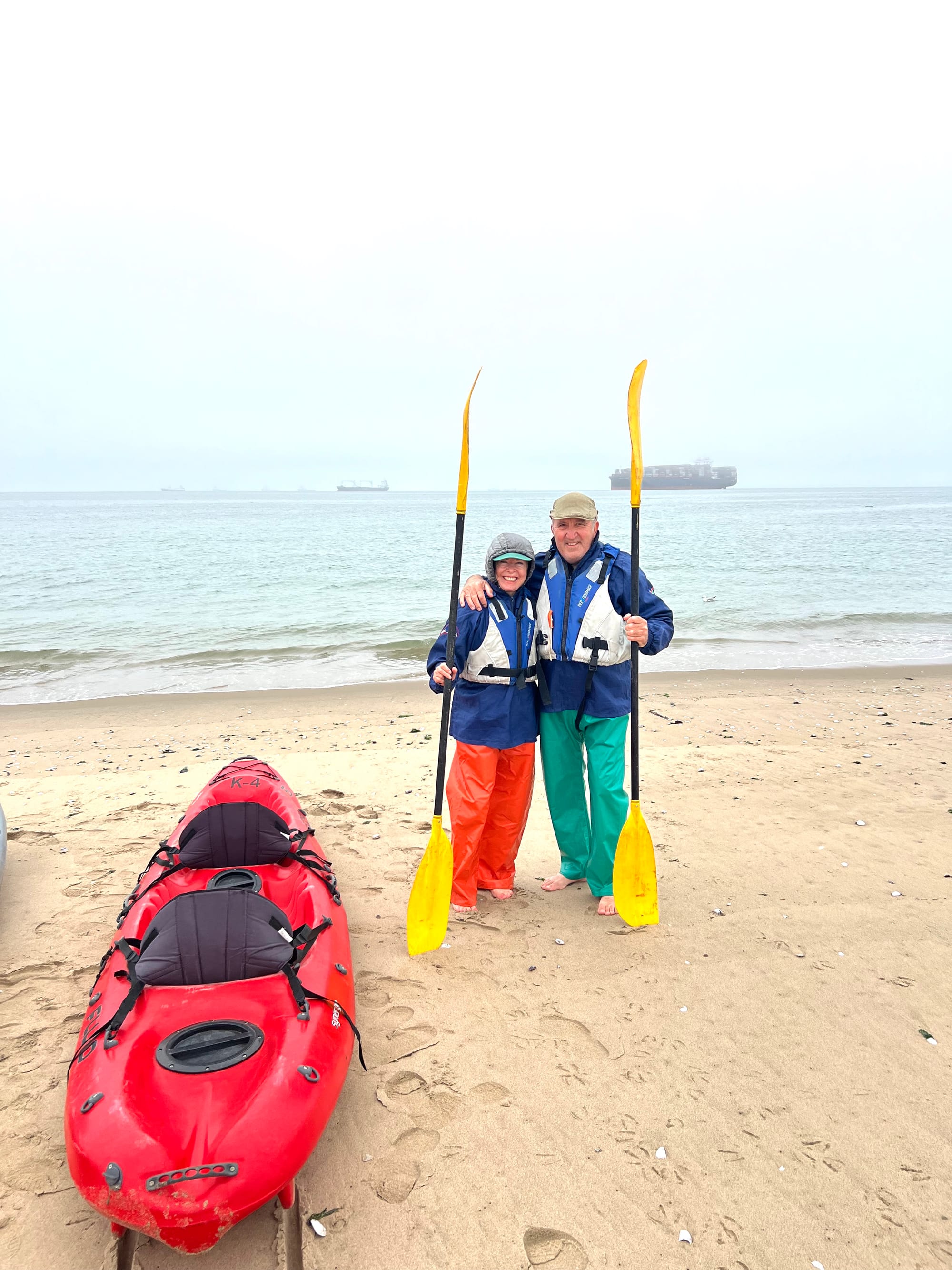
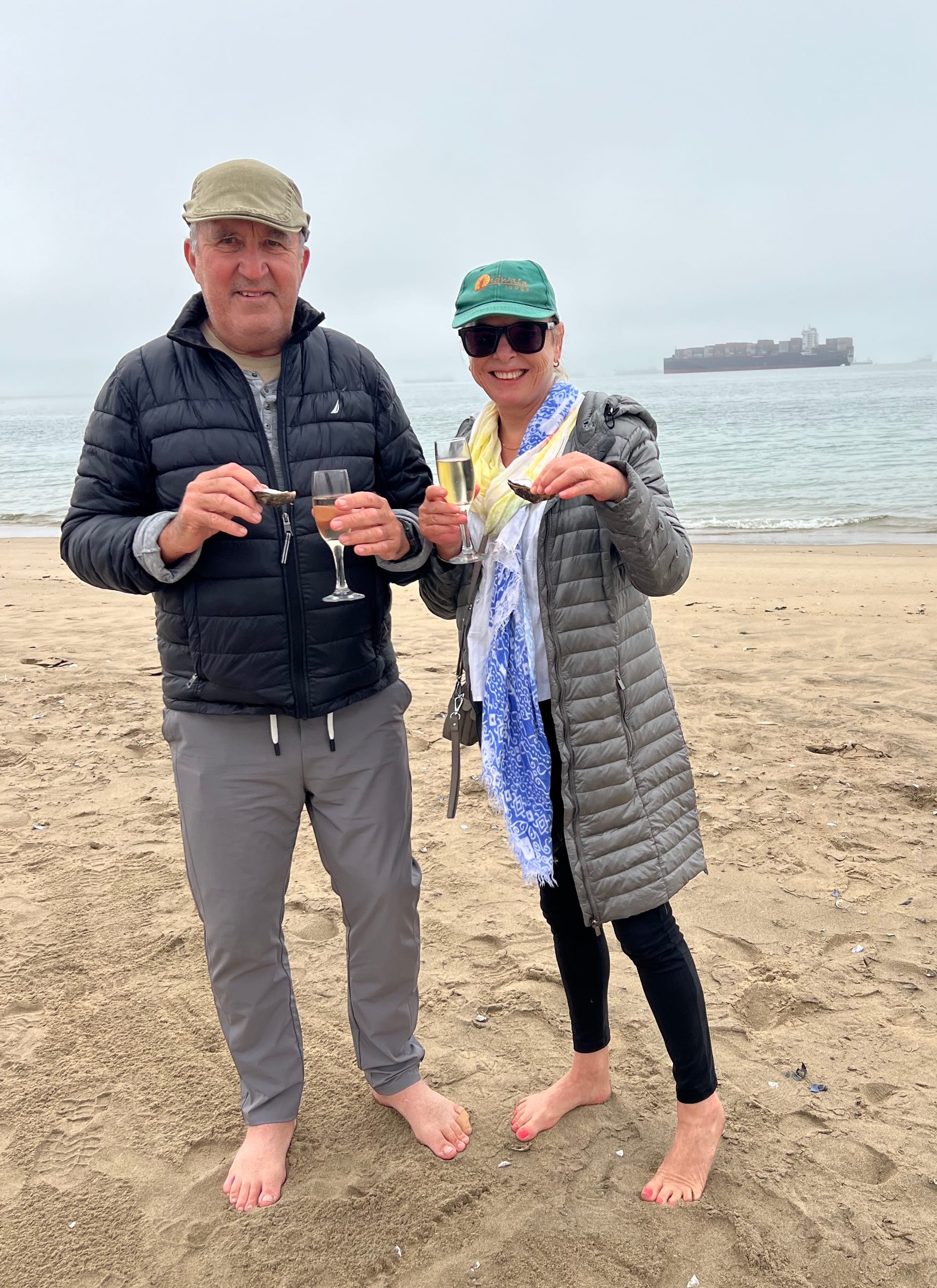
We upgraded to an all-day tour featuring kayaking with the seals at Pelican Point followed by an oyster and champagne lunch on the beach, and then a 4x4 trip to Sandwich Harbour. Then we booked for dinner at the Anchor for that evening.
Our first priority was to find somewhere to watch the Kiwi test rugby the next evening, and secondly to confirm our tour for the next day. The Mola Mola Safaris office was on the waterfront, a pub with a TV next door to the one side, and the Anchor restaurant on the other side. What a win!!
We upgraded to an all-day tour featuring kayaking with the seals at Pelican Point followed by an oyster and champagne lunch on the beach, and then a 4x4 trip to Sandwich Harbour. Then we booked for dinner at the Anchor for that evening.
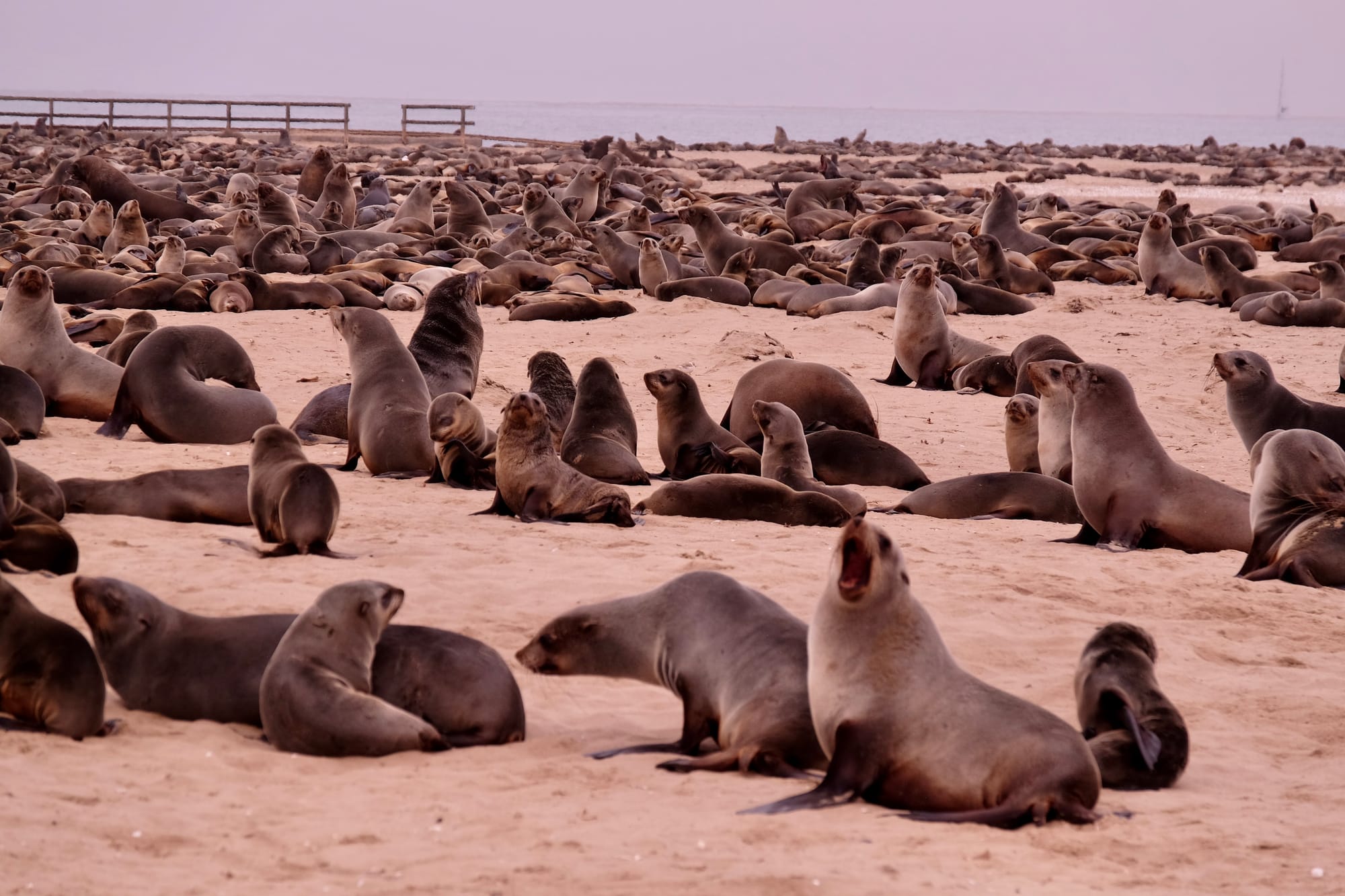
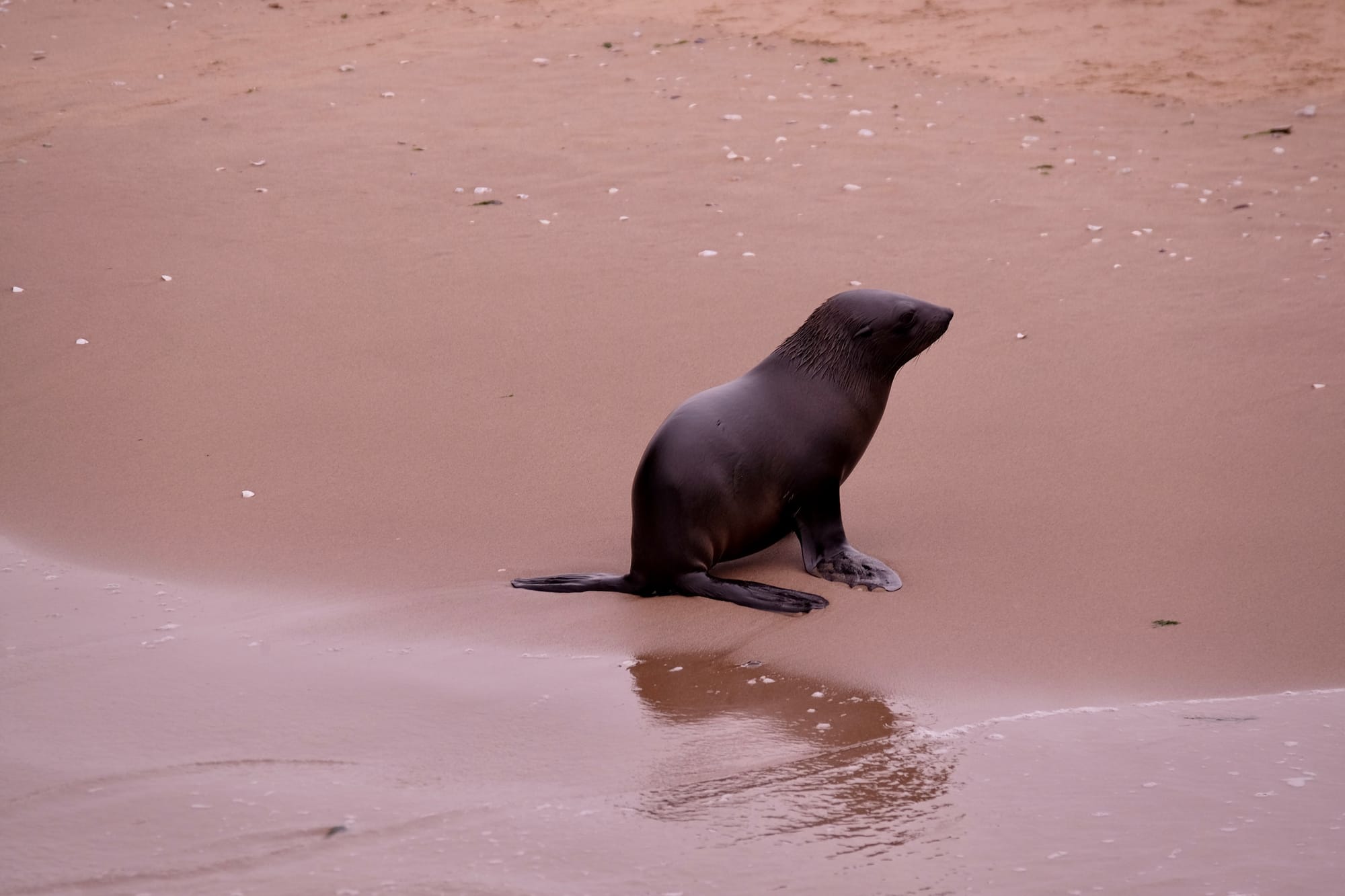
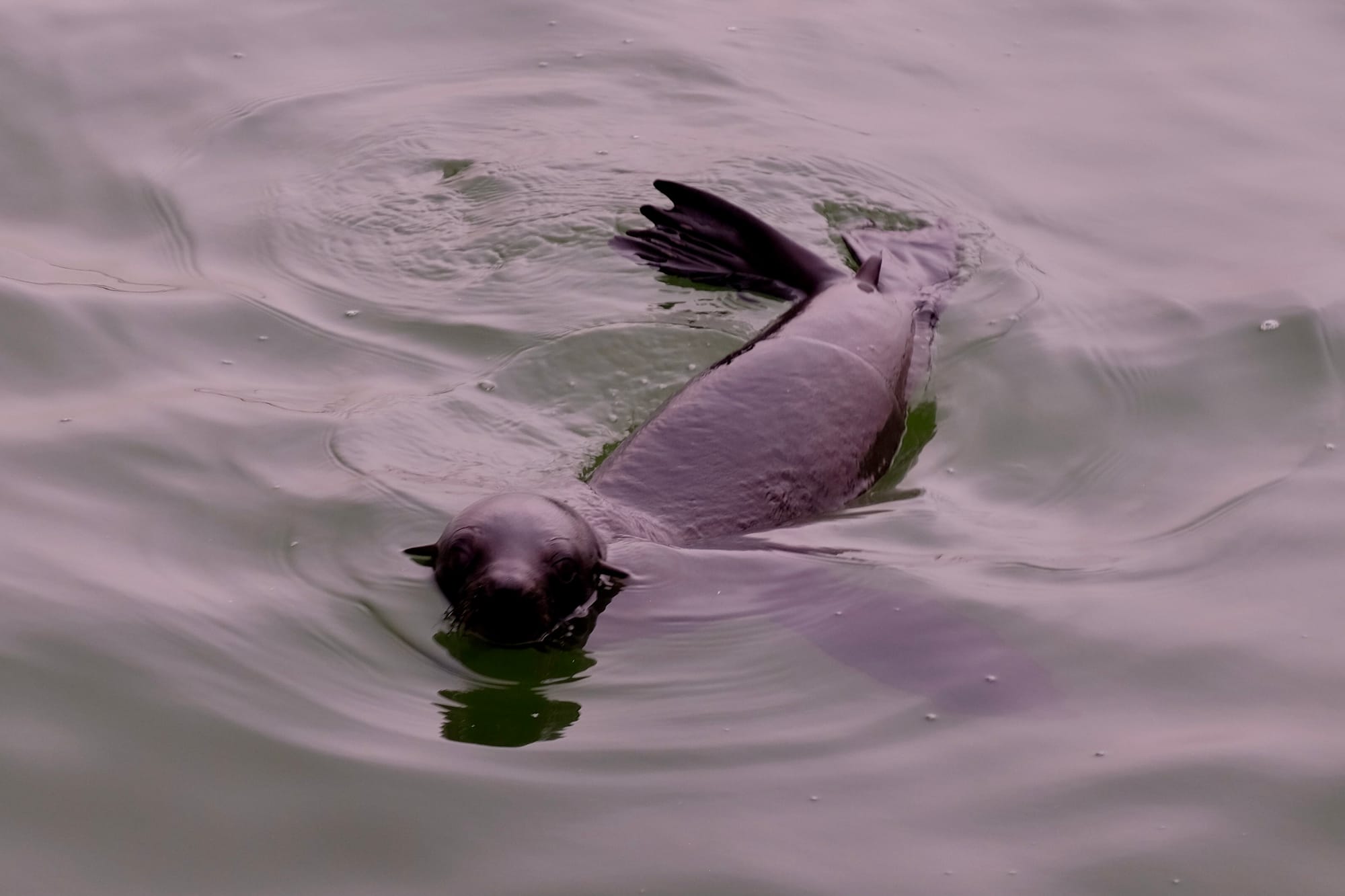
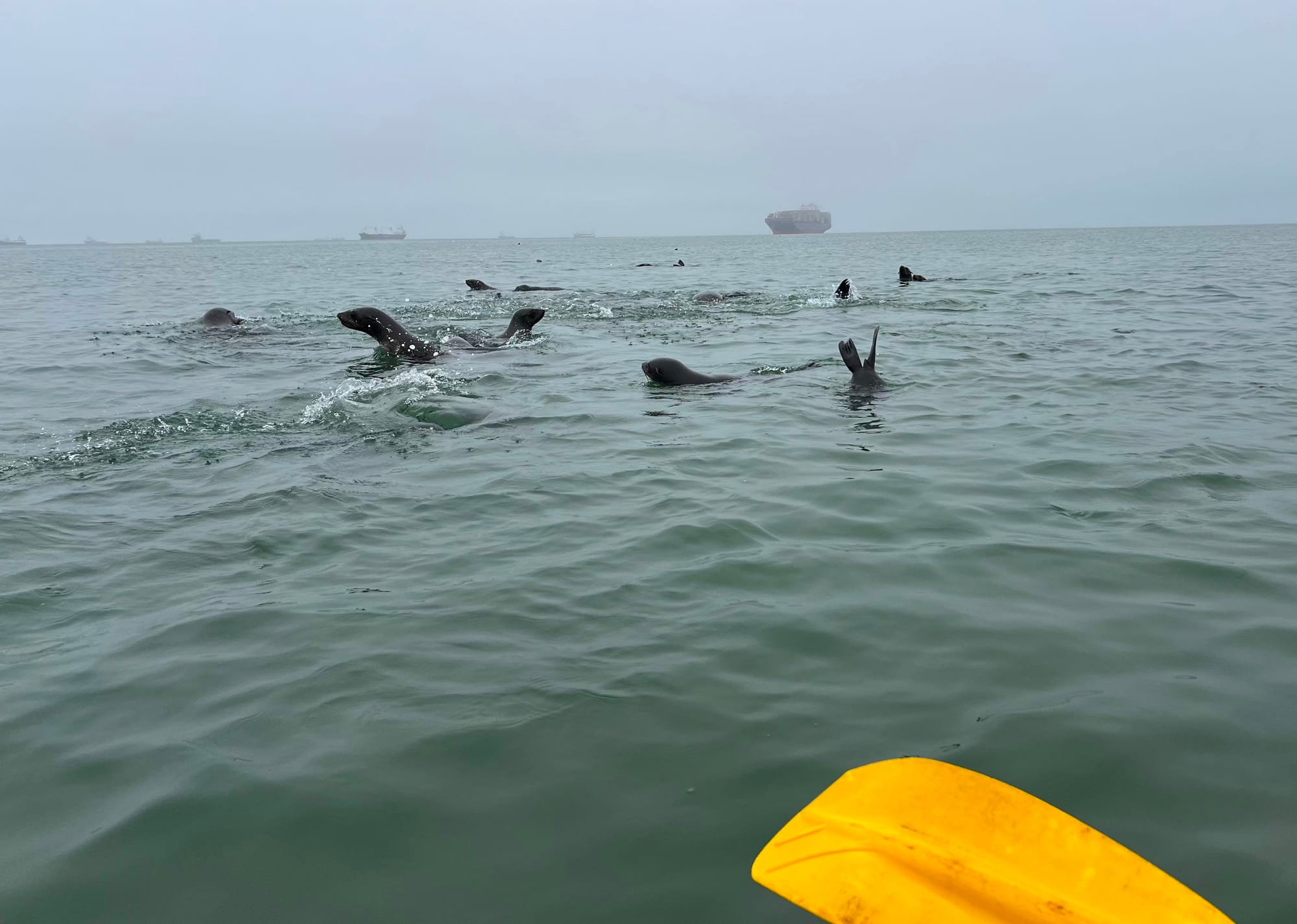
A catamaran took us out to Pelican Point - the trip included surprise onboard visits by a seal, then a pelican, followed by a kelp gull. Really? There were hundreds of seals on the beach at Pelican Point making quite a din. The younger ones were curious and many swam out to us and frolicked around the kayak. Paddling a little further out to sea we were thrilled to have bottlenosed dolphins surfacing nearby.
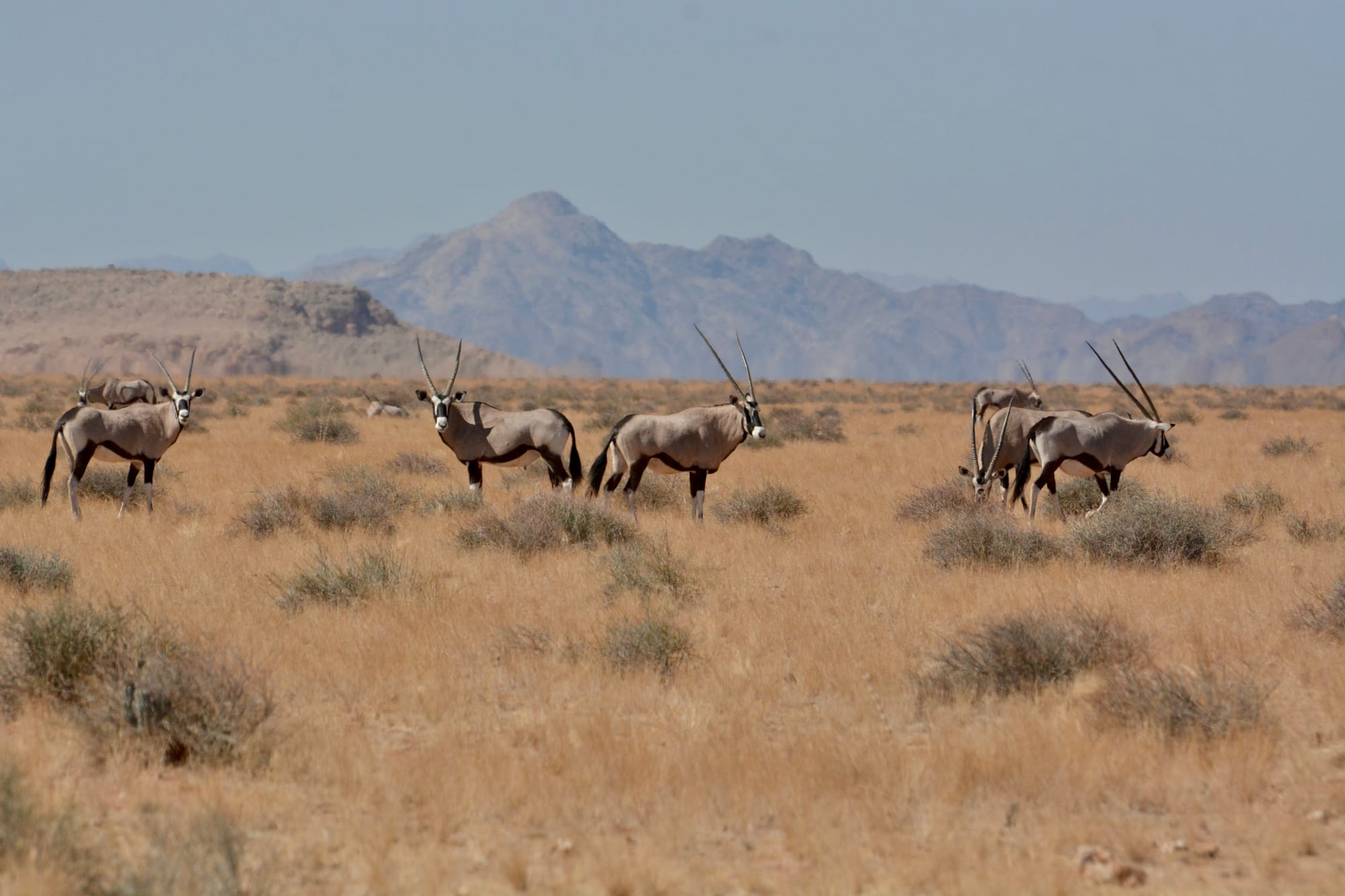
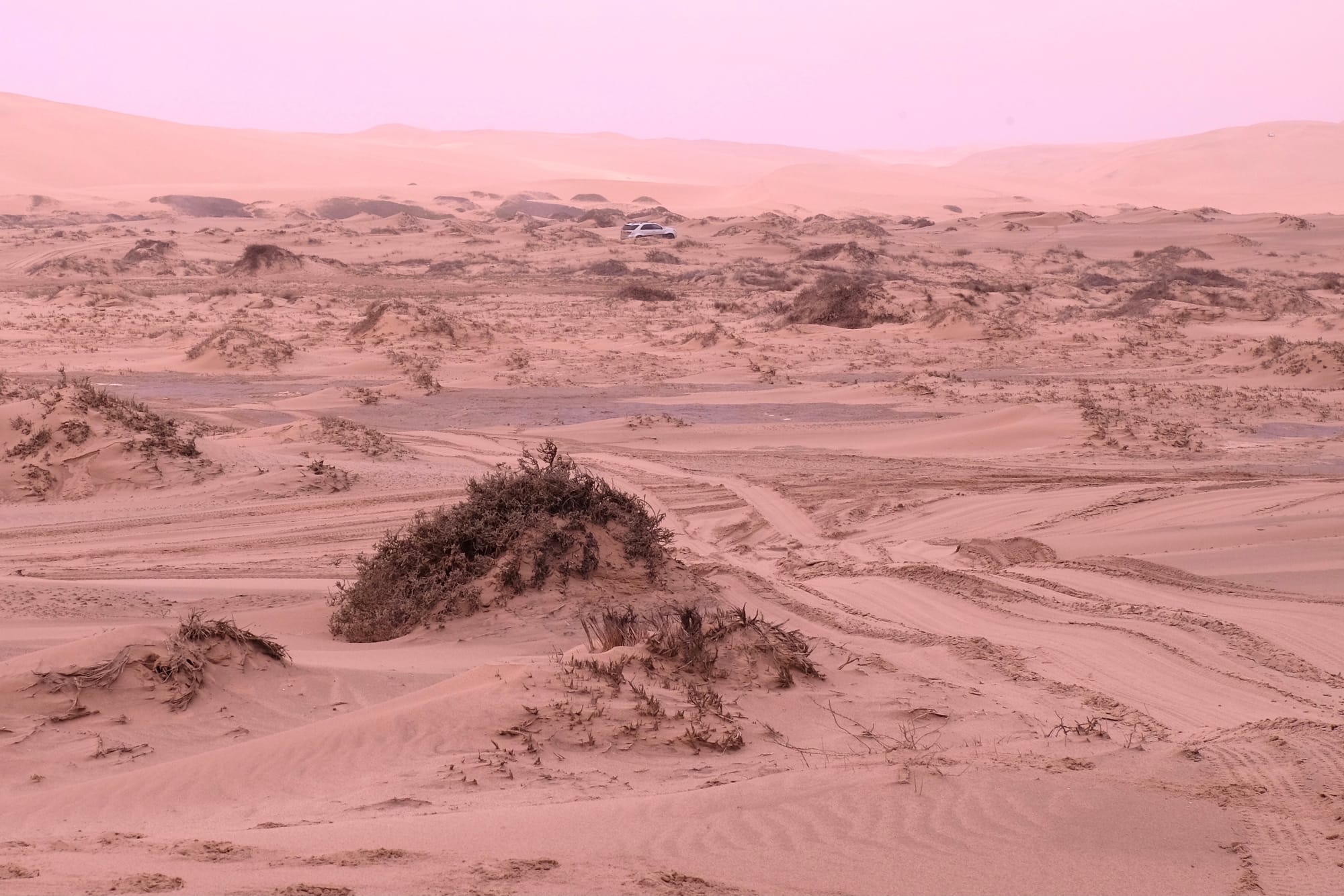
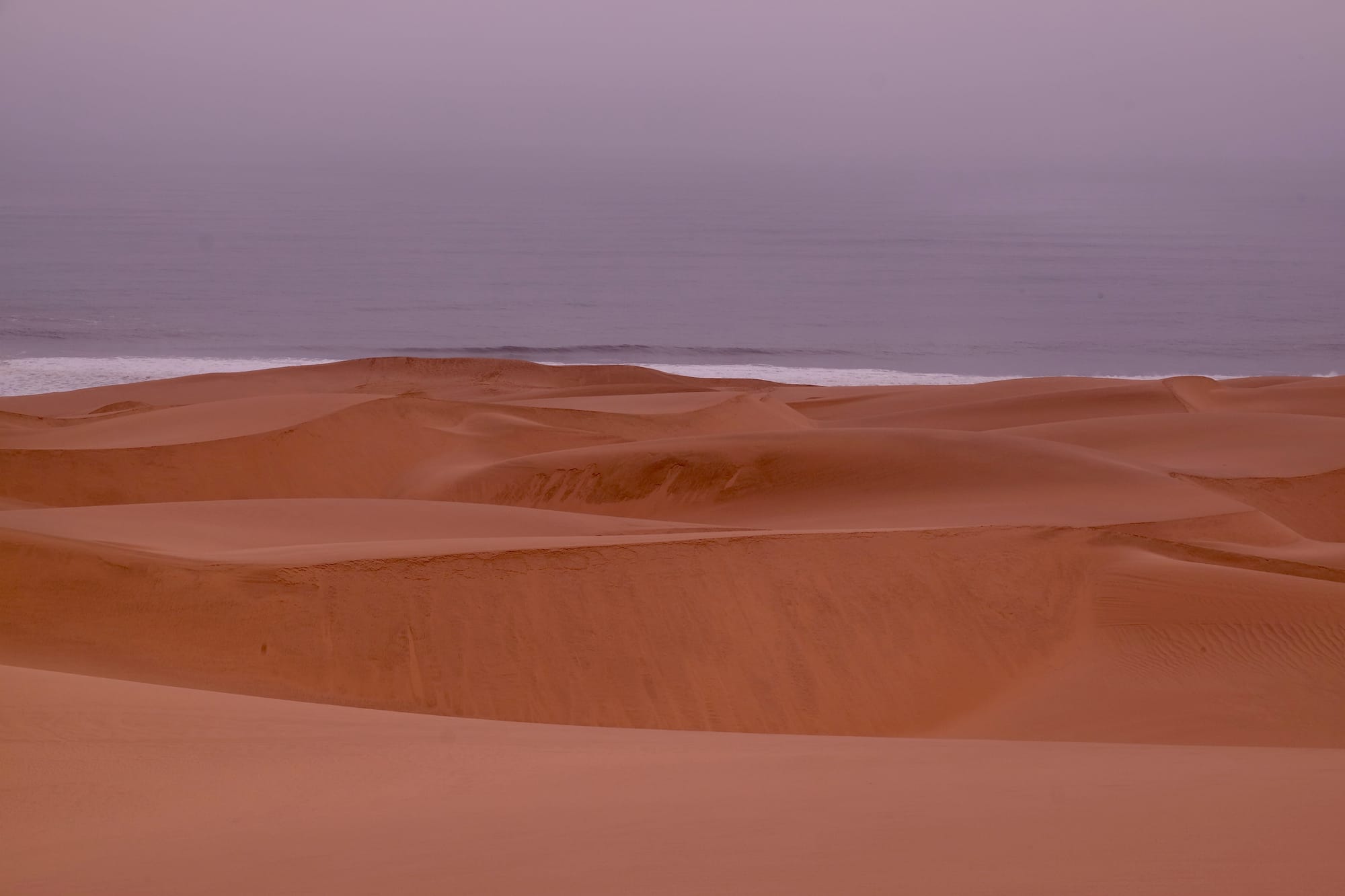
Lunch on the beach was followed by a hectic 4x4 drive to an area they call Sandwich Harbour, once a trading port, but there is nothing left of the harbour now having long ago been reclaimed by the sea. It's purported to be the only place in the world where the sea meets the sand dunes. We did some insane 'dune bashing', which is like a roller coaster ride. Along the way we spotted black backed jackal, oryx and springbok. The sea mist started to roll in and we headed home.
Lunch on the beach was followed by a hectic 4x4 drive to an area they call Sandwich Harbour, once a trading port, but there is nothing left of the harbour now having long ago been reclaimed by the sea. It's purported to be the only place in the world where the sea meets the sand dunes. We did some insane 'dune bashing', which is like a roller coaster ride. Along the way we spotted black backed jackal, oryx and springbok. The sea mist started to roll in and we headed home.
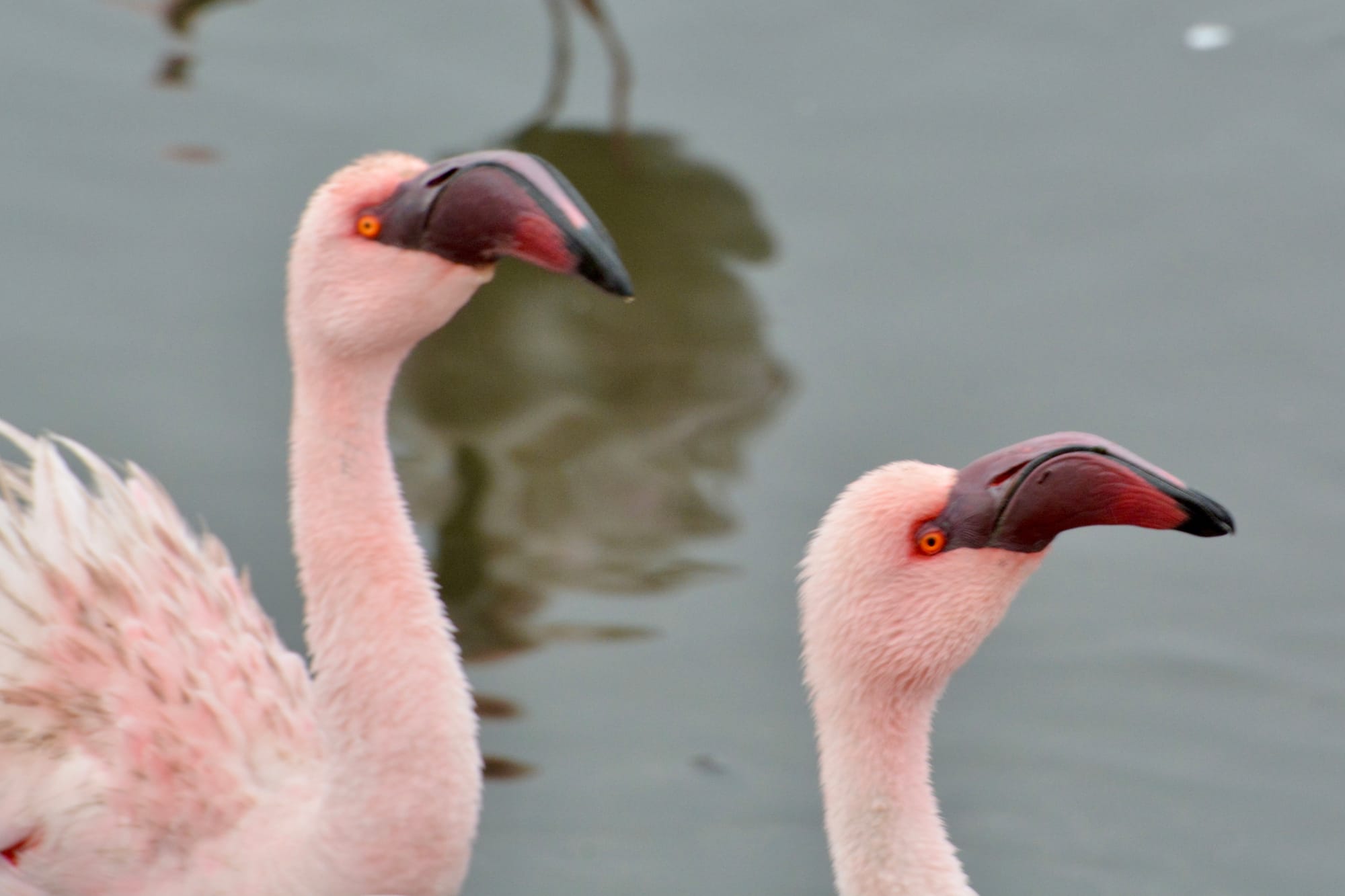
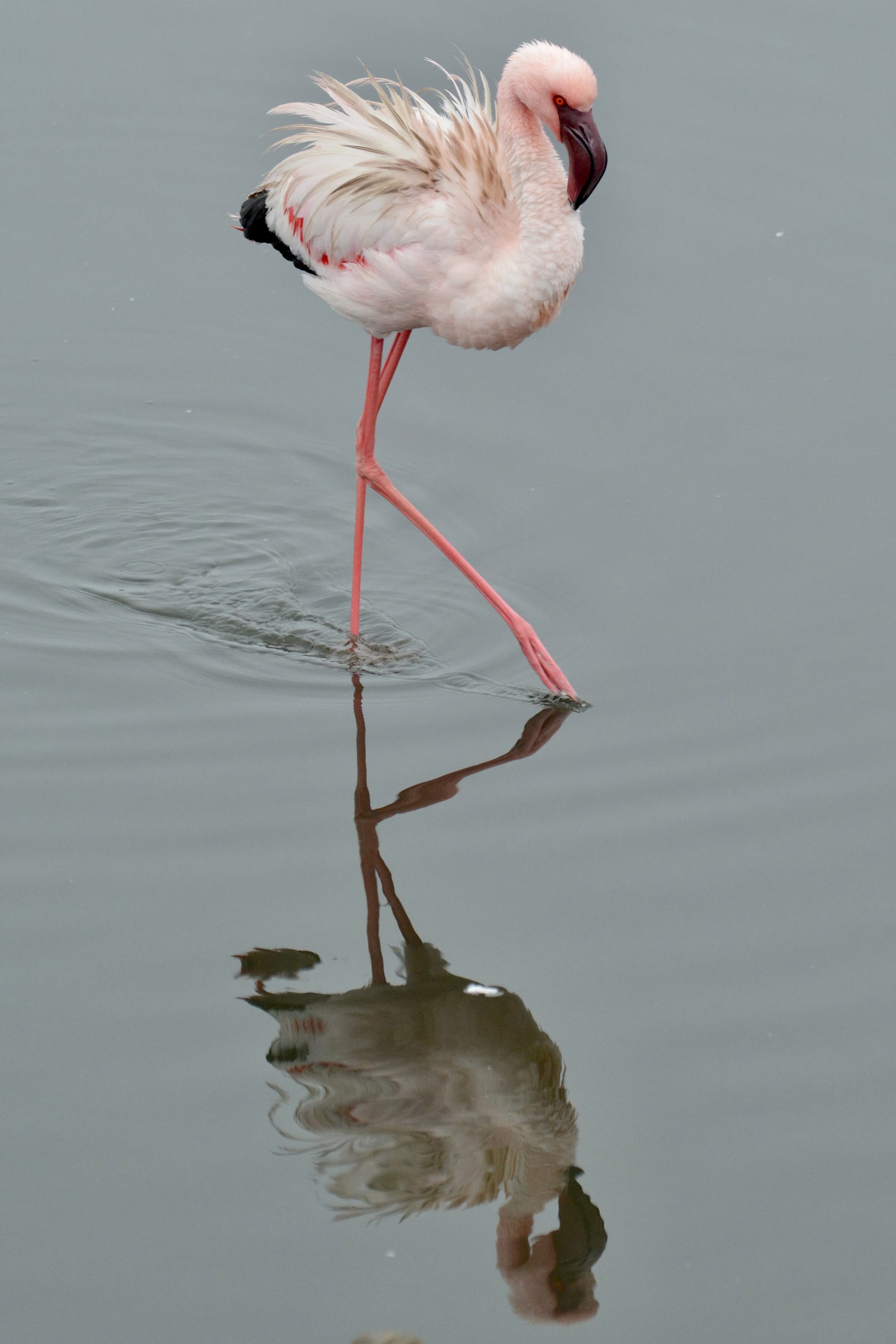
The next morning we did a decent walk along the promenade, and enjoyed watching the flamingos in the bay along the way. There are two species there - the greater which is larger and whiter, and the lesser which is pinker with an imposing beak and prettier. The promenade walk is most enjoyable with only a few people walking and jogging.
We thoroughly enjoyed watching the Bokke take out the Kiwis over a couple of Hansa drafts, and then simply went next door to our designated restaurant for a great meal.
Walvis Bay town itself is rather uninspiring, so we were pleased with our proximity to the promenade, venturing only into town for a few travelling necessities.
We thoroughly enjoyed watching the Bokke take out the Kiwis over a couple of Hansa drafts, and then simply went next door to our designated restaurant for a great meal.
Walvis Bay town itself is rather uninspiring, so we were pleased with our proximity to the promenade, venturing only into town for a few travelling necessities.
Foodie section
The Mola Mola tour lunch on the beach was fabulous. The team braaied oysters, crayfish and fillet steaks, and served it with champagne. We now reckon braaing oysters is the way forward.
Dinner at the Anchor was equally superb - we elected to do a tapas style meal with a few 'starter' seafood dishes, all washed down with a very fine chardonnay. Delicious.
The Mola Mola tour lunch on the beach was fabulous. The team braaied oysters, crayfish and fillet steaks, and served it with champagne. We now reckon braaing oysters is the way forward.
Dinner at the Anchor was equally superb - we elected to do a tapas style meal with a few 'starter' seafood dishes, all washed down with a very fine chardonnay. Delicious.
Swakopmund
Walvis Bay to Swakopmund is a half hour drive, but we only got there at 2pm due to the fact that the car's battery was flat (most likely due to the fact that Brig left the lights on the night before - what a dumb car to not switch them off when you lock it - our cars do!).
We booked a quad bike tour for the next morning and then went for sundowners at the Tug Restaurant next to the Swakopmund jetty and, after walking out along the jetty, enjoyed watching a beautiful sunset .
We booked a quad bike tour for the next morning and then went for sundowners at the Tug Restaurant next to the Swakopmund jetty and, after walking out along the jetty, enjoyed watching a beautiful sunset .
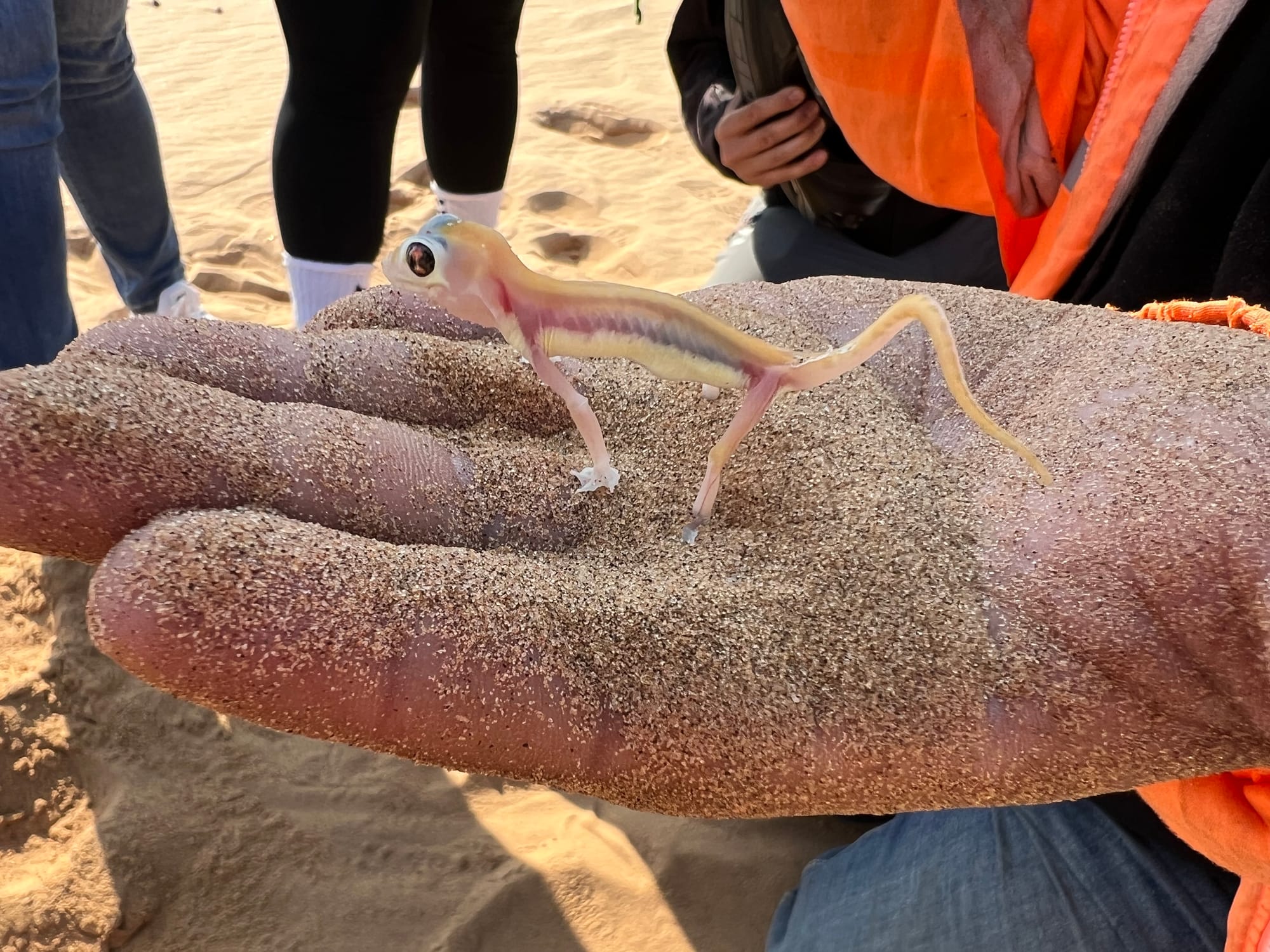
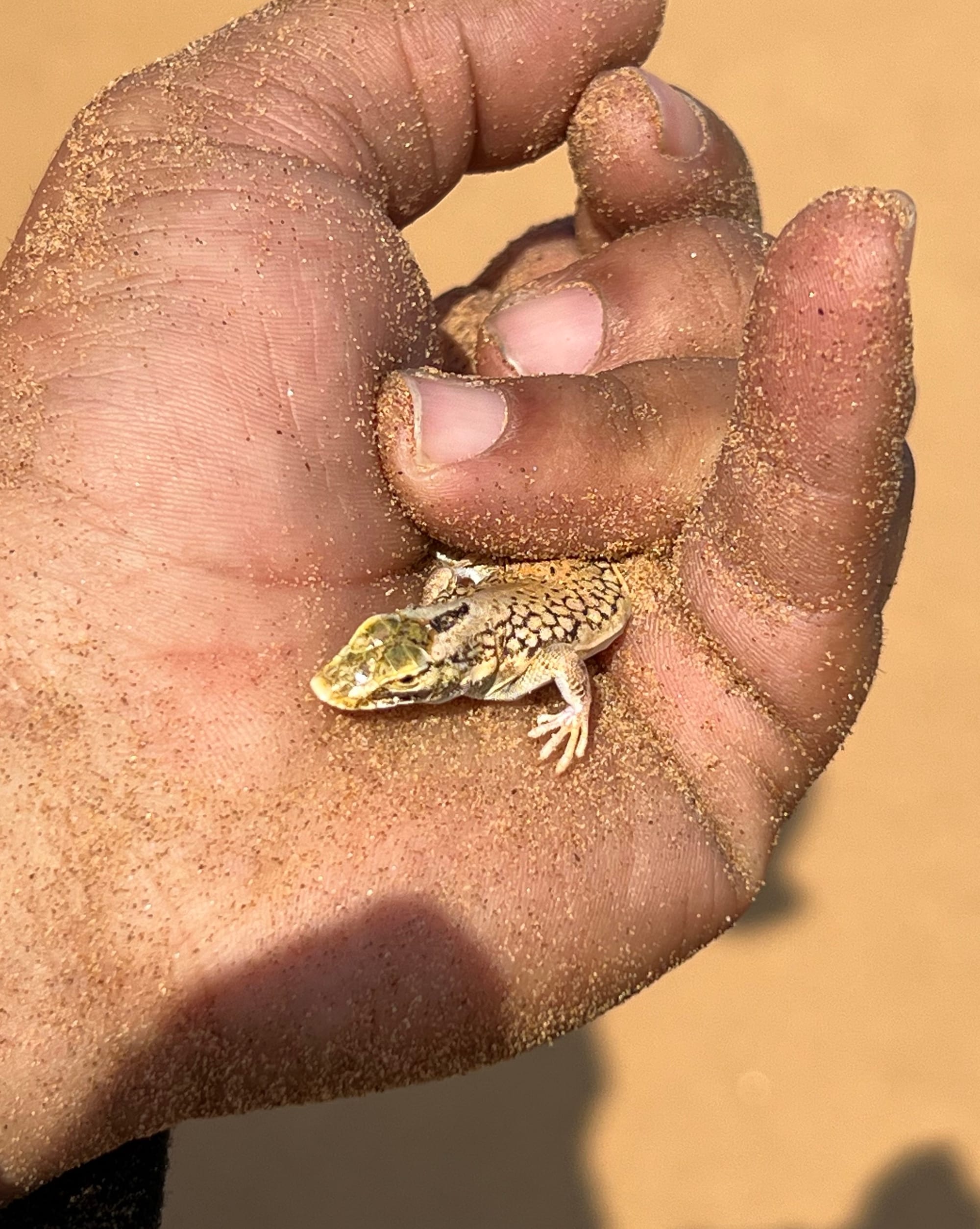
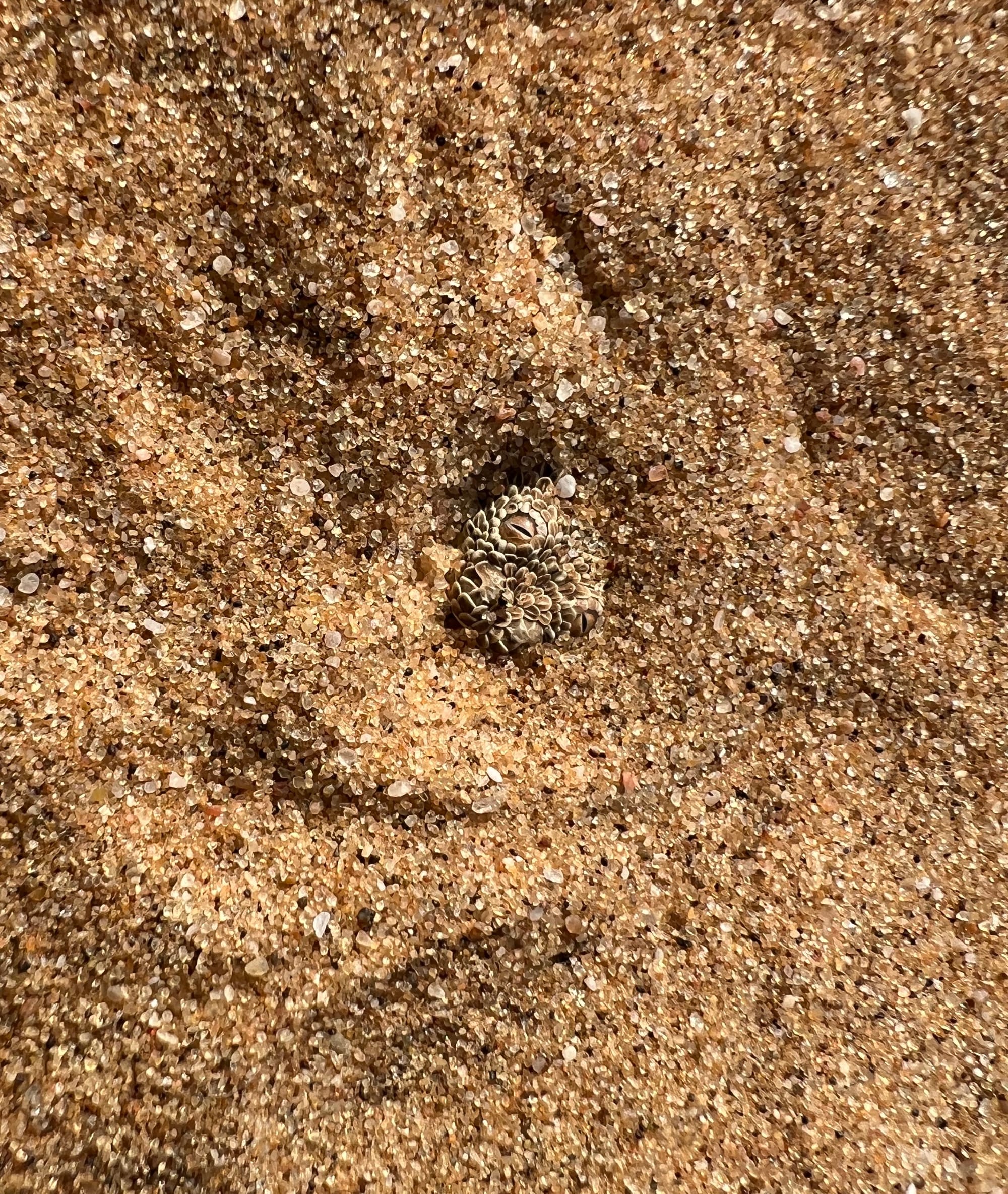
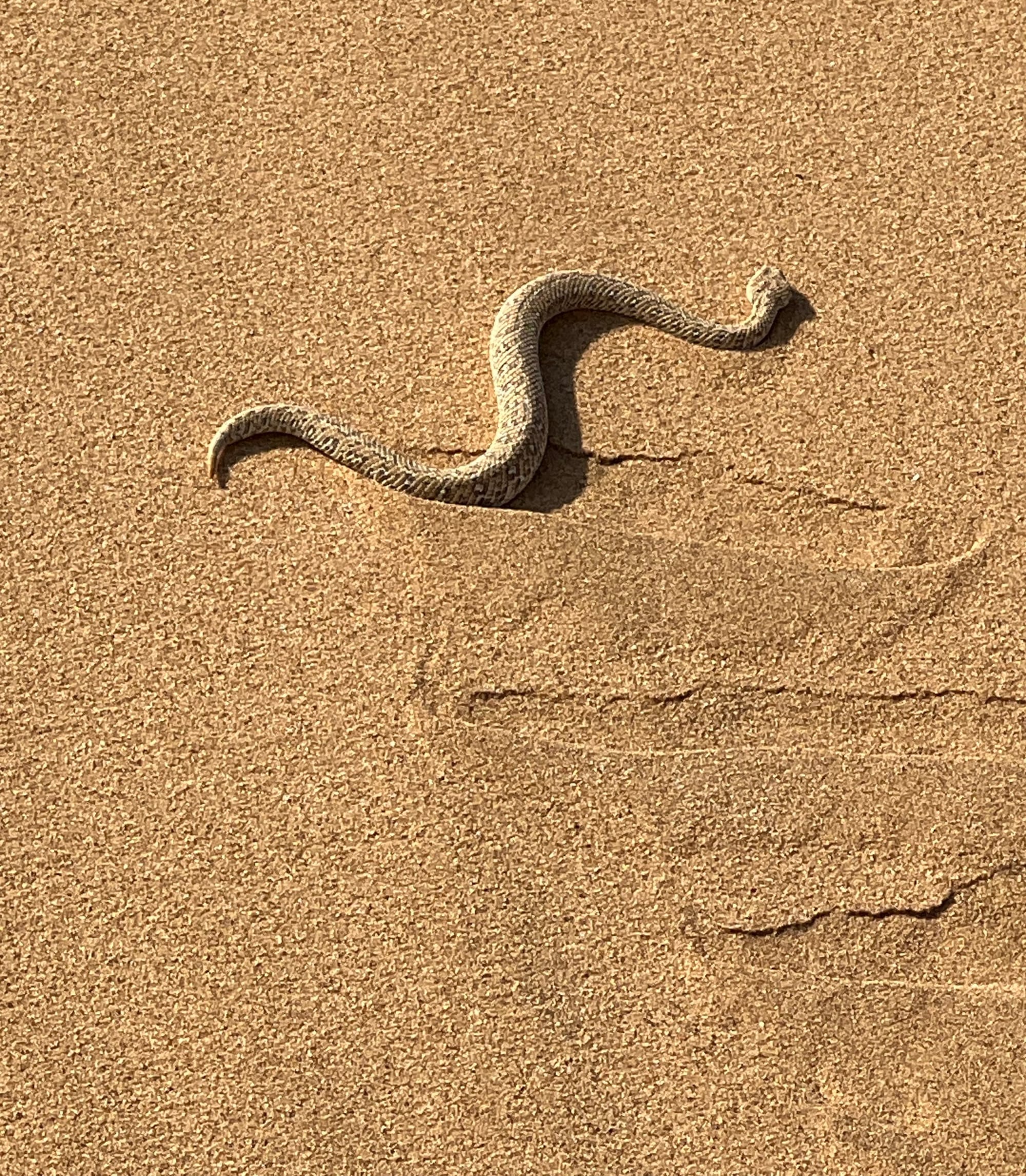
The quad biking was great fun. We had a guide to ourselves and he showed us some of the 'little five' creatures to be found in the desert - a cartwheel spider, a translucent gecko, a shovel-nosed lizard, and best of all, a sidewinder snake. These fascinating creatures all live under the sand during the day and the guide finds them by spotting tell-tale tracks.
The Namib is in fact the oldest desert in the world. There is a fascinating episode on BBC Planet II about it. The diversity and uniqueness of it are mesmerising. We left inspired and privileged to have been there.
The Namib is in fact the oldest desert in the world. There is a fascinating episode on BBC Planet II about it. The diversity and uniqueness of it are mesmerising. We left inspired and privileged to have been there.

Foodie section
This town was probably our favourite culinary experience of the tour. The first night at the Tug, in anticipation of primarily red meat up in Etosha, we again opted for a tapas style seafood meal which was excellent. The second night we found the local Brauhaus - you can probably guess what the cuisine was. We shared a bratwurst starter and rare fillet steak which were cooked to perfection.
In the morning we did a good walk on the promenade and then drove around researching for a new spot for dinner. Opting to reserve at Andy's Seafood Restaurant for the evening, we were blown away by the oysters, all of course from Walvis Bay oyster farms - fat, juicy and lightly cooked under a griller with a dollop of garlic butter - a process proudly demonstrated to Brigi. We ended up having five each to the point where we were so full.
This town was probably our favourite culinary experience of the tour. The first night at the Tug, in anticipation of primarily red meat up in Etosha, we again opted for a tapas style seafood meal which was excellent. The second night we found the local Brauhaus - you can probably guess what the cuisine was. We shared a bratwurst starter and rare fillet steak which were cooked to perfection.
In the morning we did a good walk on the promenade and then drove around researching for a new spot for dinner. Opting to reserve at Andy's Seafood Restaurant for the evening, we were blown away by the oysters, all of course from Walvis Bay oyster farms - fat, juicy and lightly cooked under a griller with a dollop of garlic butter - a process proudly demonstrated to Brigi. We ended up having five each to the point where we were so full.
Etosha
Days 18 to 24
Etosha Safari Lodge
The travel time to Etosha is long, so we broke it up by staying over at Out of Africa Guesthouse in Otjiwarongo (getting that right takes a bit of practice). Travel time was made even longer by our doing a diversion to see Spitzkoppe, known as the Matterhorn of the Namib, and again choosing the longer 'B' road route via Sukses.
The lodge was quite impressive, apart from poor WiFi again, only available in reception at low speed, but we were given a spacious, comfortable, family room. We booked a morning game drive for the next day and indulged in a buffet dinner with game dish selections.
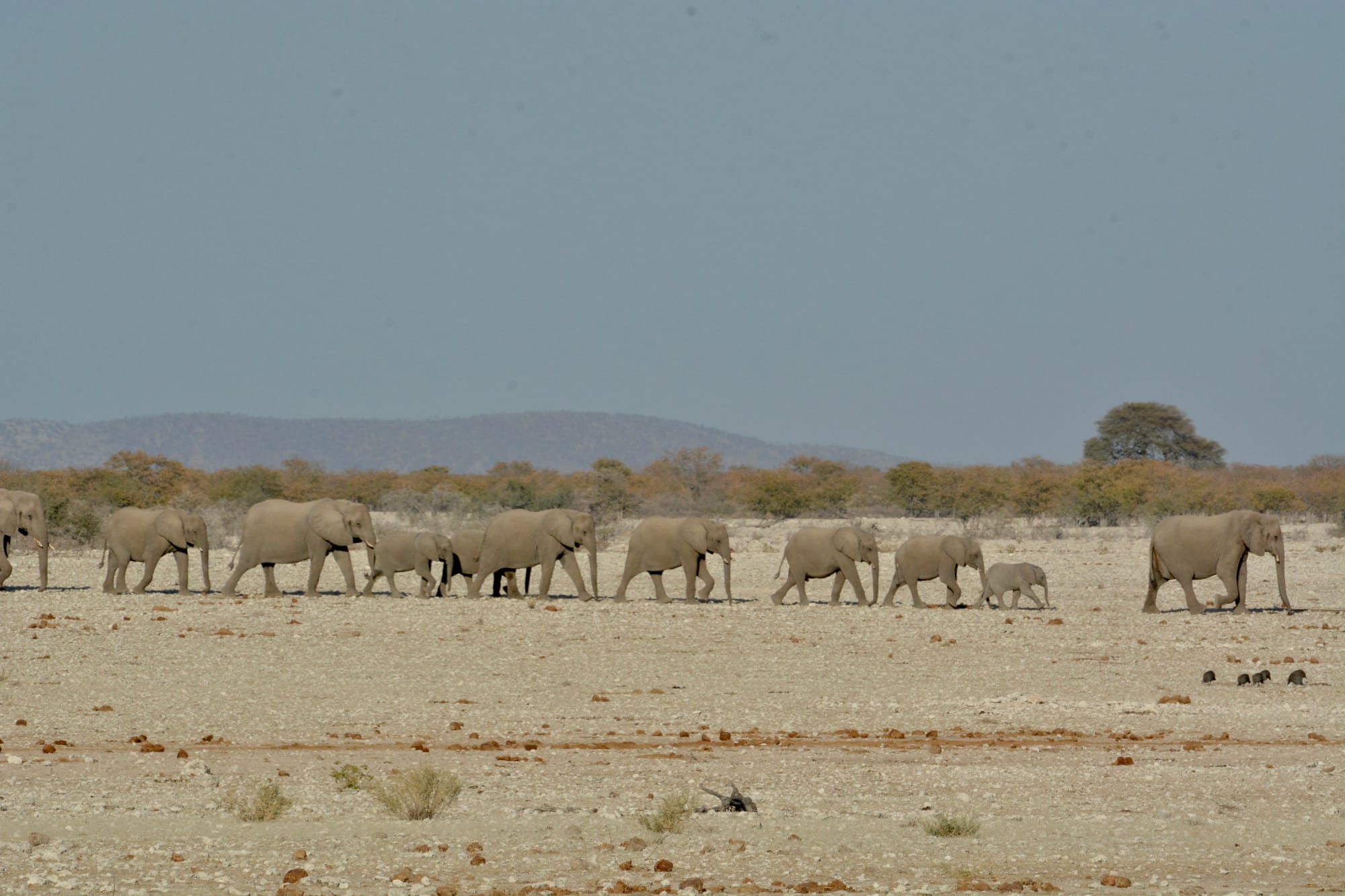
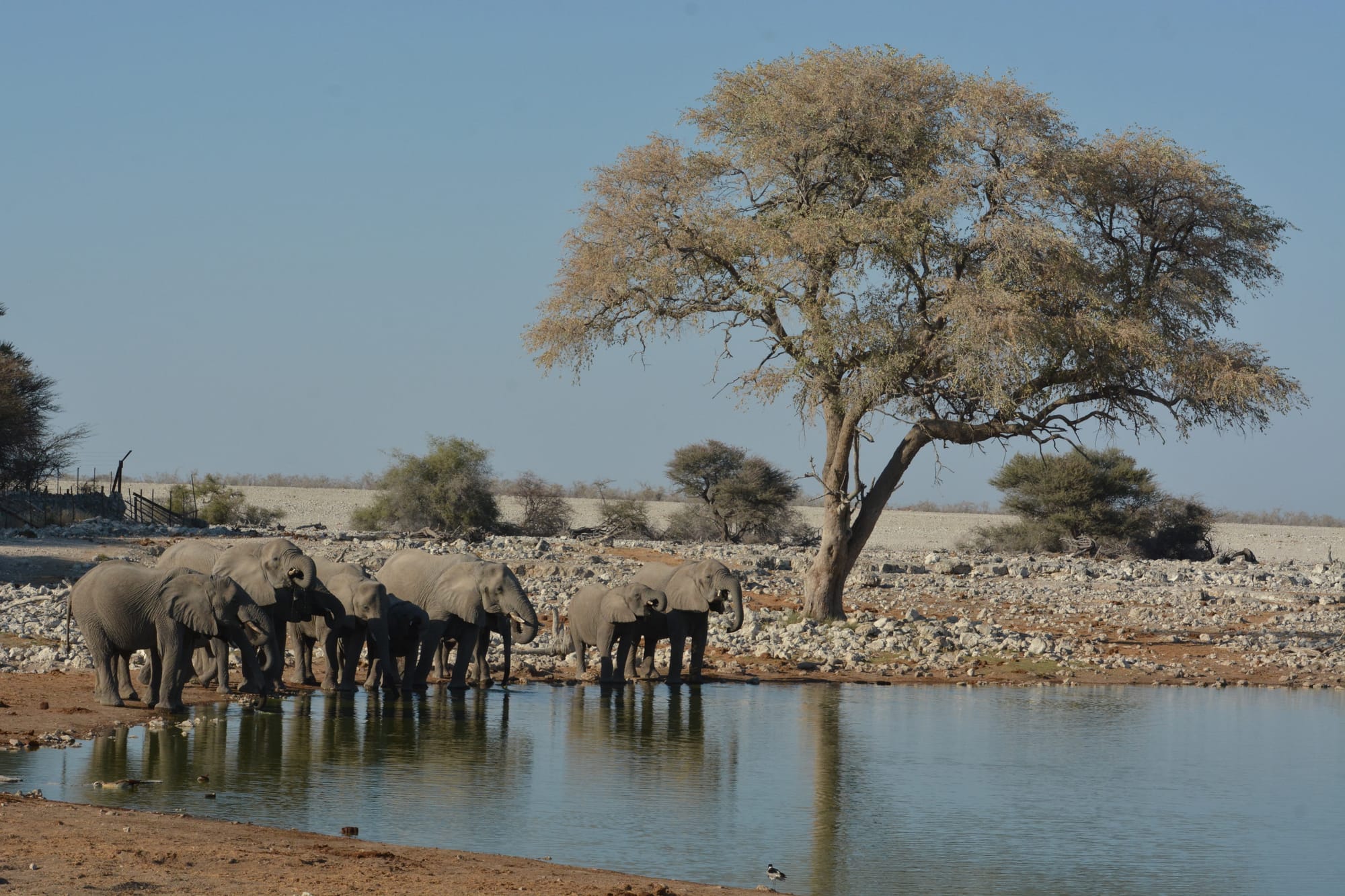
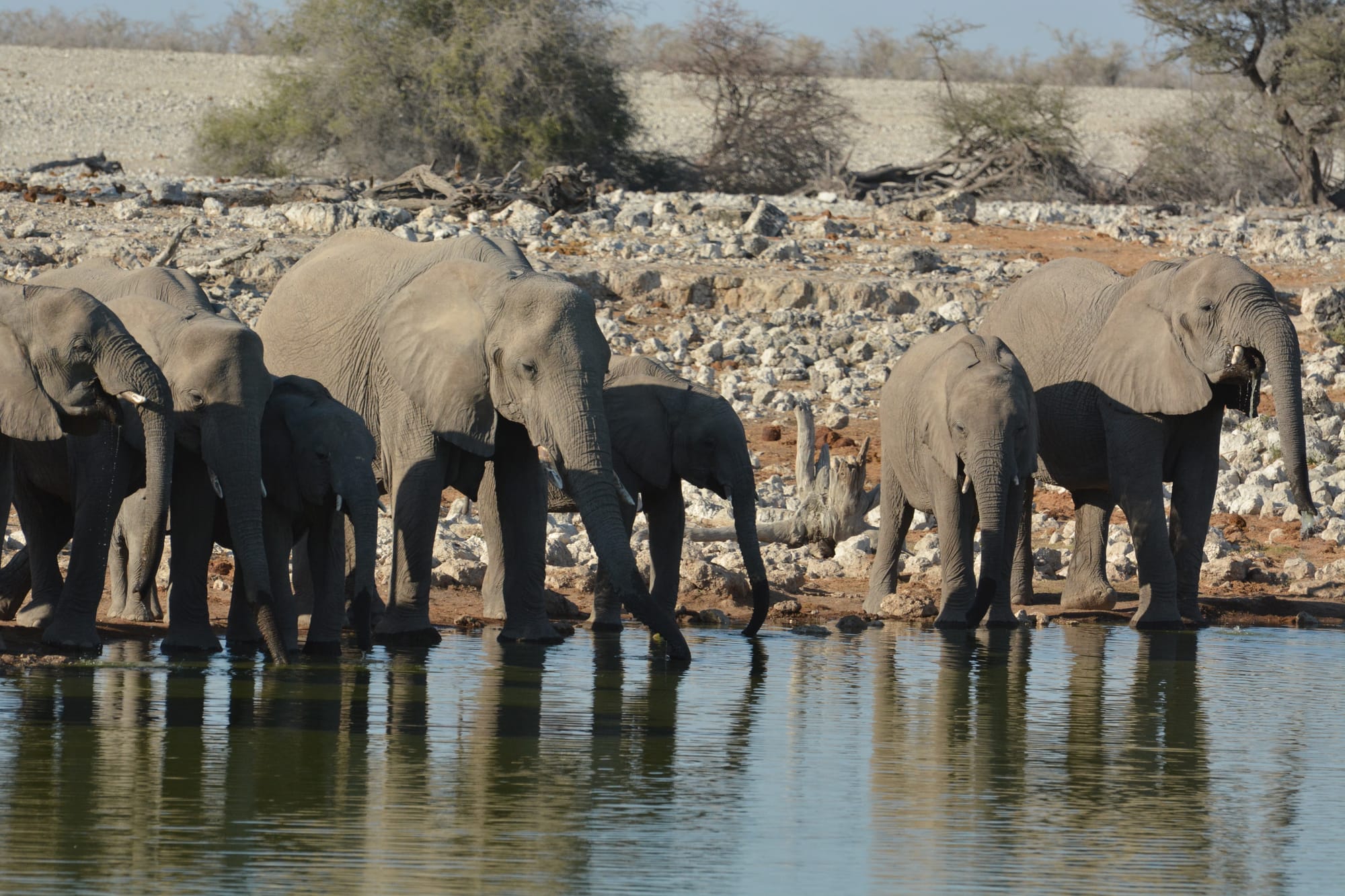
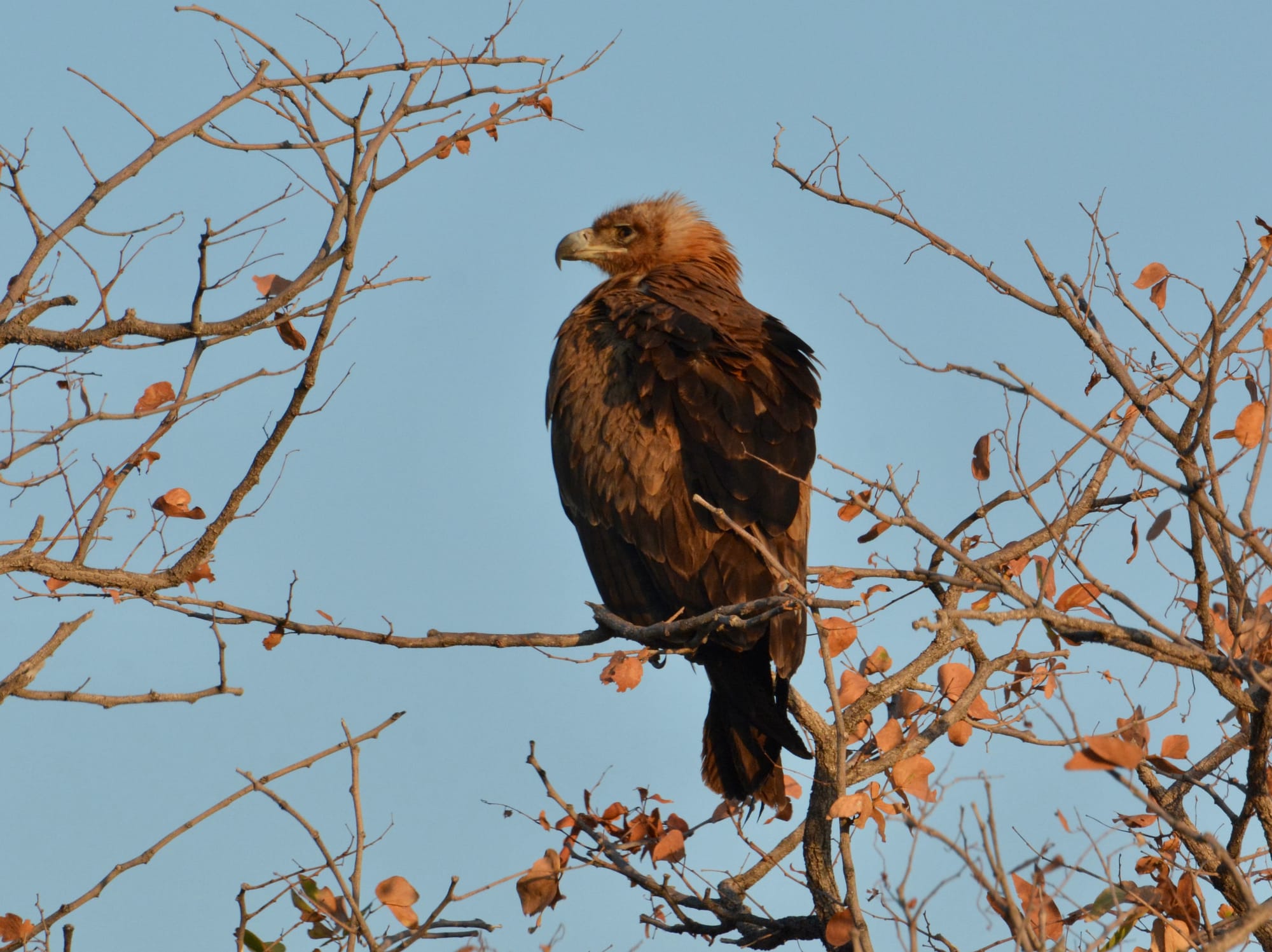
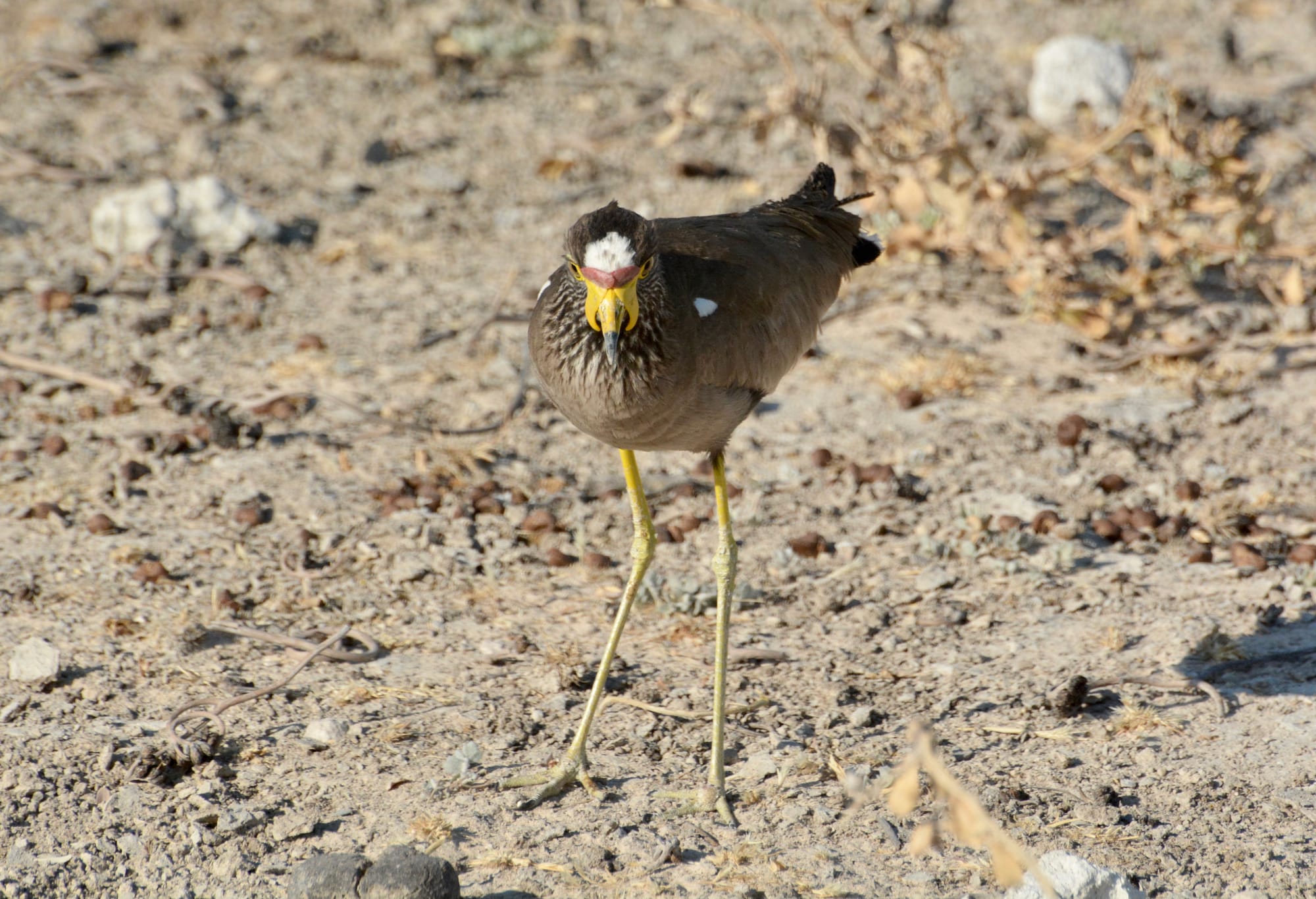
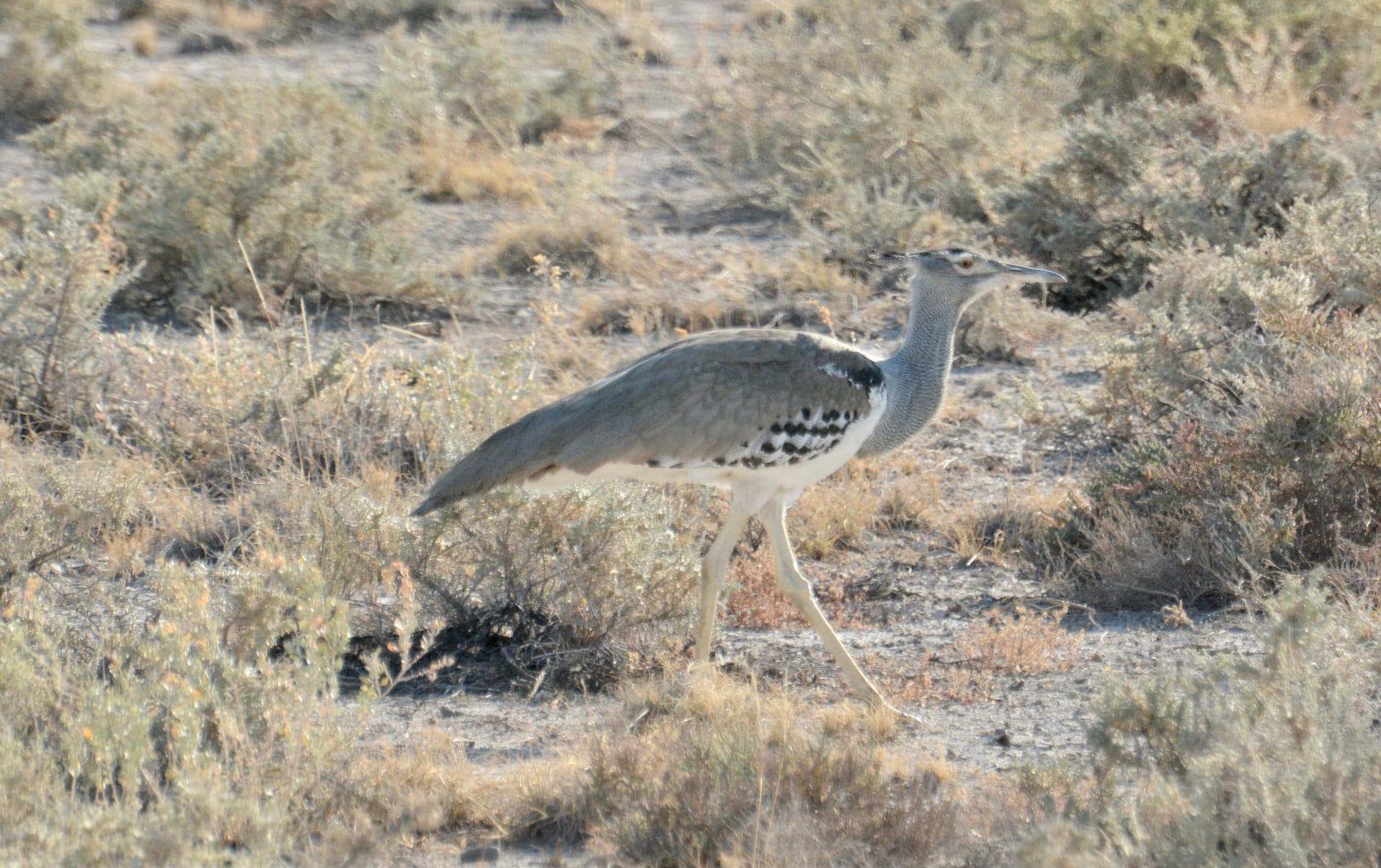
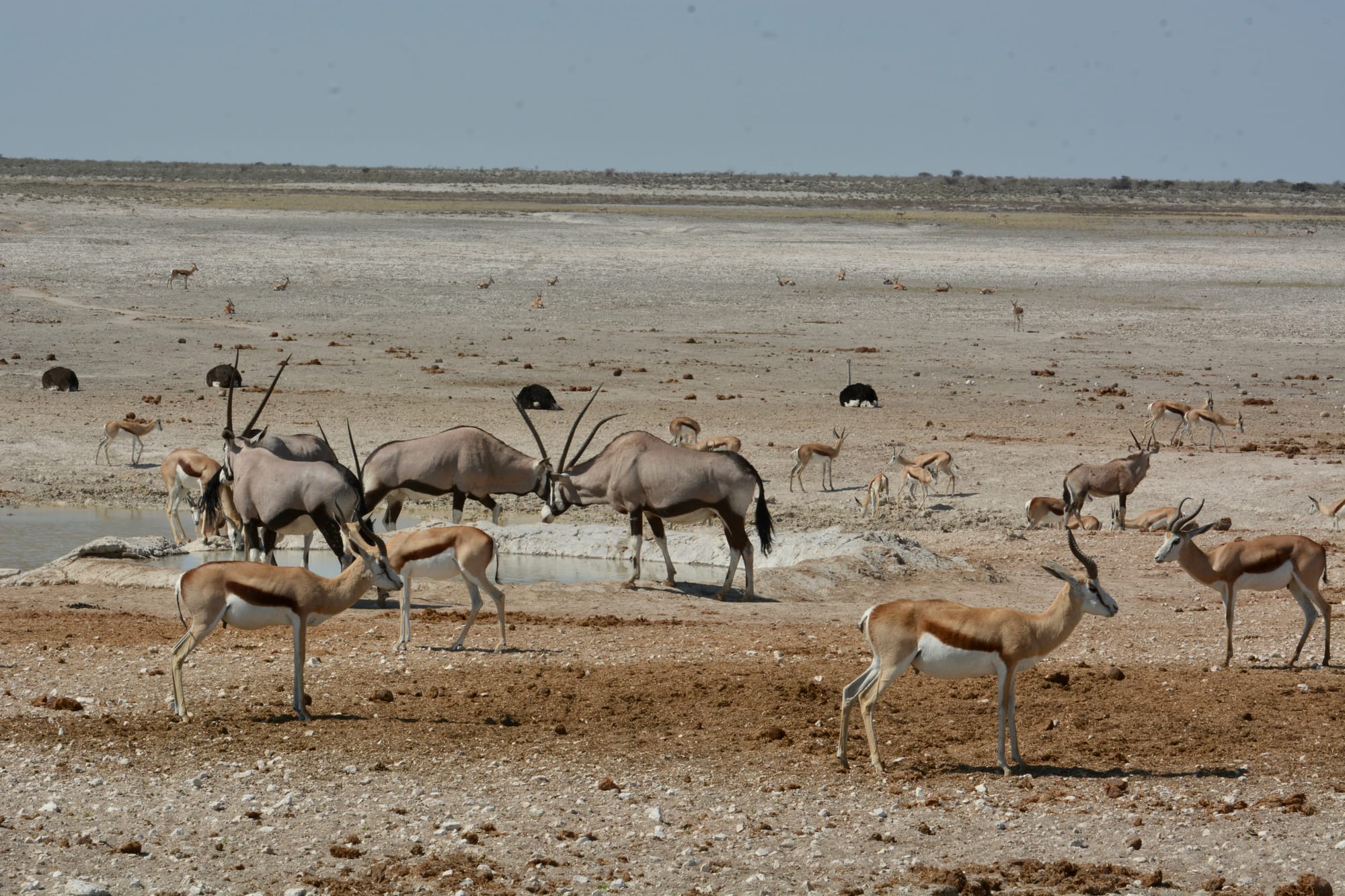
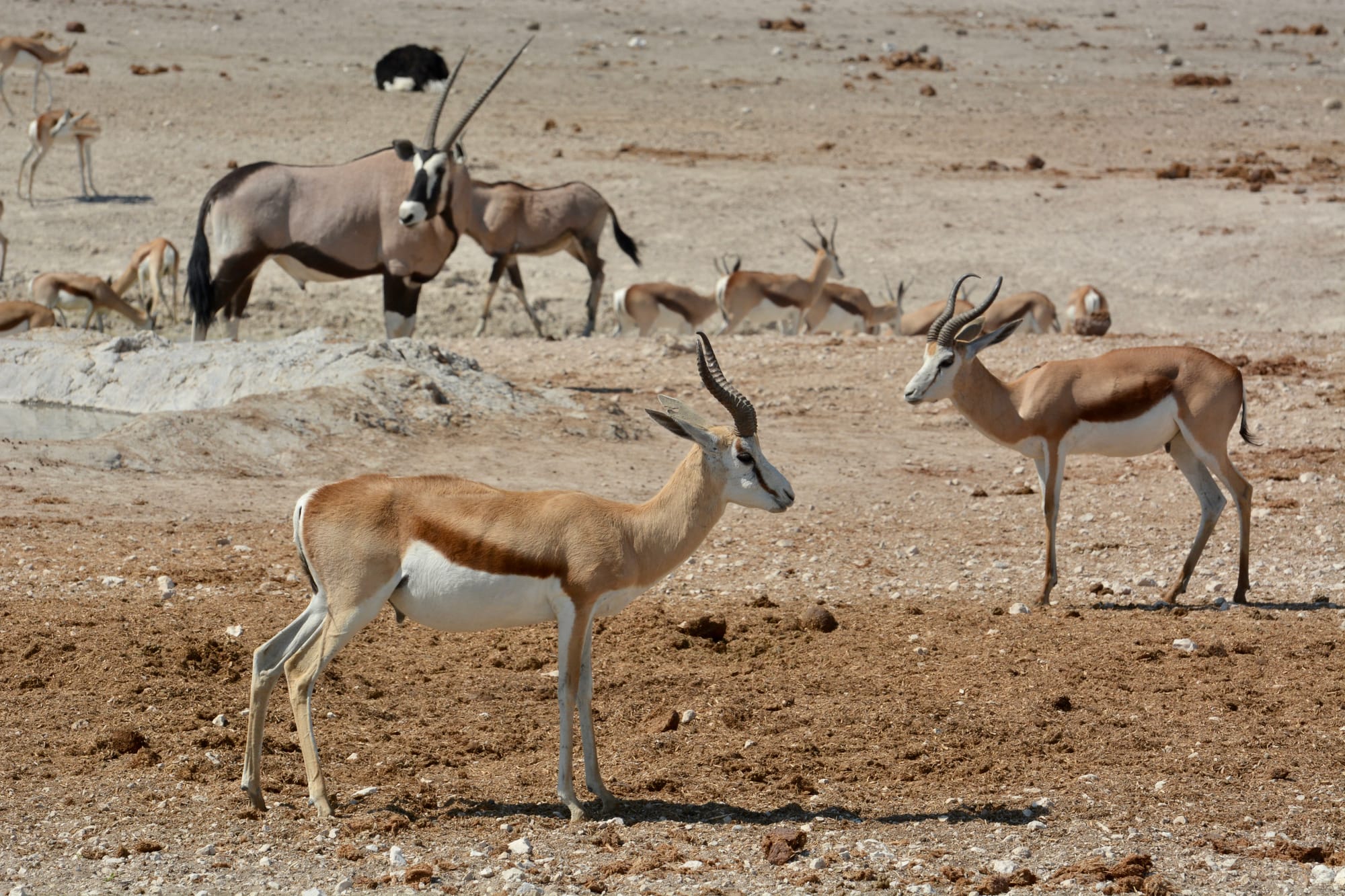
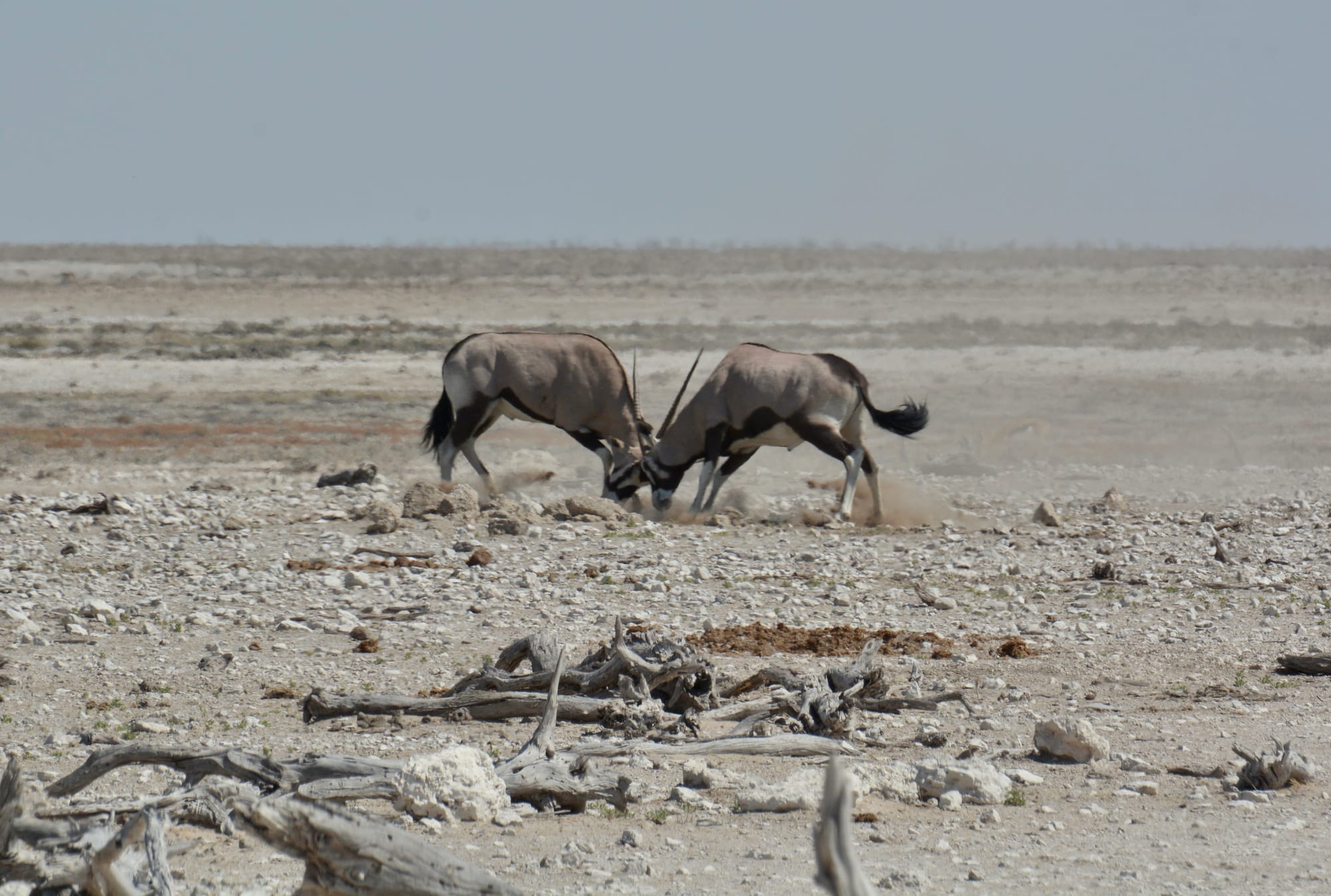
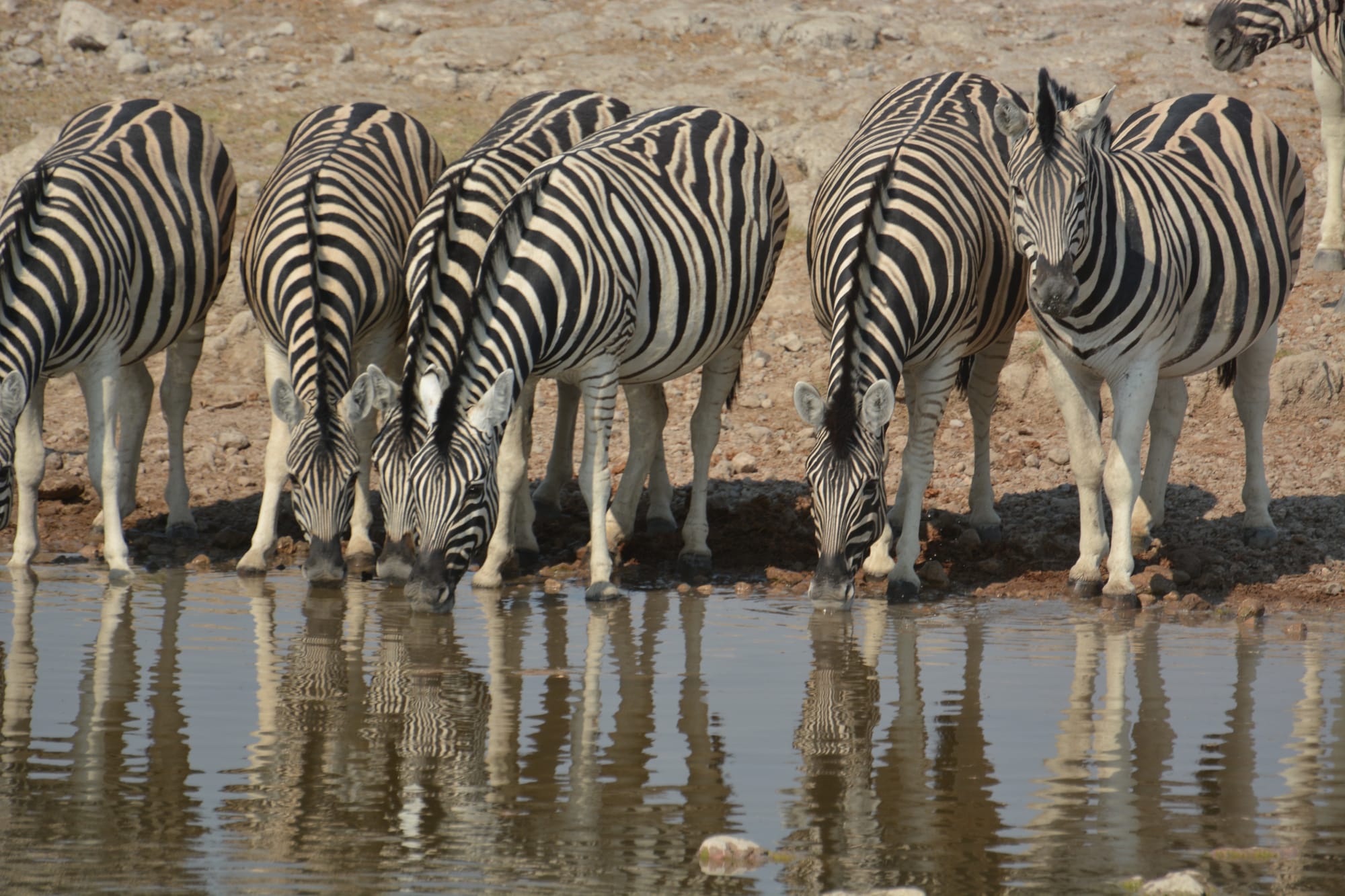
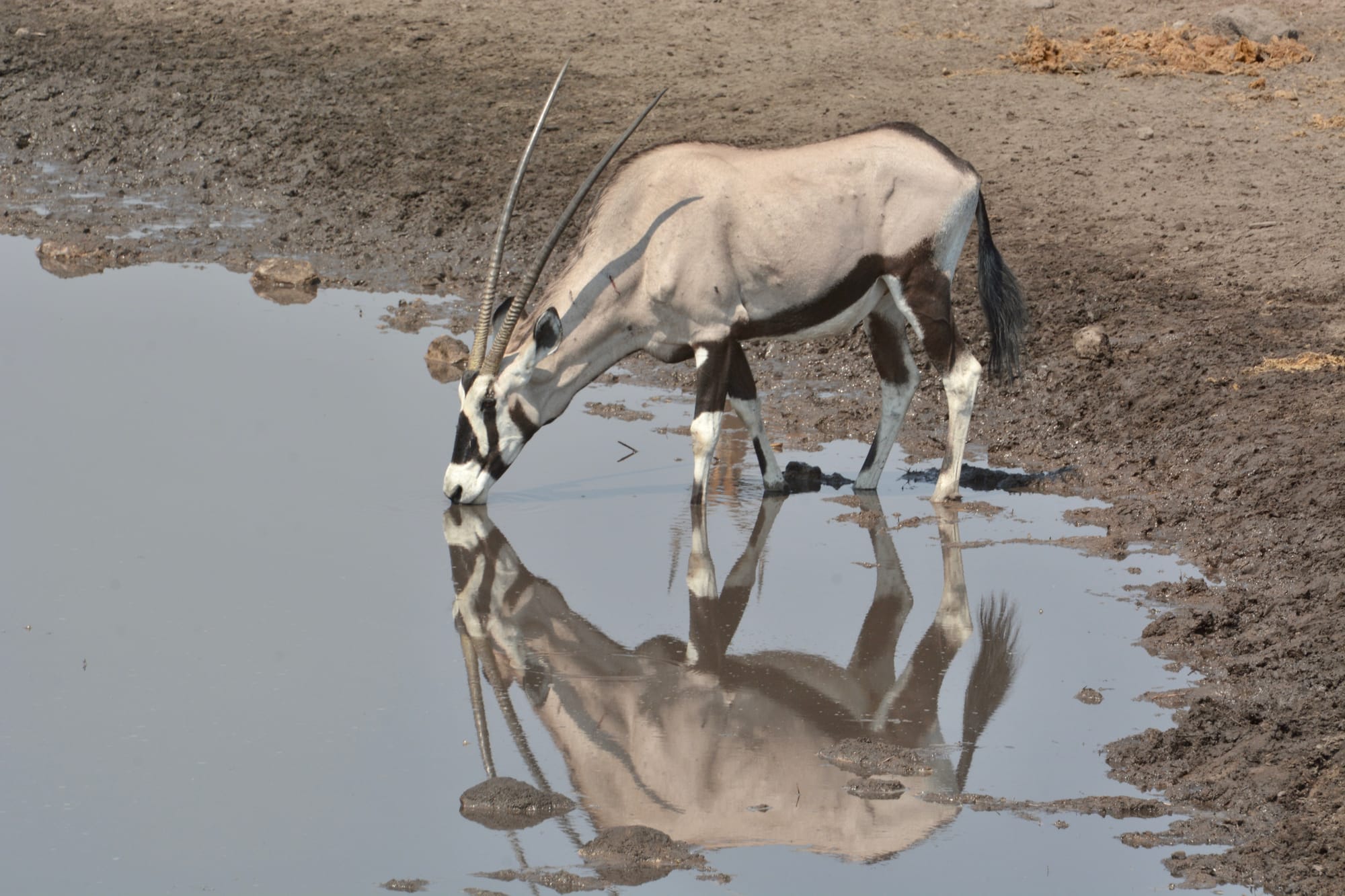
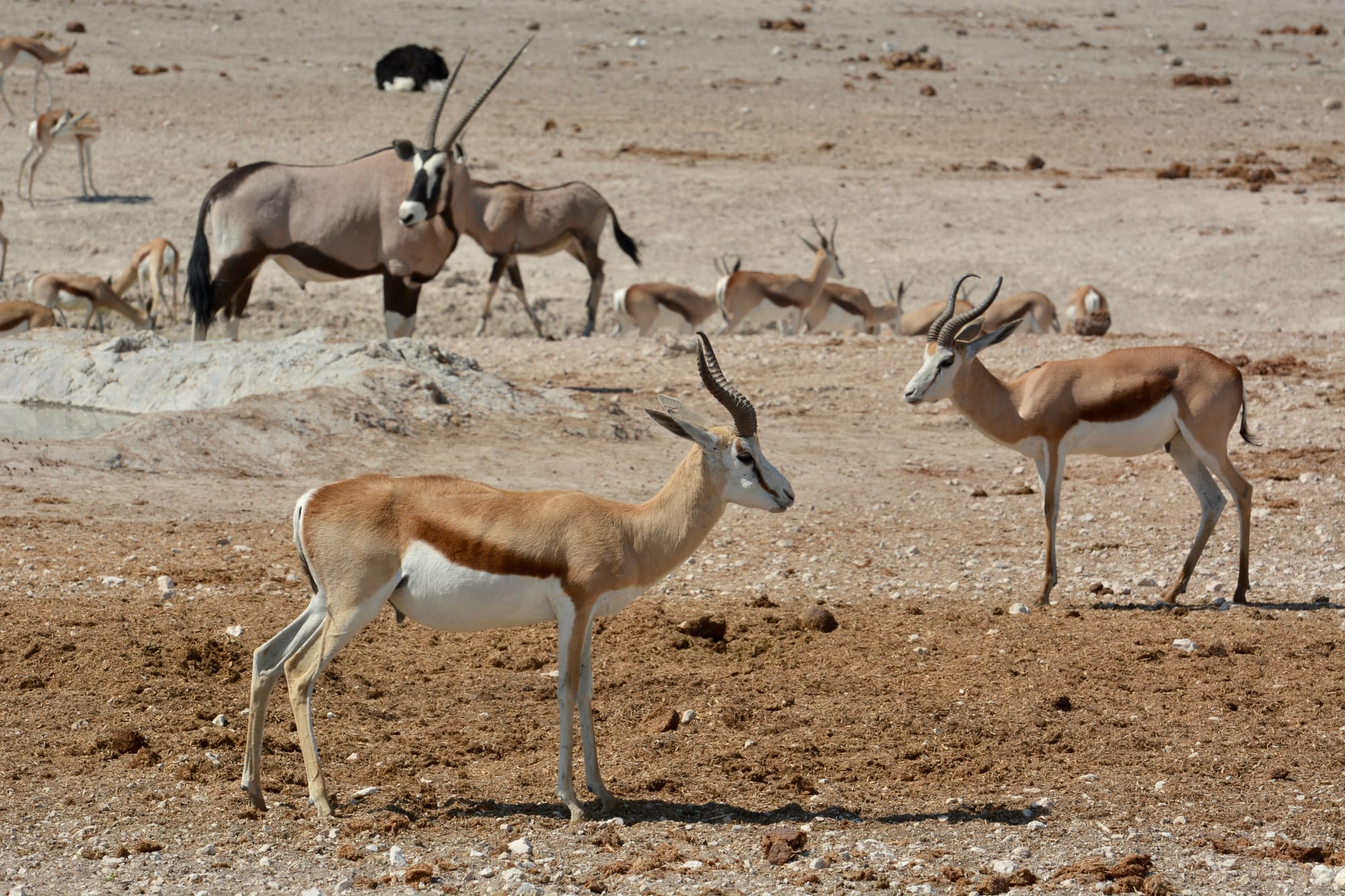
The drive yielded what I was looking for - the classic image of many animal species at a water pan. But the best was the bird life and we were able to add a few more species to our 'lifer' bird list, including the magnificent tawny eagle, an African wattled lapwing and the kori bustard.
The lodge was quite impressive, apart from poor WiFi again, only available in reception at low speed, but we were given a spacious, comfortable, family room. We booked a morning game drive for the next day and indulged in a buffet dinner with game dish selections.
The drive yielded what I was looking for - the classic image of many animal species at a water pan. But the best was the bird life and we were able to add a few more species to our 'lifer' bird list, including the magnificent tawny eagle, an African wattled lapwing and the kori bustard.
Mokuti
Our experience on the roads in the west of Etosha persuaded us not to drive an estimated 5 hours through Etosha to our next destination of Mokuti Lodge on the east of the pan, but to drive back around via Otjiwarongo. It was a good call as it's easy driving on straight, comfortable roads, and takes the same time.
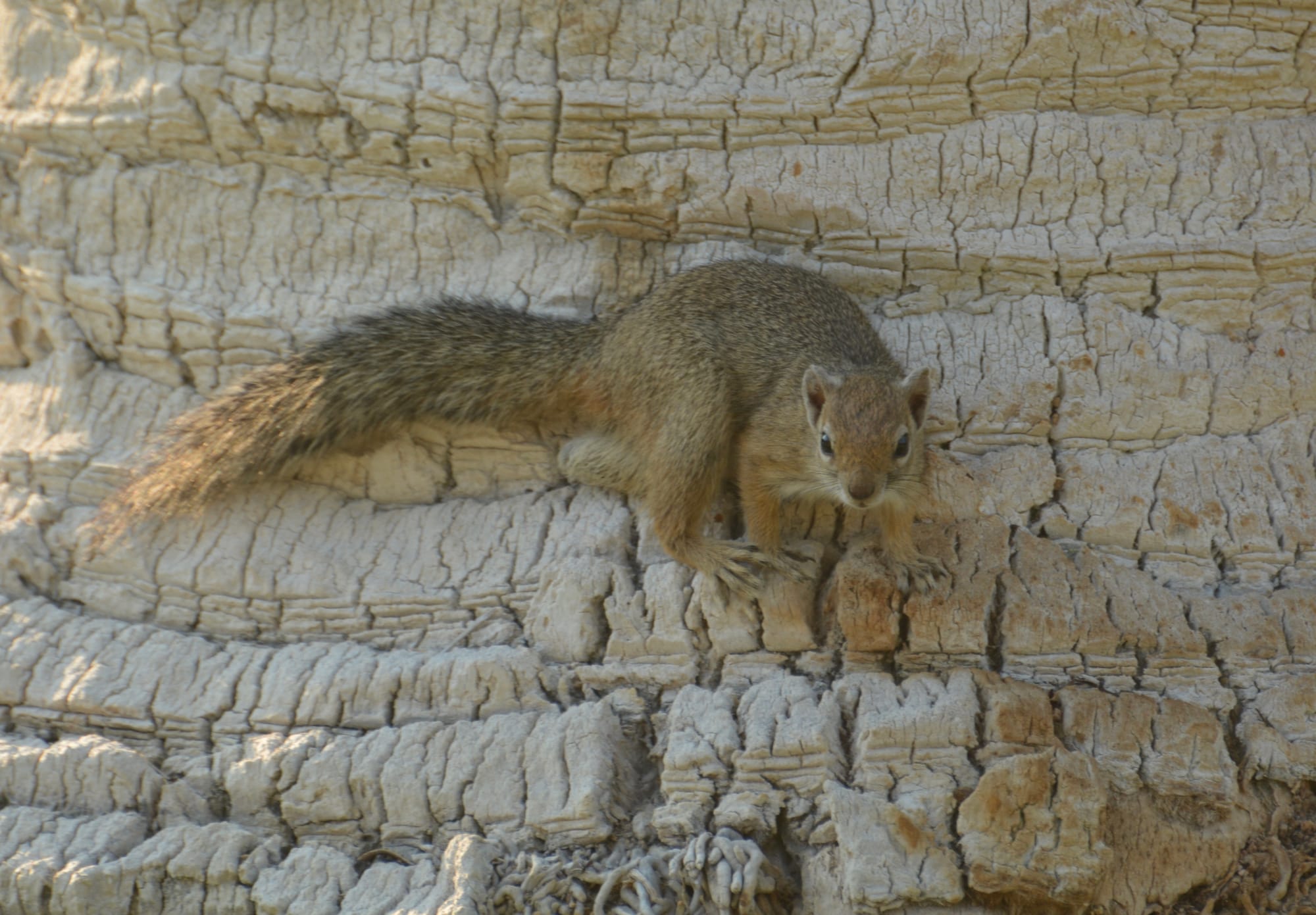
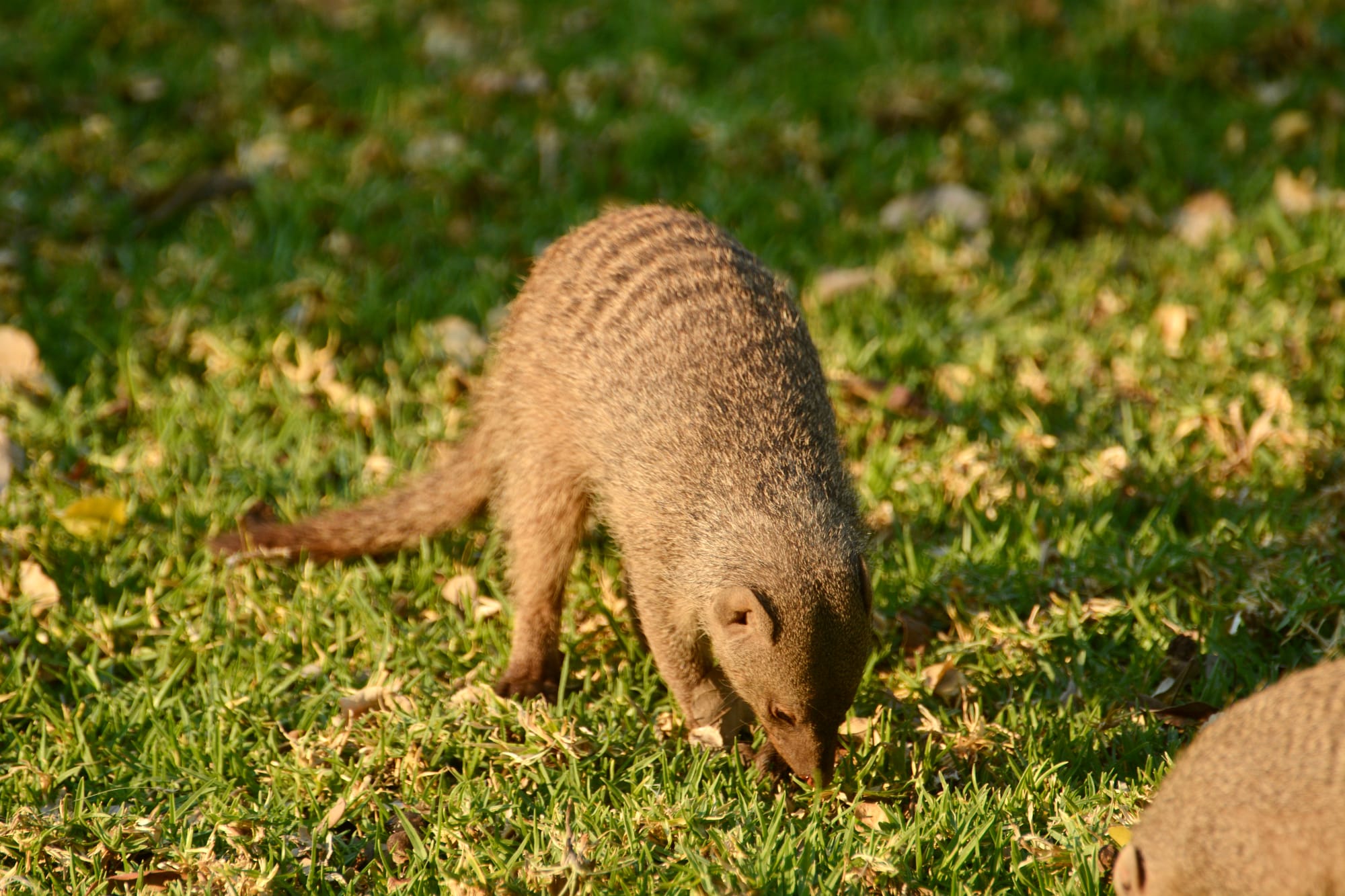
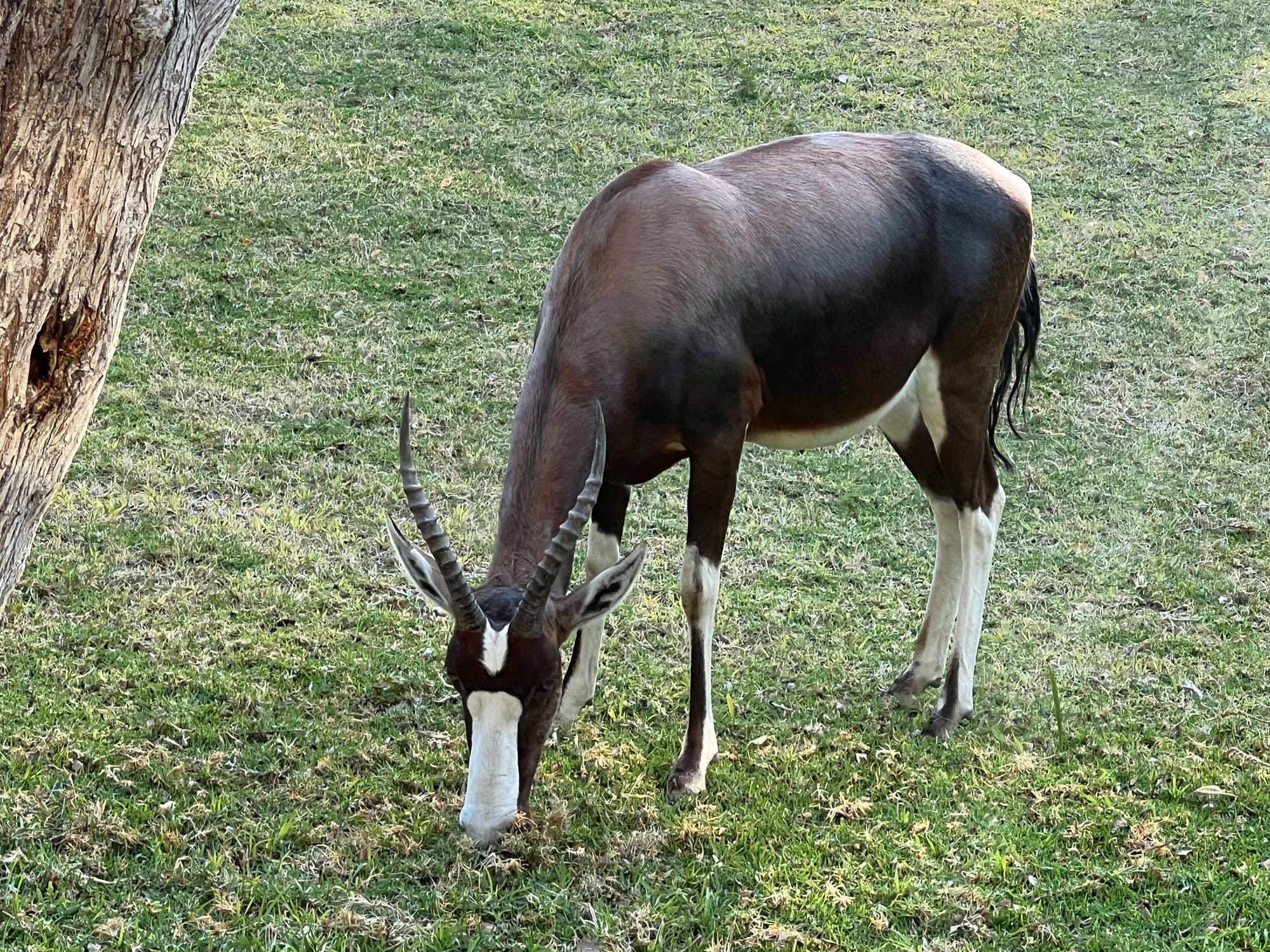
Mokuti Lodge was a next level up. A stunning lodge with beautiful grounds and golf carts to your rooms. We enjoyed the grounds with banded mongoose (mongeese?), squirrels and bontebok mowing the lawn.
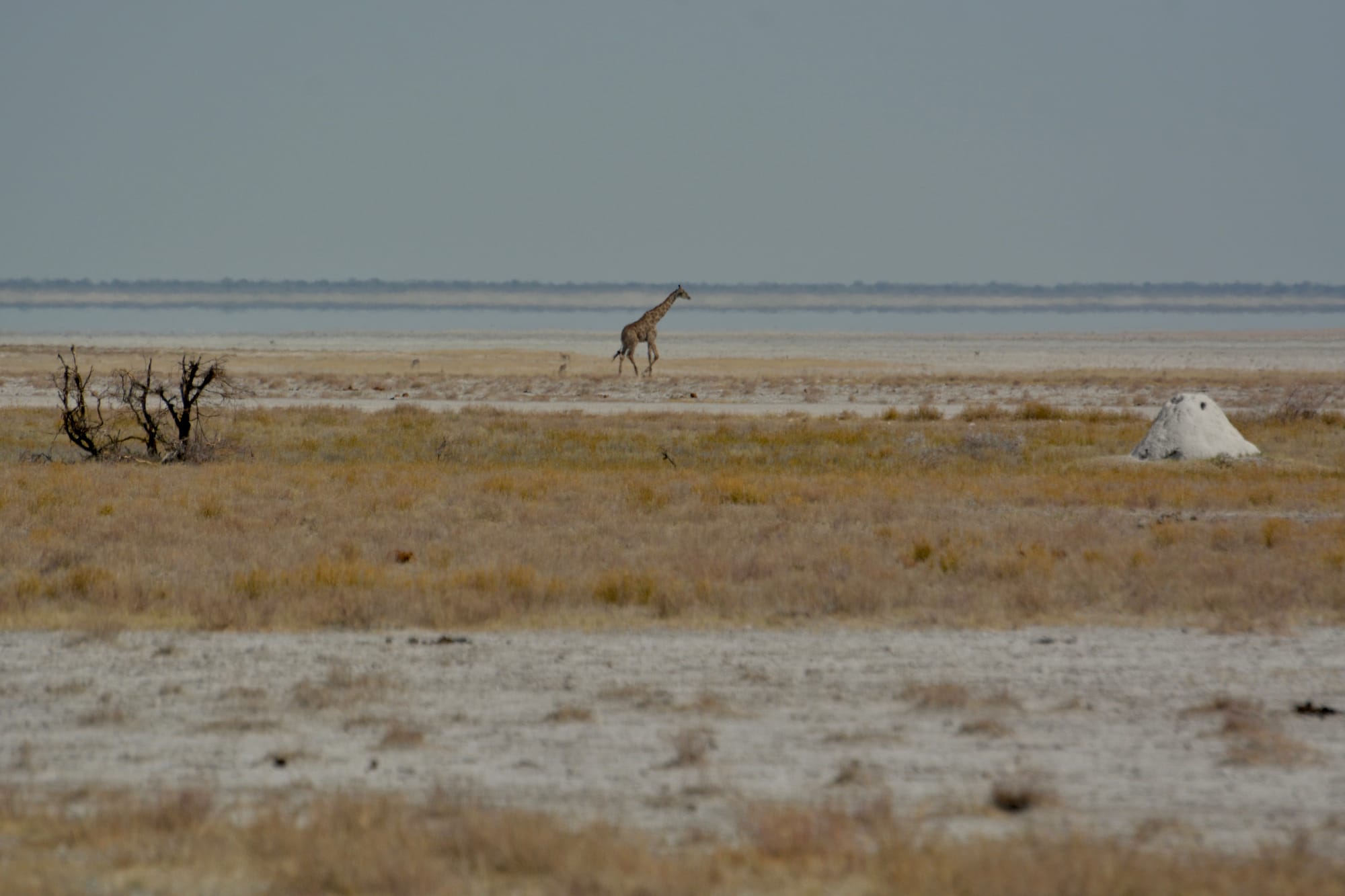
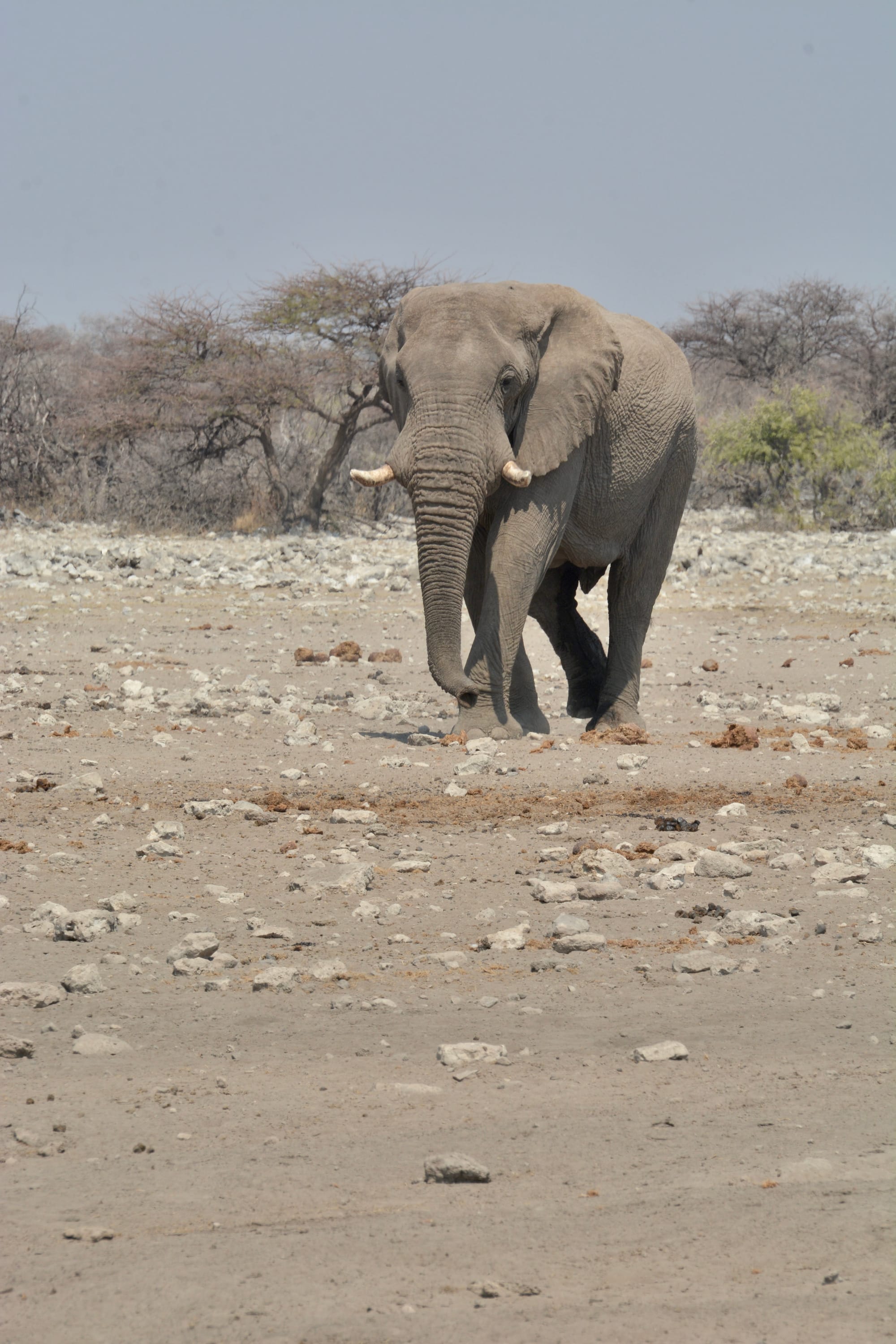
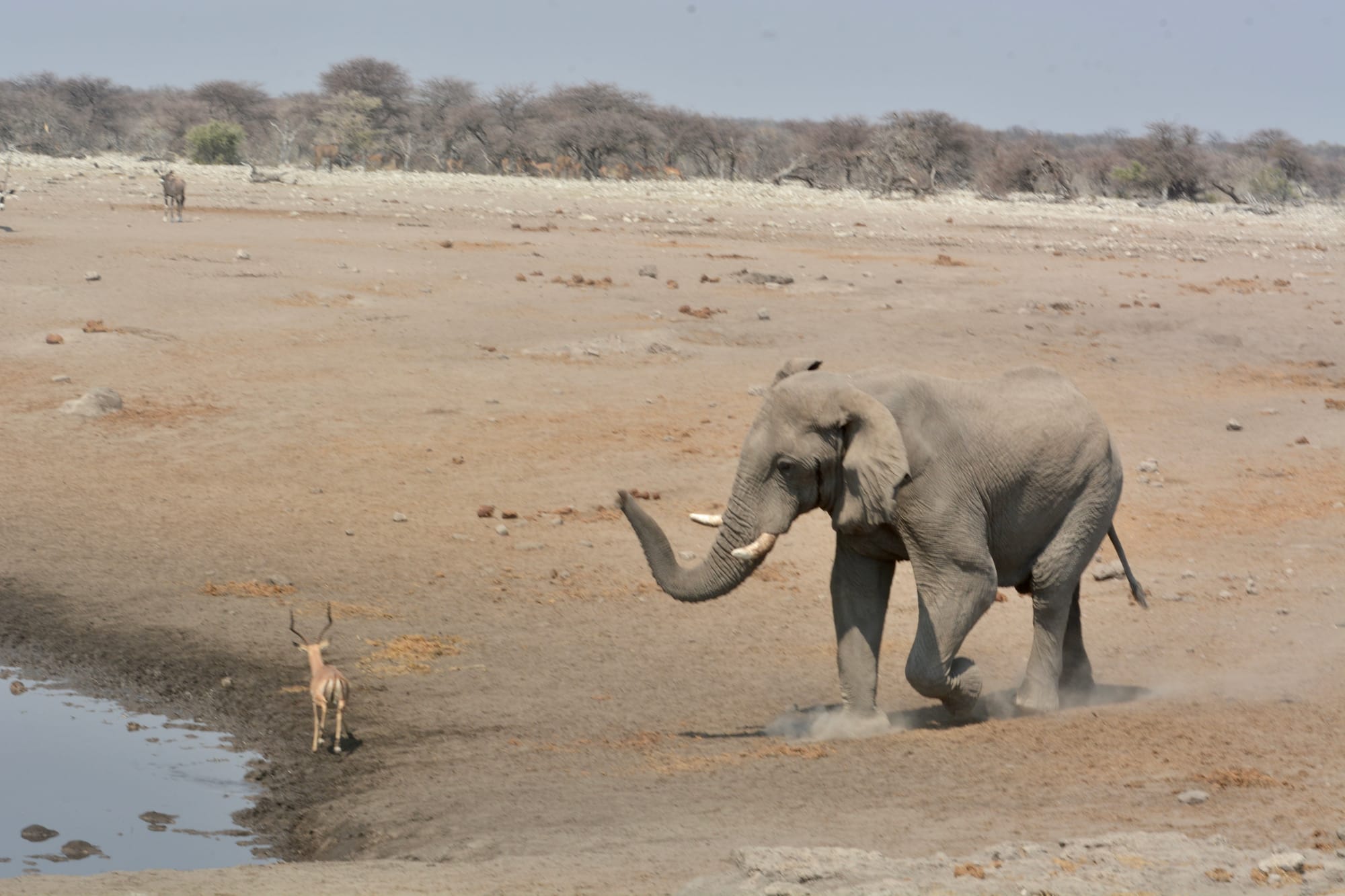
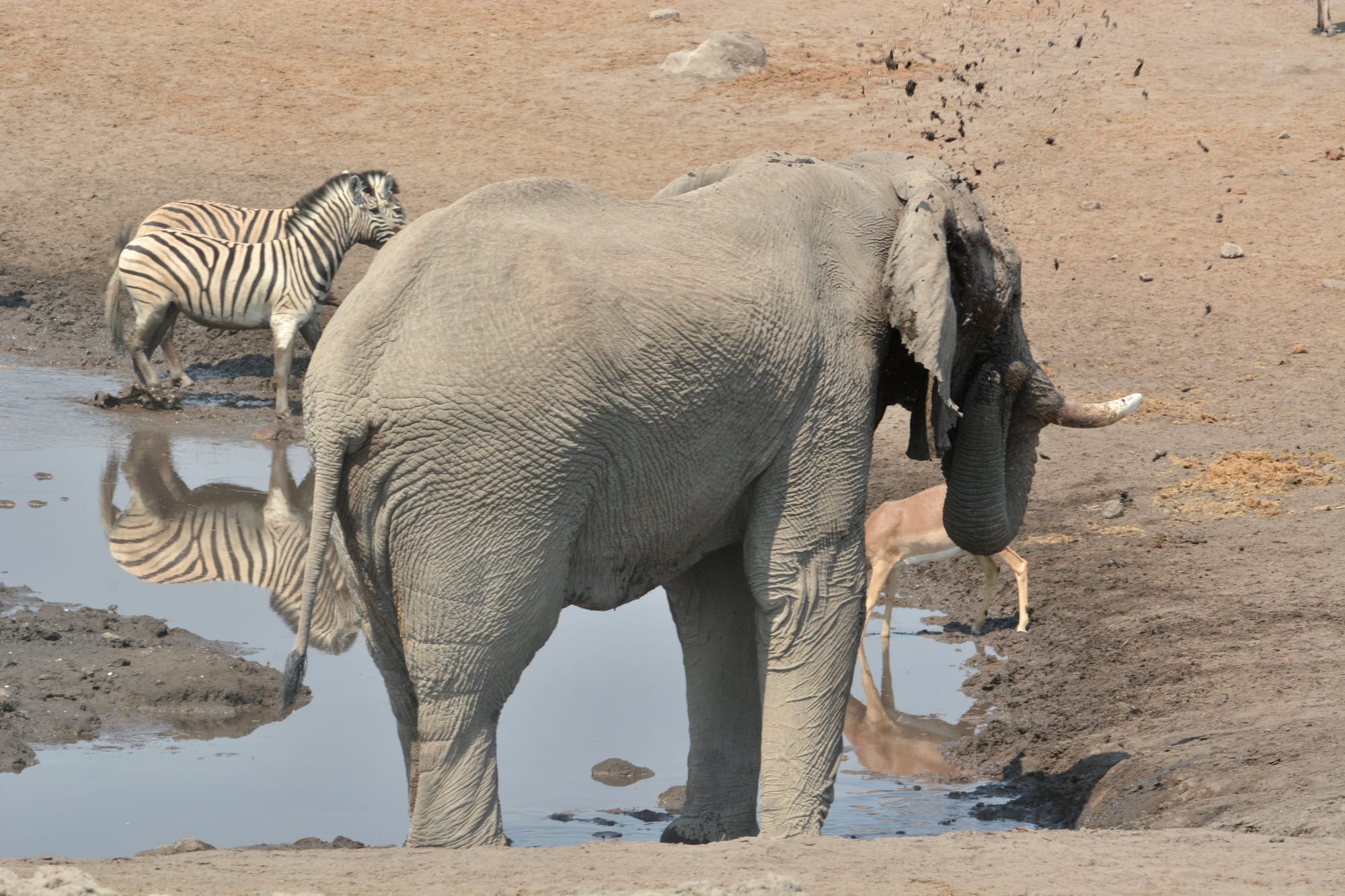
The game drive in the morning was amazing. We learnt that there is a Namibian species of our impala, called a black-faced impala which is bigger and darker (see image in gallery below). Our guide Fabio knew his birds and we ticked off a few more 'lifers'. A magnificent bull elephant in musk visiting a waterhole was a treat.
Mokuti Lodge was a next level up. A stunning lodge with beautiful grounds and golf carts to your rooms. We enjoyed the grounds with banded mongoose (mongeese?), squirrels and bontebok mowing the lawn.
The game drive in the morning was amazing. We learnt that there is a Namibian species of our impala, called a black-faced impala which is bigger and darker (see image in gallery below). Our guide Fabio knew his birds and we ticked off a few more 'lifers'. A magnificent bull elephant in musk visiting a waterhole was a treat.

Foodie section
The food at our two lodges consisted of a buffet for breakfast and dinner. The spreads were very generous with a wide variety of cereals and fruit for breakfast followed by eggs to order from the chef standing by. Dinner was a display of soups, delicious salads, pastas and meat dishes, including oryx mini steaks prepared while you wait, and kudu goulash, plus a selection of deserts. The only problem of course was that the dishes were hard to pass by and we both got home several kilograms heavier
We really wanted to sample the Namibian wines and I selected a Kathlolischer made by an estate outside Otavi founded by Lutheran priests. It is a delicious blend of Syrah, Tempranillo and Mouverdre. A lovely way to end the day.
The food at our two lodges consisted of a buffet for breakfast and dinner. The spreads were very generous with a wide variety of cereals and fruit for breakfast followed by eggs to order from the chef standing by. Dinner was a display of soups, delicious salads, pastas and meat dishes, including oryx mini steaks prepared while you wait, and kudu goulash, plus a selection of deserts. The only problem of course was that the dishes were hard to pass by and we both got home several kilograms heavier
We really wanted to sample the Namibian wines and I selected a Kathlolischer made by an estate outside Otavi founded by Lutheran priests. It is a delicious blend of Syrah, Tempranillo and Mouverdre. A lovely way to end the day.
Windhoek
Days 25 to 28
Progess Guest Farm
Etosha being our last desired destination we journeyed to Windhoek with another stopover in Otjiwarongo. Our final destination in Namibia was a stay at Progress Guest Farm for the night, as it is located a few kilometers from Windhoek Hosea Kutako International Airport, which is about 50 km from Windhoek, and an early start for us.
We drove through Windhoek to take in a couple of the city's attractions and headed out to our accommodation. What a treat this turned out to be. We were staying on an active farm, out on our own in the honeymoon cottage, sitting fully relaxed outside on the veranda watching waterbuck pass on by and identifying new birds.
That evening, after a delicious oryx steak for dinner (Brig couldn't do it after the Etosha visits and had chicken schnitzel), we sat and chatted to the farm manager, Willem, and learnt so much about the way of life for a farmer in that part of the world. He has to constantly deal with the threat of leopards, prolific in his area, attacking his cattle - and he has the scars to show for an encounter with one.
We drove through Windhoek to take in a couple of the city's attractions and headed out to our accommodation. What a treat this turned out to be. We were staying on an active farm, out on our own in the honeymoon cottage, sitting fully relaxed outside on the veranda watching waterbuck pass on by and identifying new birds.
That evening, after a delicious oryx steak for dinner (Brig couldn't do it after the Etosha visits and had chicken schnitzel), we sat and chatted to the farm manager, Willem, and learnt so much about the way of life for a farmer in that part of the world. He has to constantly deal with the threat of leopards, prolific in his area, attacking his cattle - and he has the scars to show for an encounter with one.
DON'T WAIT ANY LONGER
Close
It was with mixed feelings that we returned home from the airport - sad that we had come to the end of an incredible tour, but as always, elated to be back home with the dogs.
Namibia should be on everyone's bucket list. It is a very special place - so wild, diverse and unique. The people are warm and friendly, and there is so much to do.
Tips for travellers
Namibia should be on everyone's bucket list. It is a very special place - so wild, diverse and unique. The people are warm and friendly, and there is so much to do.
Tips for travellers
- Take a soft suspension SUV and avoid the 'C' roads wherever possible.
- Make sure you have sufficient fuel to get to the next filling station, bearing in mind that distances are long and filling stations infrequent. Keep some cash on you in case the station is off line.
- Do as many of the activities on offer as possible, and there are plenty.
- Make some stays at least a couple of days for time out periods.
- Avoid places where tour buses go.
Highlights
Portugal 2025
Lisbon to Sintra - the cultural part
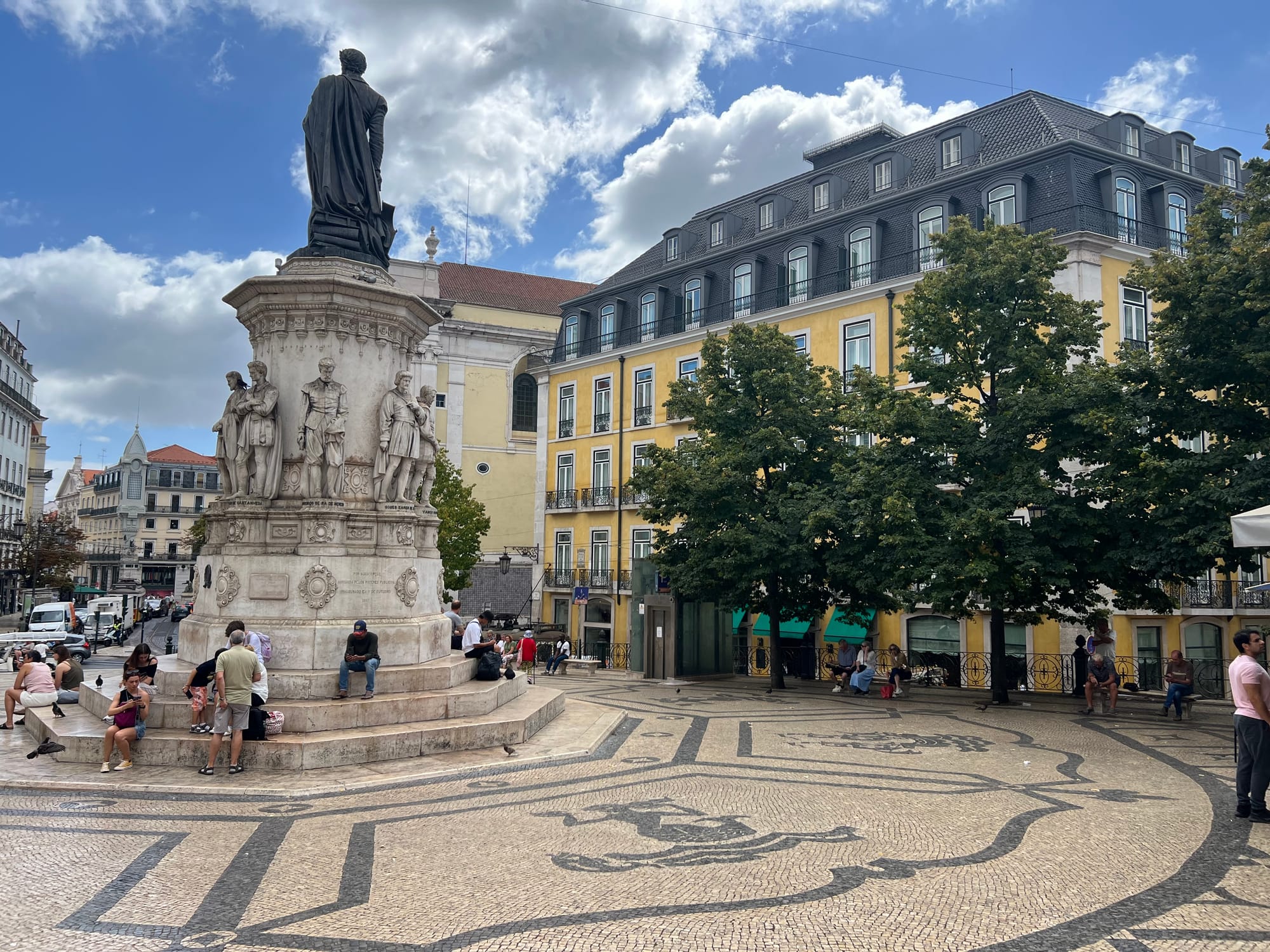
We arrived in Lisbon a bit shattered from a 16 hour flight with little sleep, and settled into our first digs. We had chosen a central spot close to a couple of sites that we wanted to explore. Little did we know that we had chosen one of the older parts of the city, which is a good thing, but also the hilliest part of the city. Wherever we walked it was a case of up and down, up and down. Anyway, we certainly got our exercise.
We had chosen to do the trip in the latter part of summer, partly to avoid the hordes of summer tourists, but alas there were plenty. We discovered later that one of the reasons was the arrival of a huge MSC liner.
We had chosen to do the trip in the latter part of summer, partly to avoid the hordes of summer tourists, but alas there were plenty. We discovered later that one of the reasons was the arrival of a huge MSC liner.
Castello de Sao Jorge
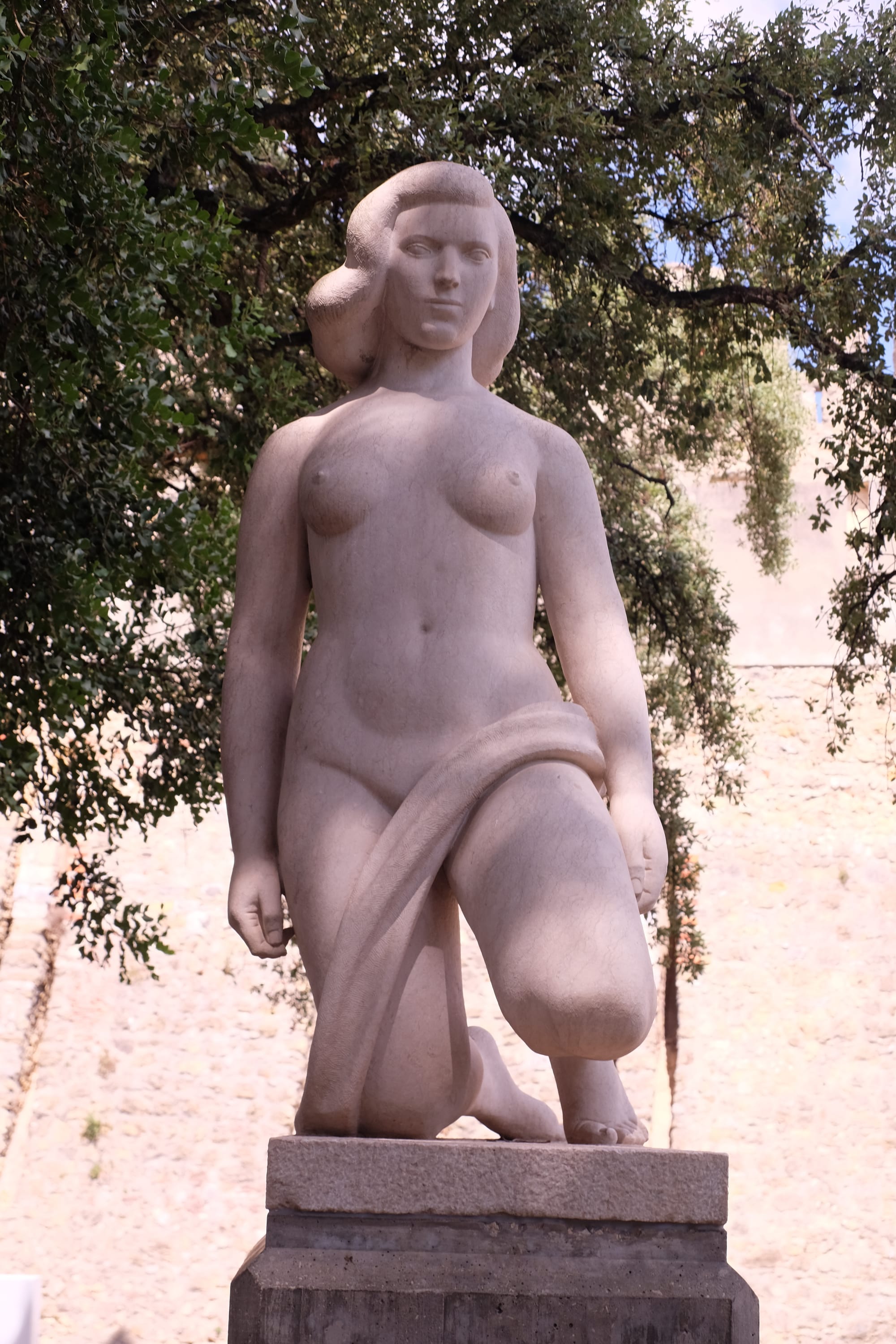
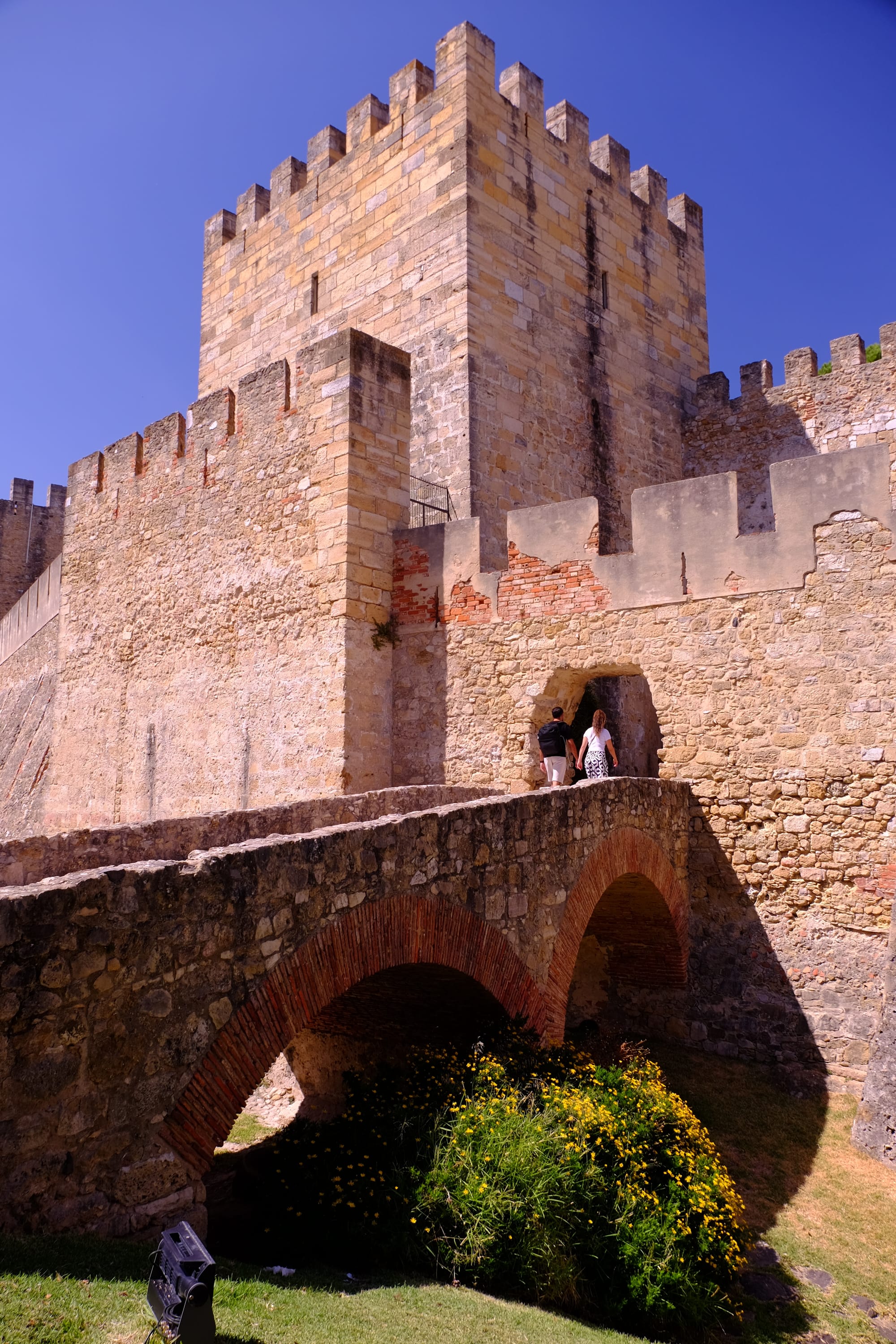
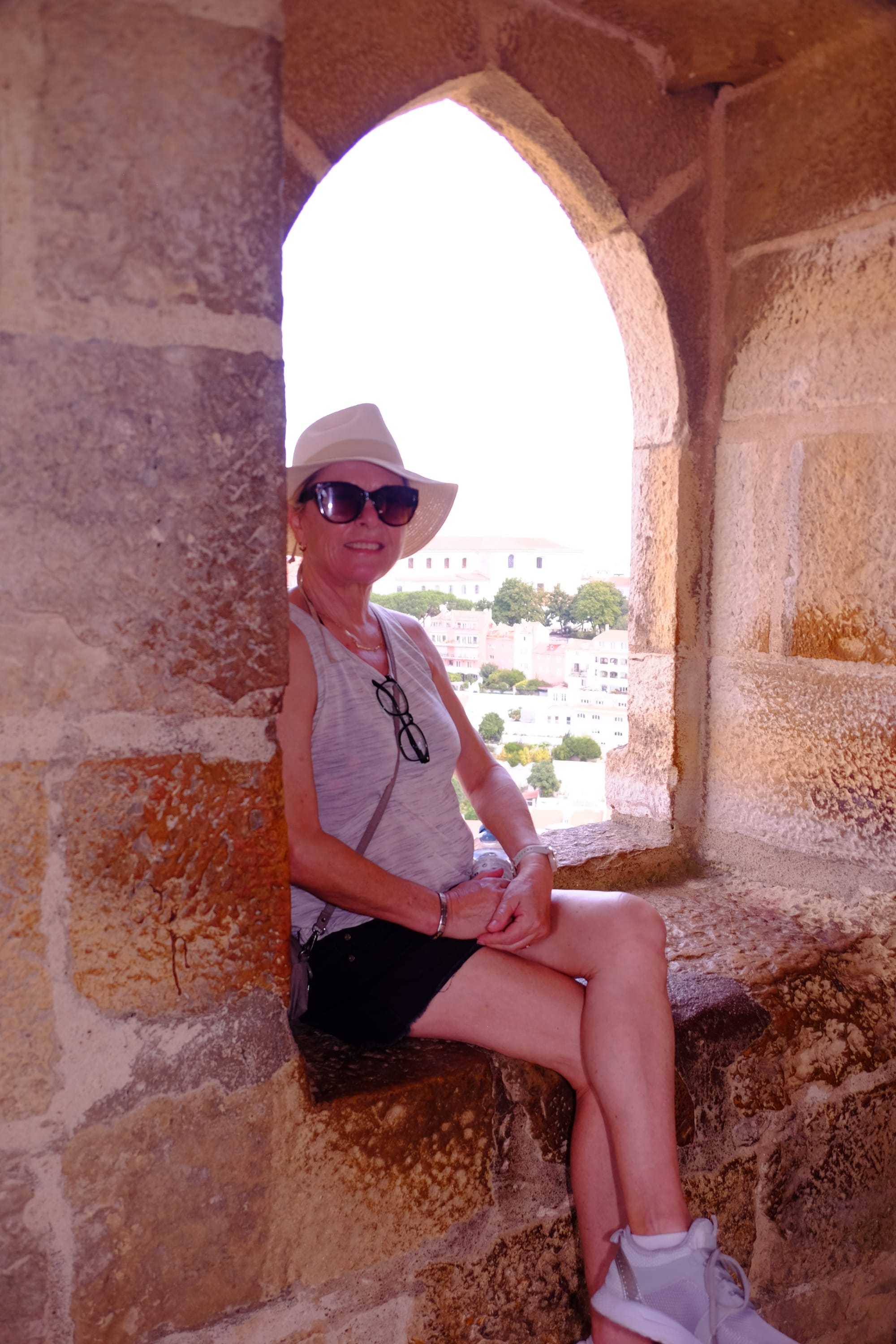
For our first outing in Lisbon we chose to visit the São Jorge Castle, known in English as Saint George's Castle. Human occupation of the castle hill dates to at least the 8th century while the oldest fortifications on the site date from the 2nd century BC. What should have been, a short half-an-hour walk turned into a much longer one due to having to dodge the hords of tourists on the pavements! Once we got there and bought our tickets to go inside it was much quieter.
One could walk around the inside areas quite freely, even up onto the battlements. The views over Lisbon from the castle were incredible. We clambered up and down the stairs to enjoy each lookout point.
One could walk around the inside areas quite freely, even up onto the battlements. The views over Lisbon from the castle were incredible. We clambered up and down the stairs to enjoy each lookout point.
The Time Out Market
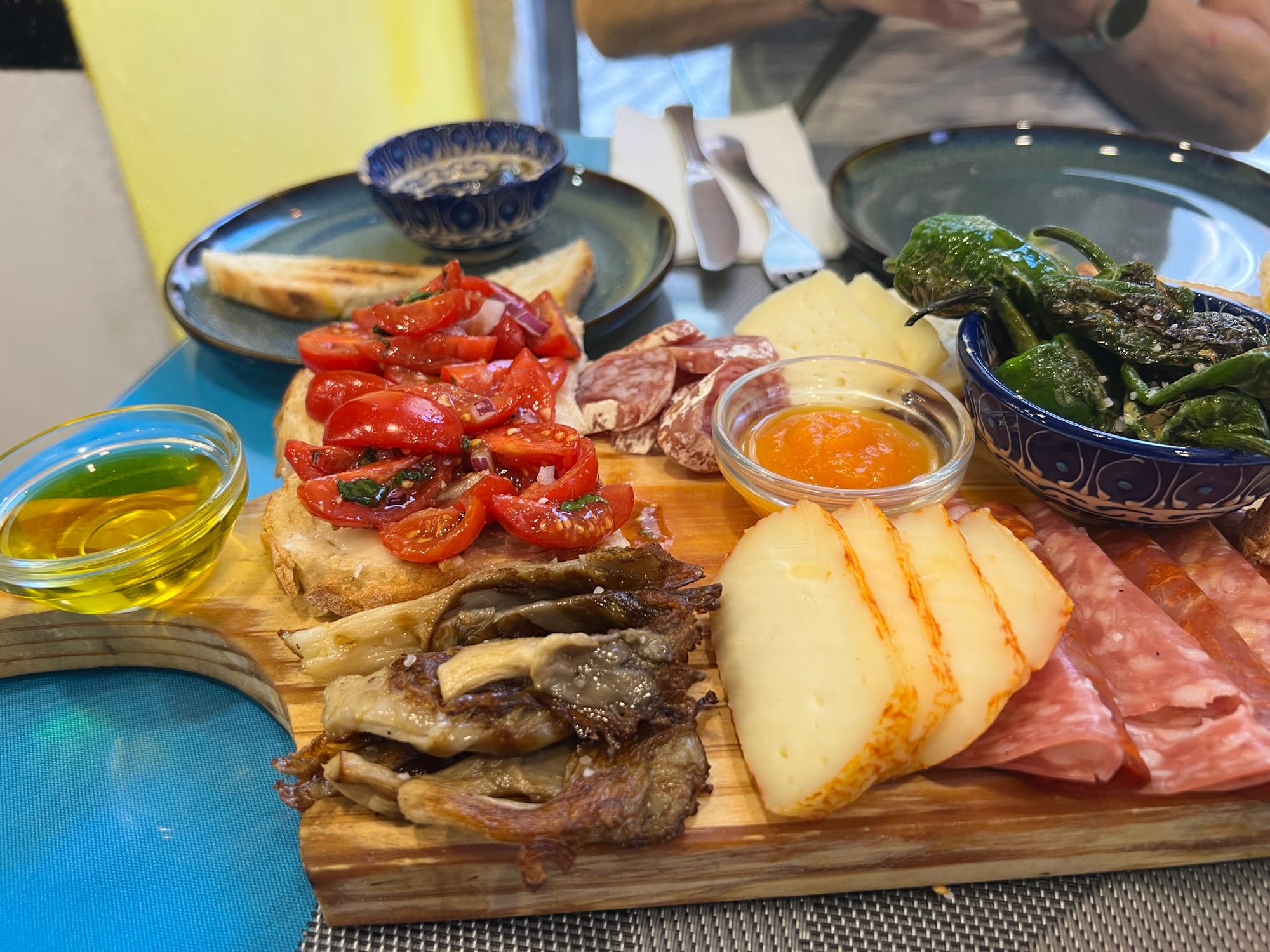
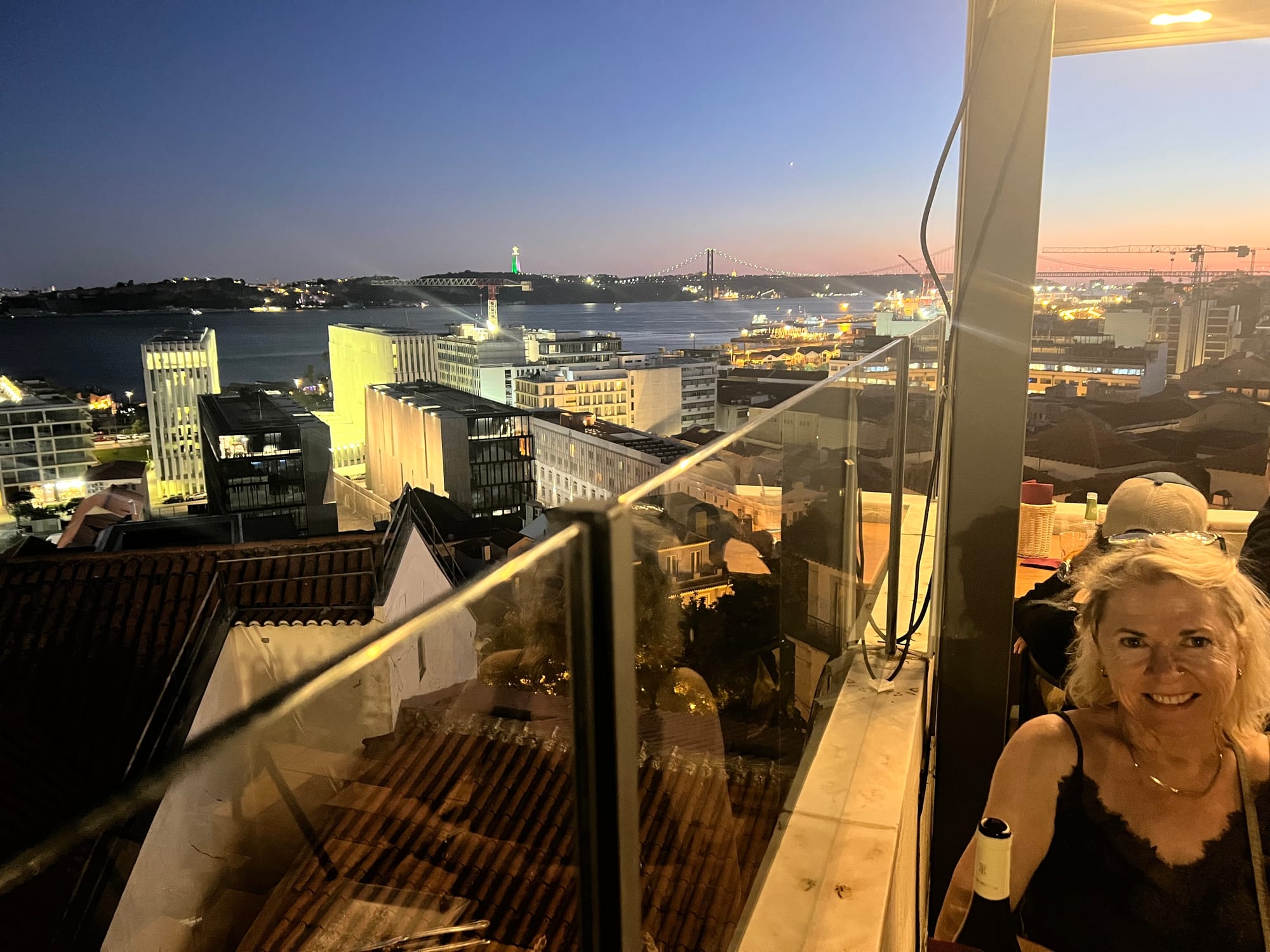
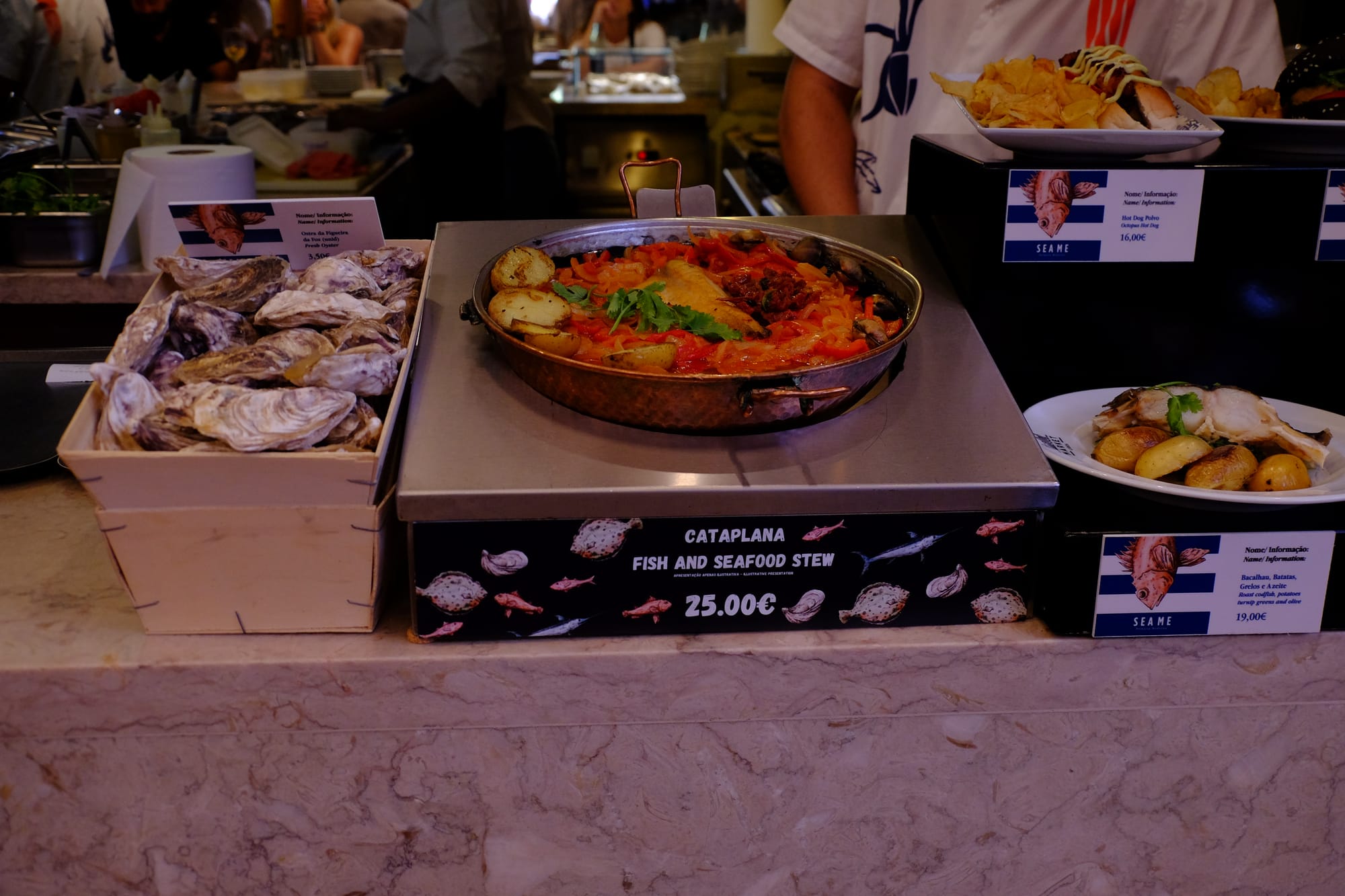
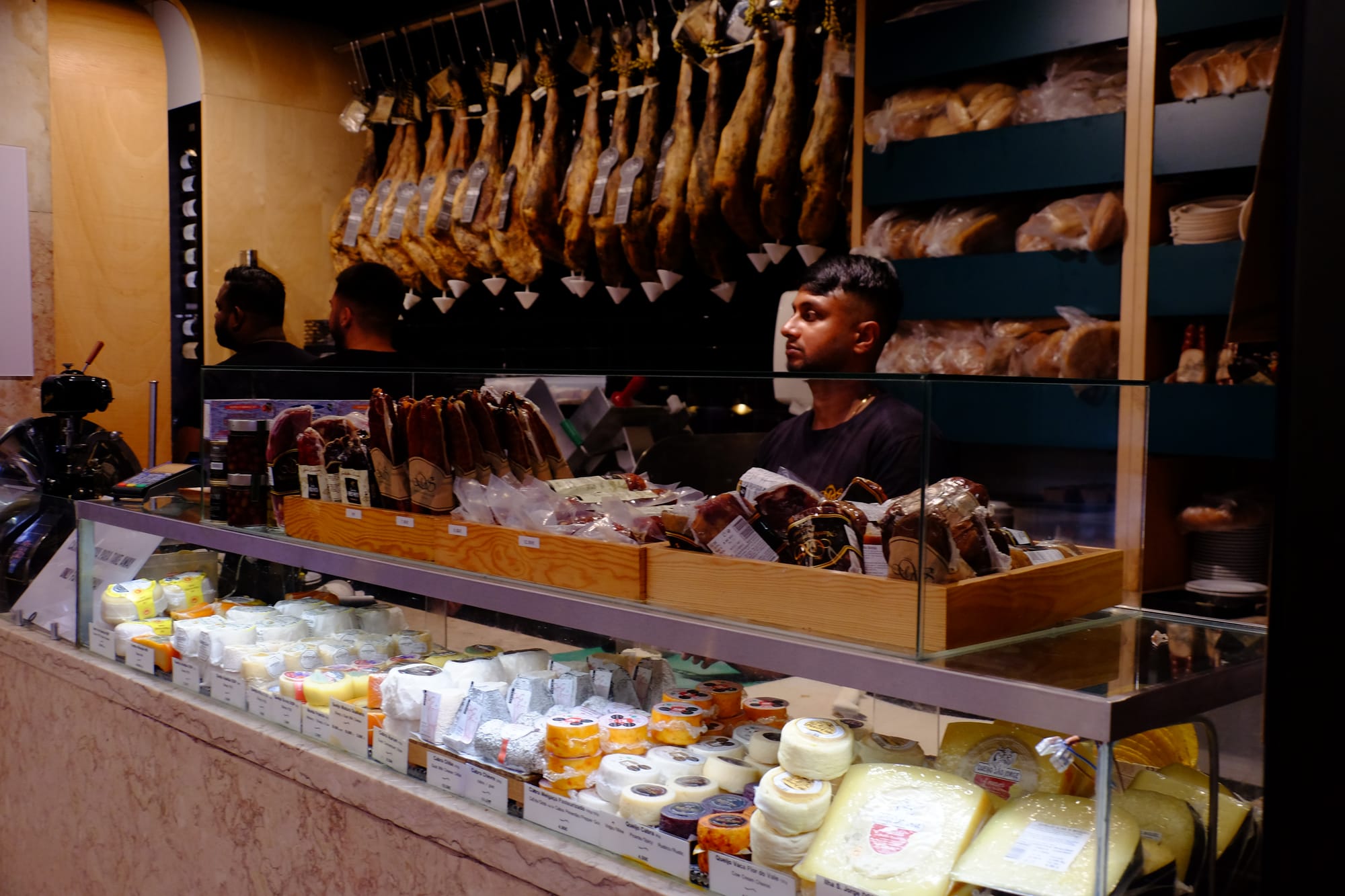
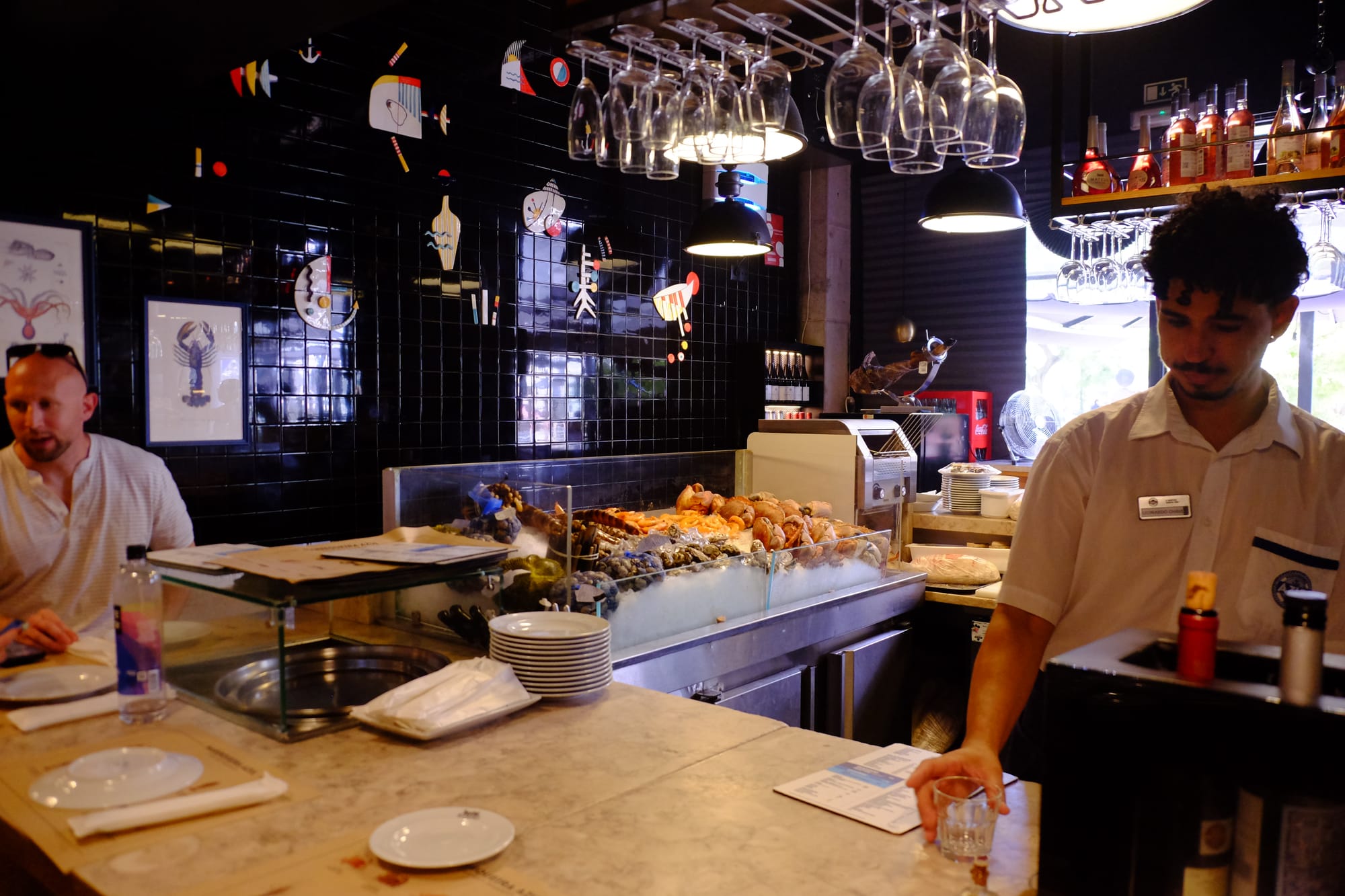
The next day we opted for visiting the Time Out Market, a short walk away. We had been here on our previous visit to Portugal and really enjoyed the spot. It's a huge hall with food stalls all round the outside and long tables in the middle. The same seafood stall was still there, so we chose clams again and we weren't disappointed.
Cascais Jol
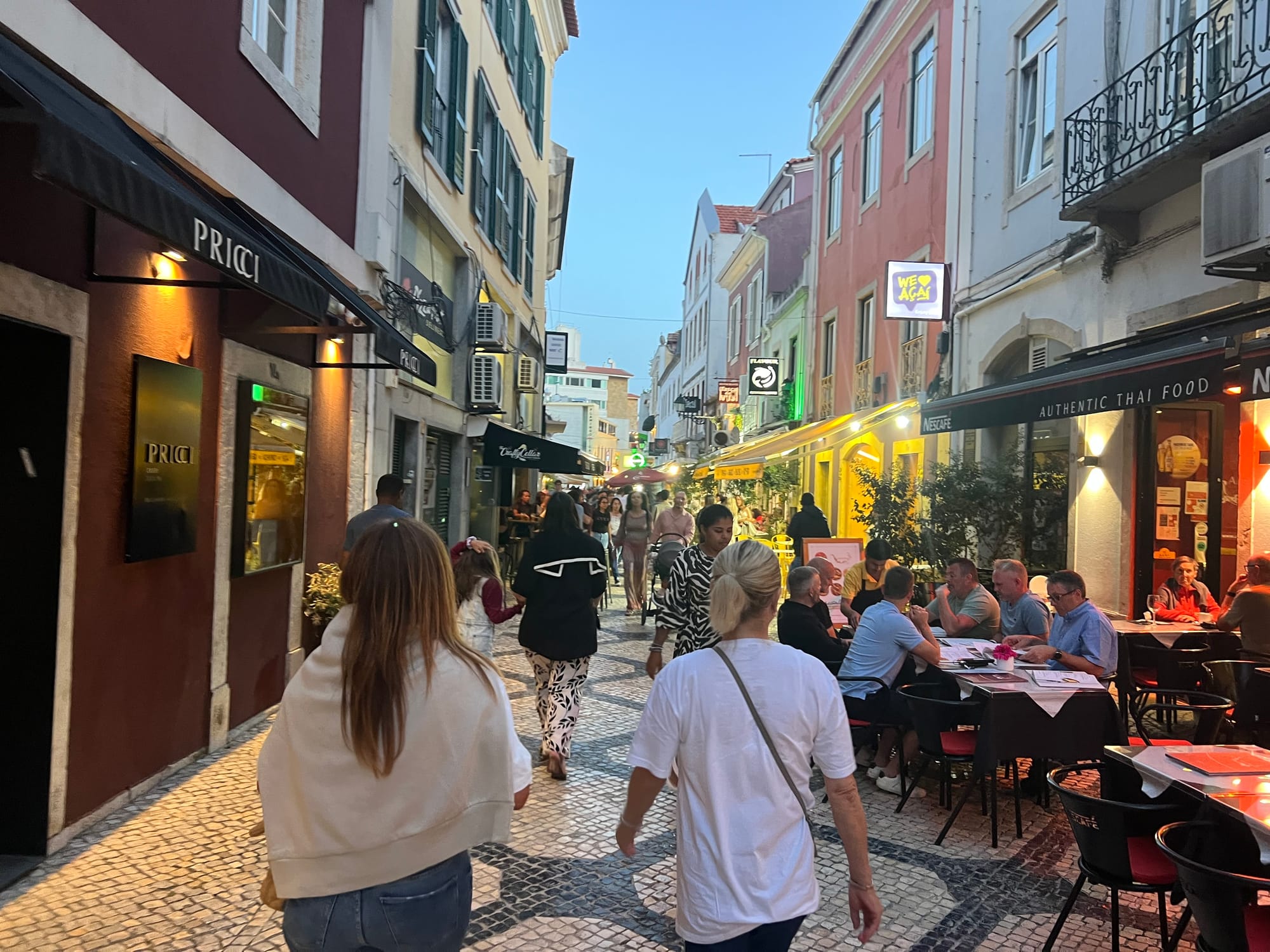
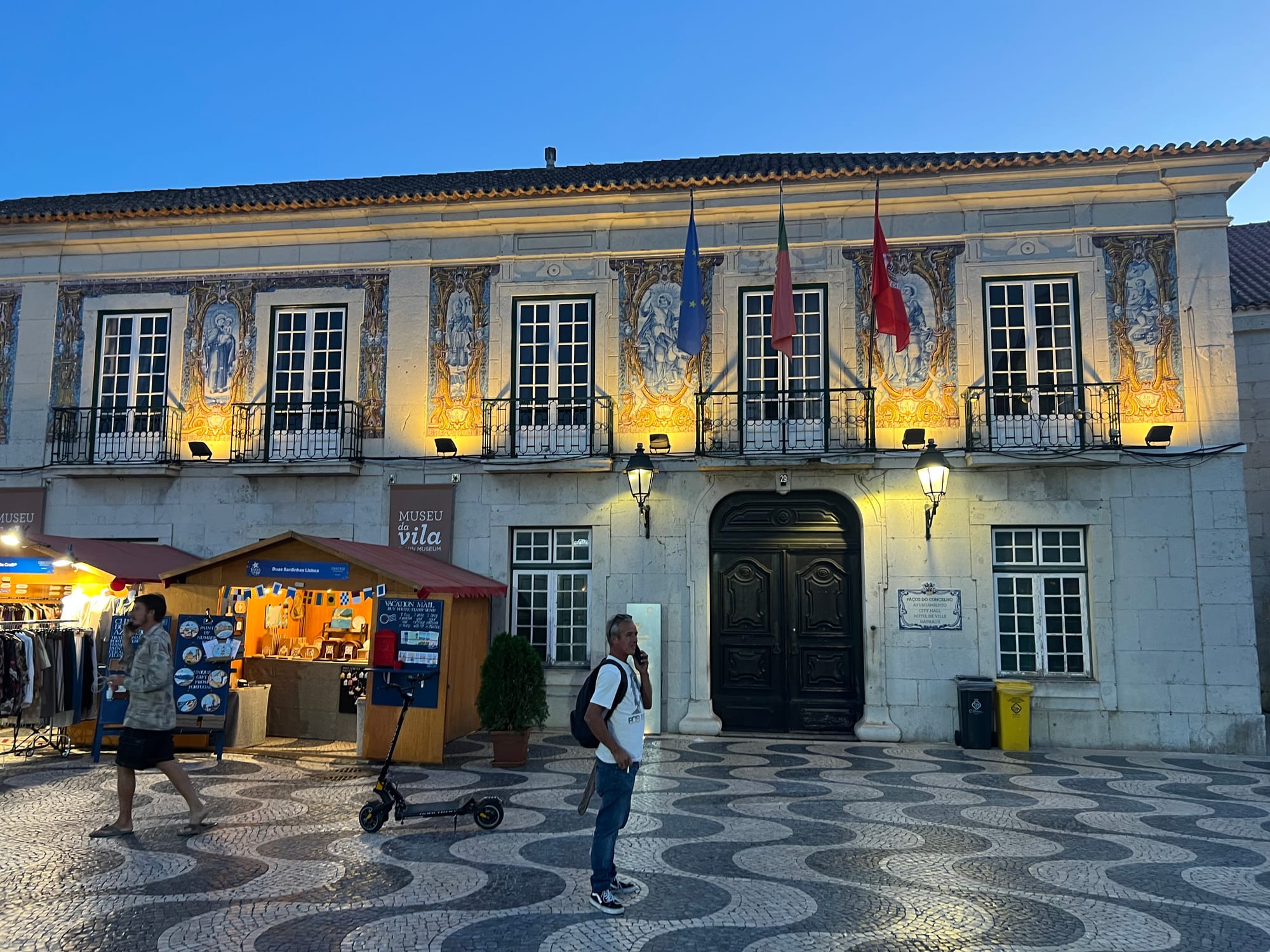
We took a taxi to Cascais and clocked into our digs. What a complete disappointment. There was no reception and no breakfast. Anyhow, it was well located so we took a walk to the market and enjoyed a couple of local beers. The lady running the beer stall told us of a Portuguese live band fair with food and drink trucks down by the ocean that night. What a jol that turned out to be. A massive stage had been built and there were thousands of people milling around and enjoying the shows, some sitting on the beach. Great timing!

Boca do Inferno
One can only guess from the Portuguese name of this spot that something hectic is happening there. Its actually a very rugged piece of coastline up the coast from Cascais where the waves smash into the cliffs. The walk there took us past the small boat harbour, the citadel and some very beautiful Portuguese architectured buildings. The sea was relatively calm so there wasn't a massive spectacle when we got there, but it was still a wonderful sight.
Palacio Nacional da Pena
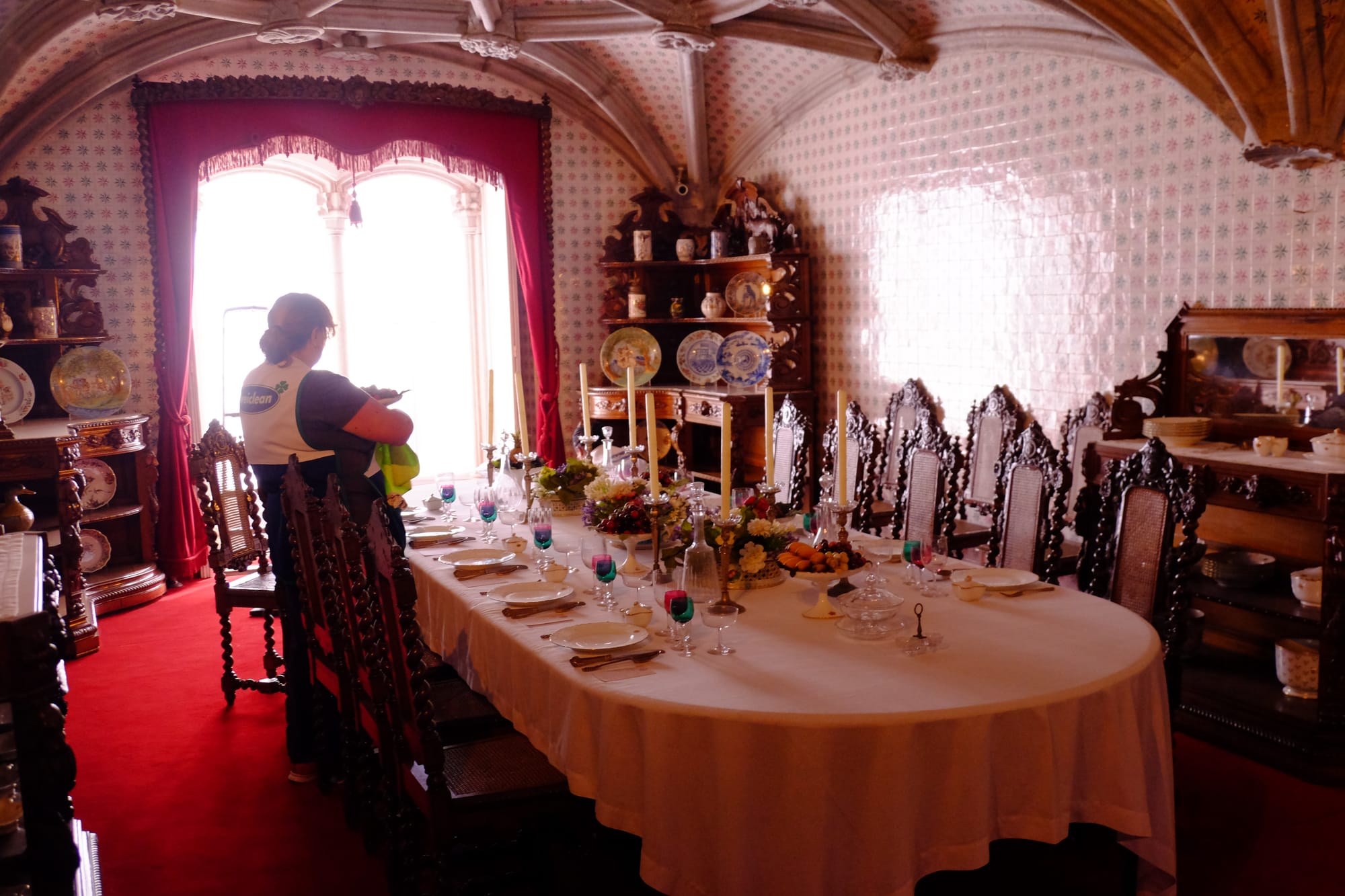
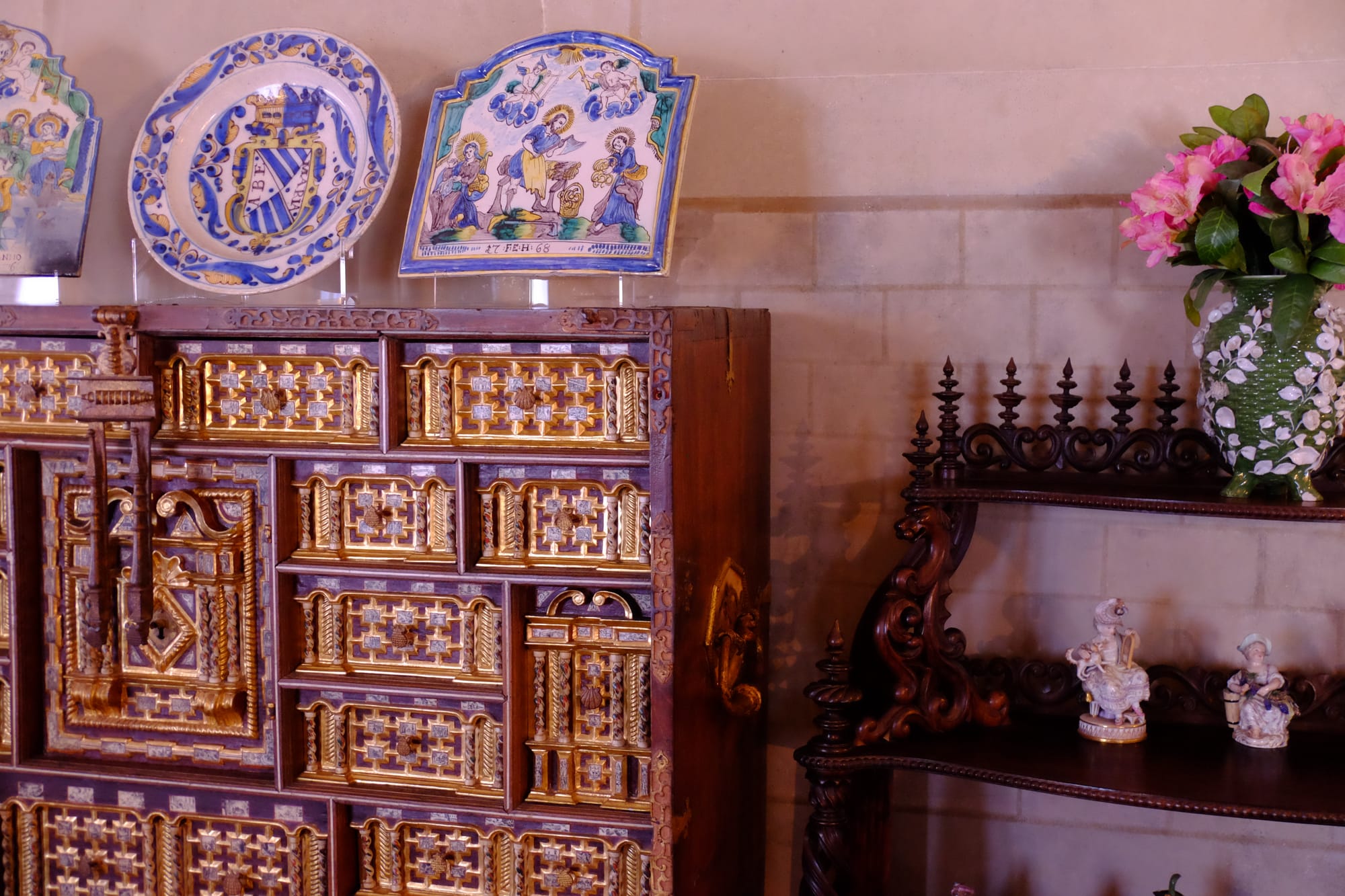
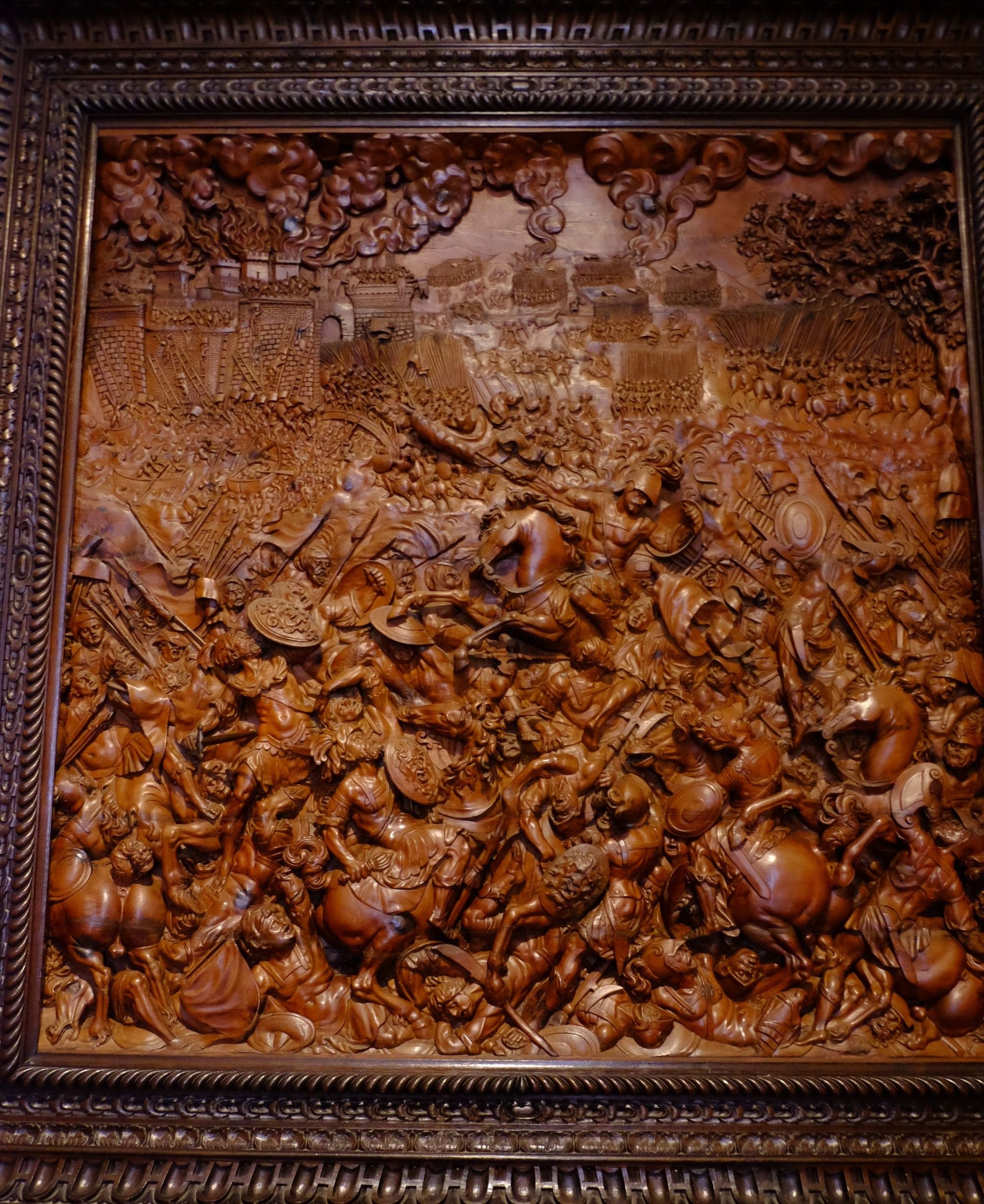
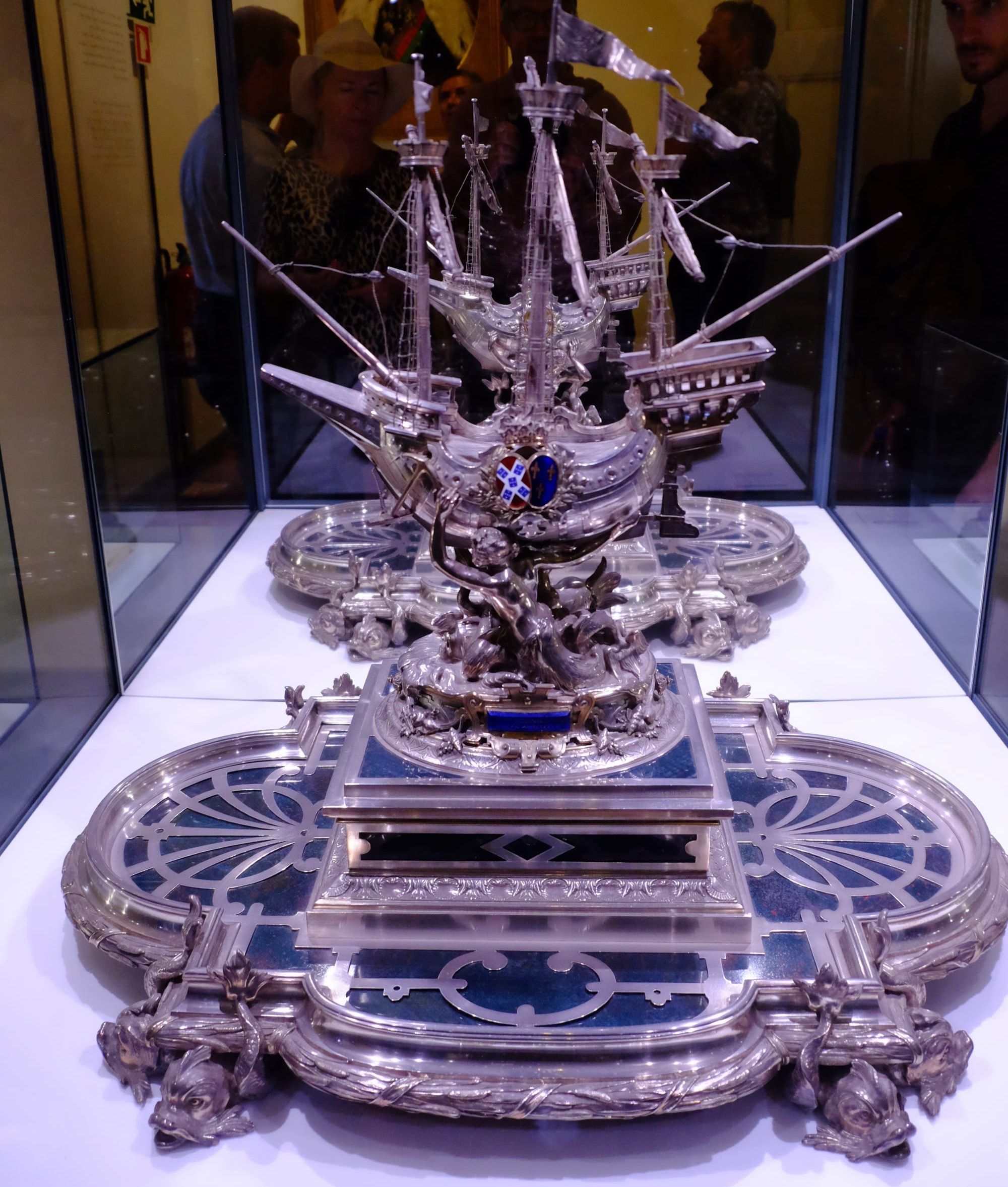
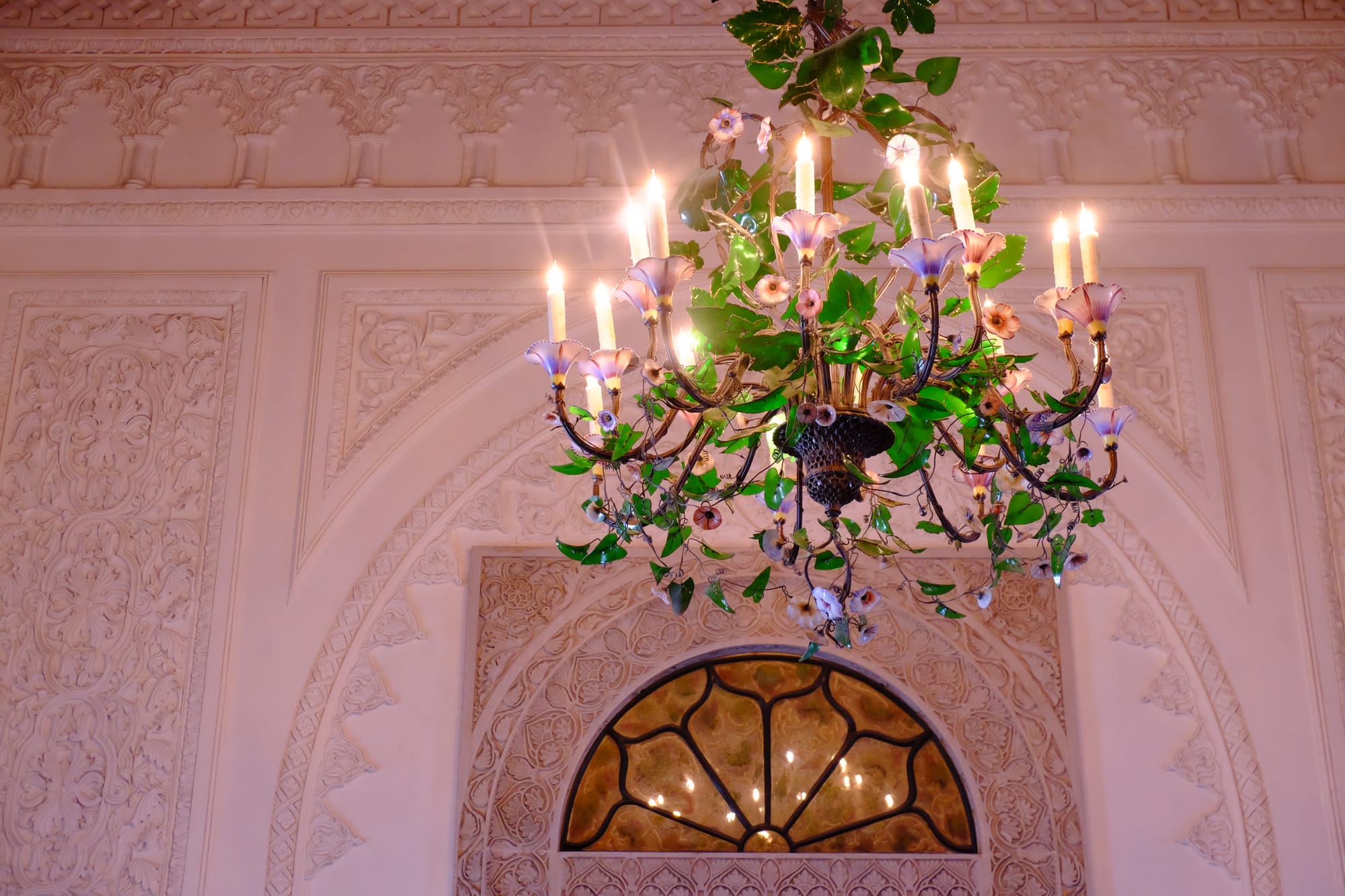
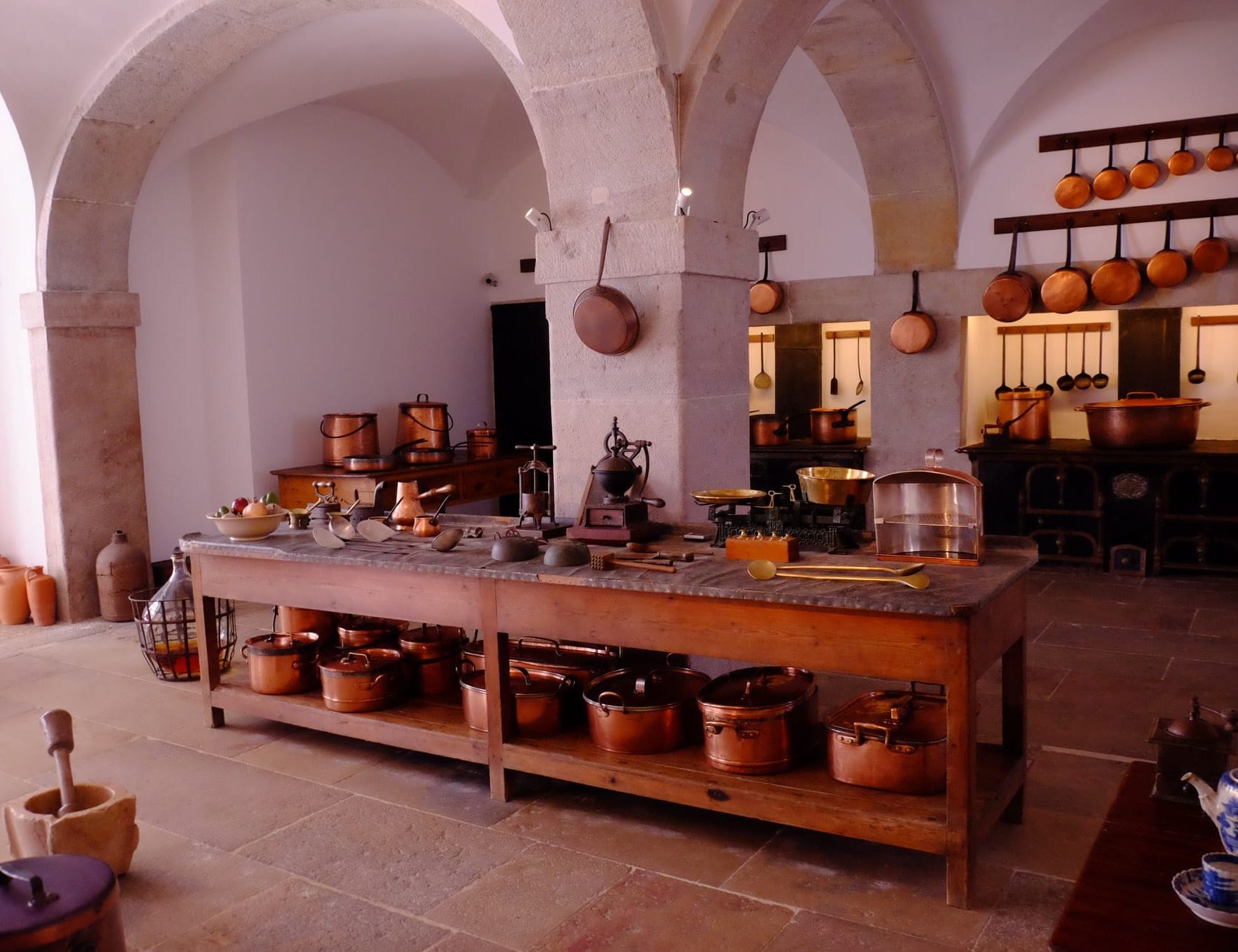
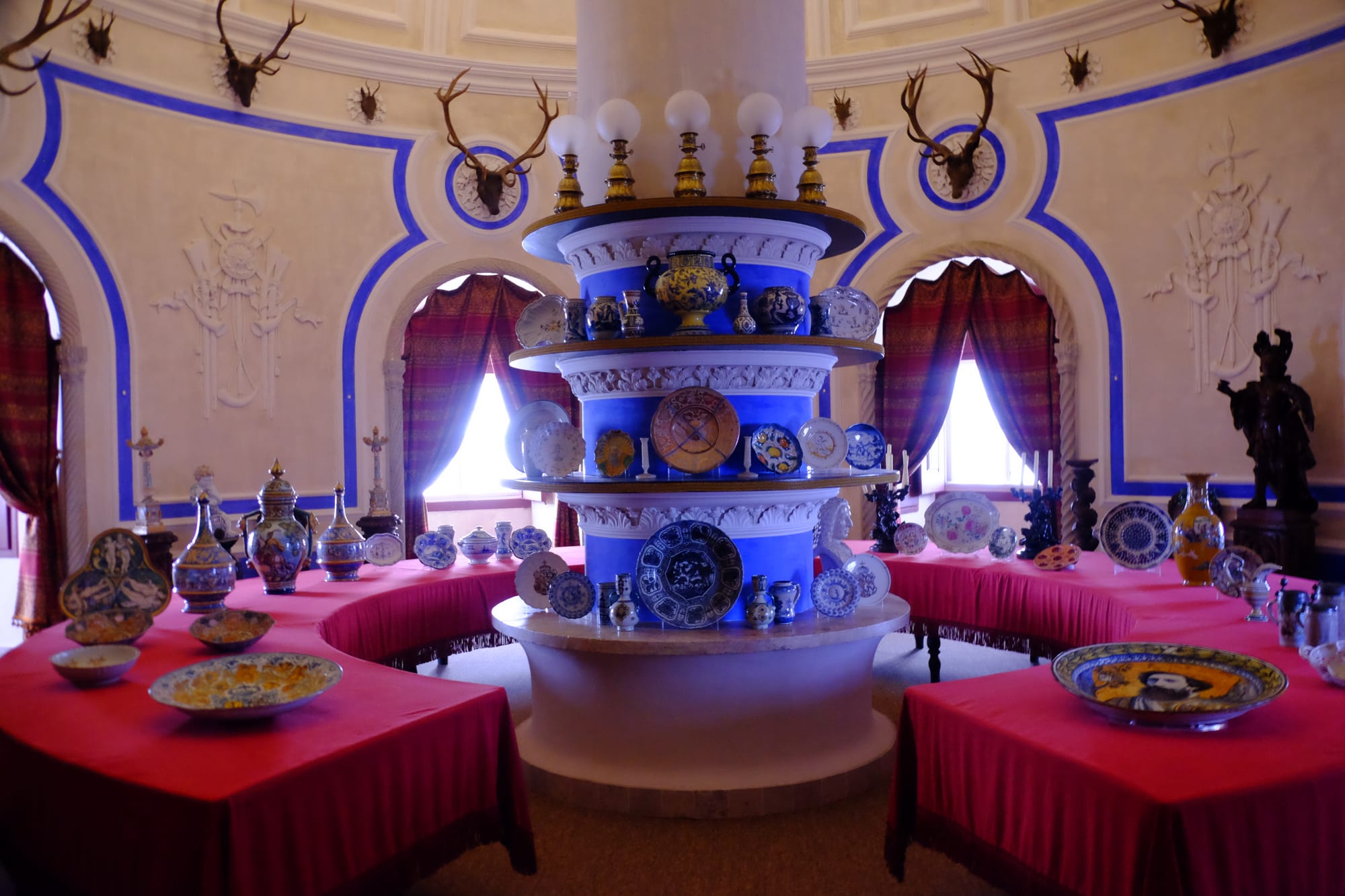
Another taxi ride took us to Sintra, a very pretty area, home to several historic places, not the least of which is the amazing Pena Palace. It's very popular with tourists, especially after Sintra was awarded world heritage site status by UNESCO. Fortunately I had booked a Palace entry ticket before leaving home so after a hectic walk up and down the forest path from the parking area we were able to skip the queues and get a bus up the very steep hill. The palace itself is stunning, and its royal contents even more so.
Castelo dos Mouros
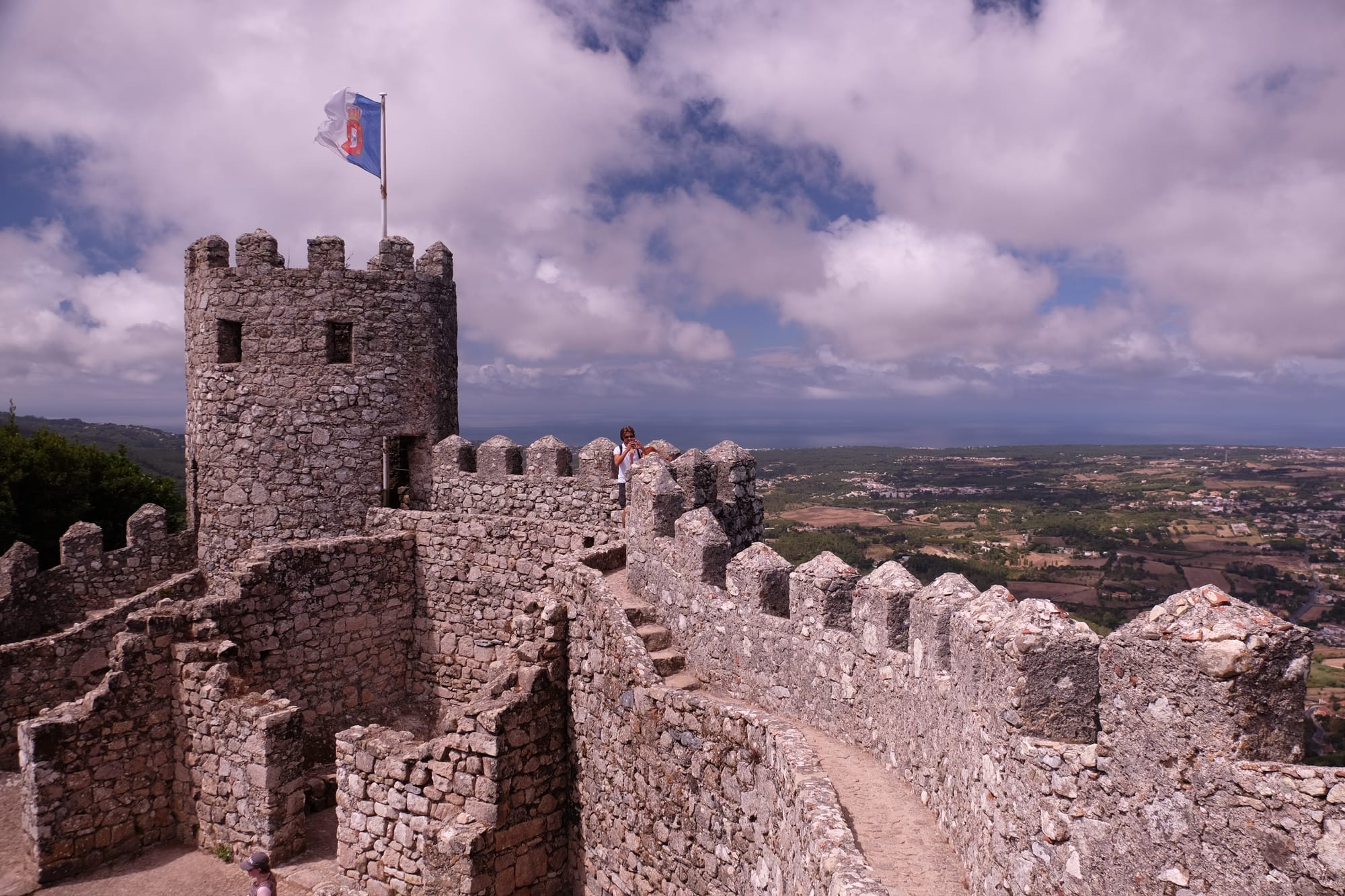
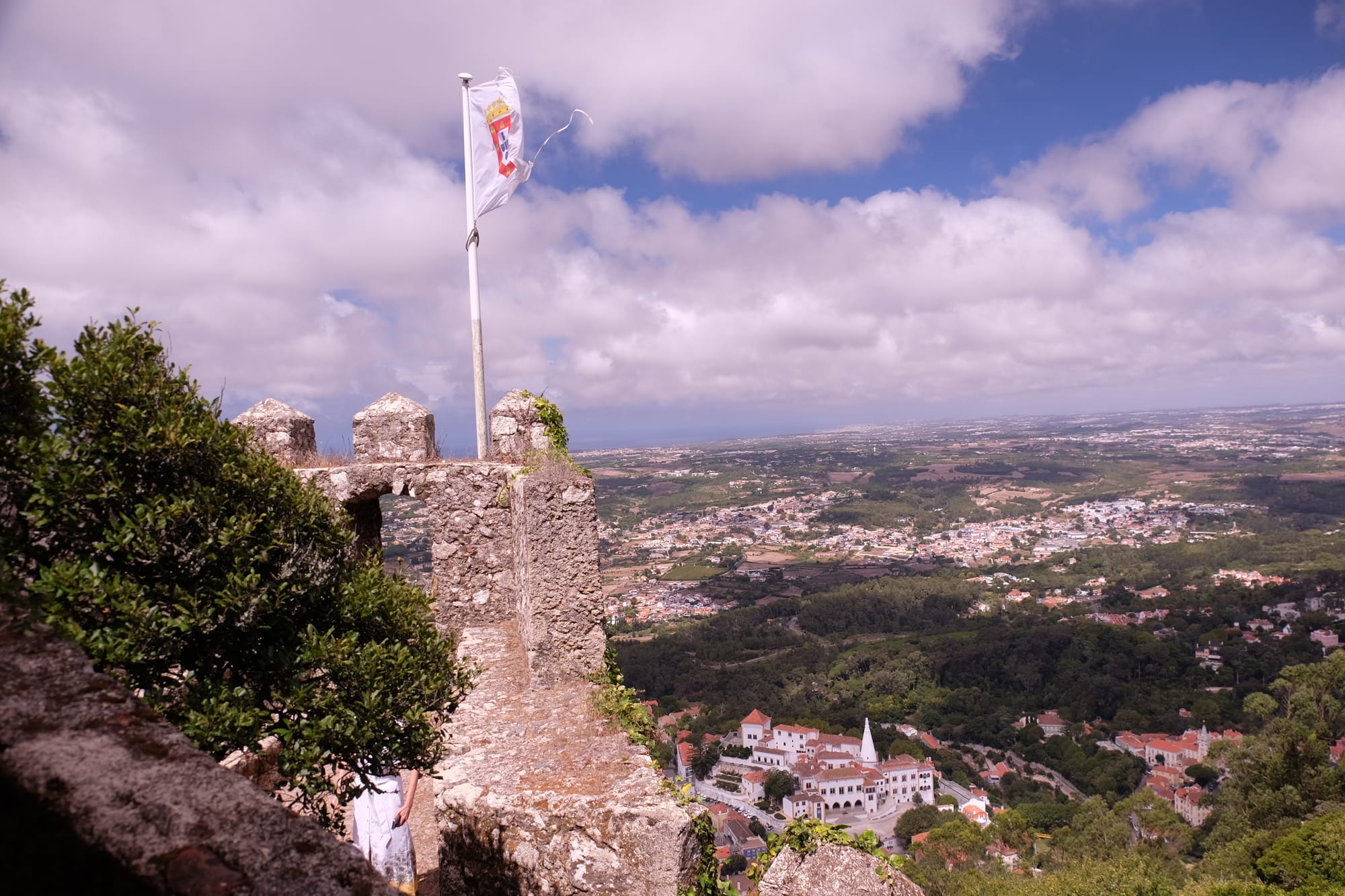
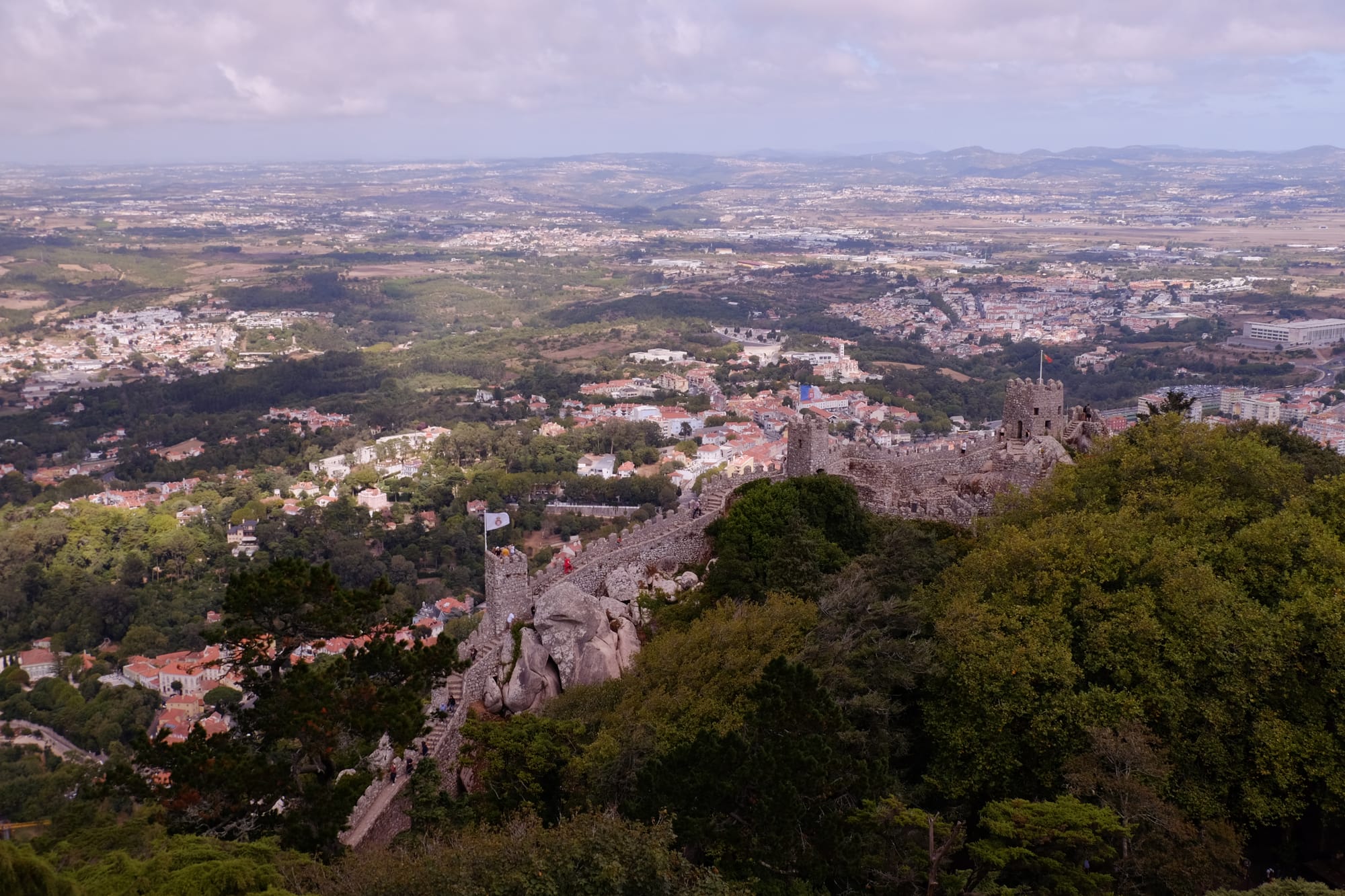
A short walk down the road from the palace is the entrance to the Moorish Castle grounds. We eagerly paid for our ticket and proceeded into the castle walls. But oh my goodness, stairs everywhere. After quite a slog we made it to the highest section. The views from the battlements out to the Atlantic ocean were incredible. I was particularly excited to get a nice photographic view of the Pena Palace, which is not really possible other than with a drone.
On the Algarve in Ferragudo
Our dear friends Mike and Sam had been nagging us to visit them in Ferragudo for quite some time. We booked the trip to Ferragudo on-line and caught a taxi to the Lisbon bus station. The bus trip to Portimao was comfortable but long, and to some extent scary, because at times travelling on the motorway the bus driver was reading a book while the bus automatically kept itself in the lane.
We finally arrived and while we were collecting our luggage the lovely vision of Sam appeared in my view. She excitedly drove us to their villa in Ferragudo, and what a lovely spot they have, only a couple of kilometers from the beach. 🏝️ Having moved here from London two years ago they are very happy here.
We finally arrived and while we were collecting our luggage the lovely vision of Sam appeared in my view. She excitedly drove us to their villa in Ferragudo, and what a lovely spot they have, only a couple of kilometers from the beach. 🏝️ Having moved here from London two years ago they are very happy here.
Praia do Pintadinho
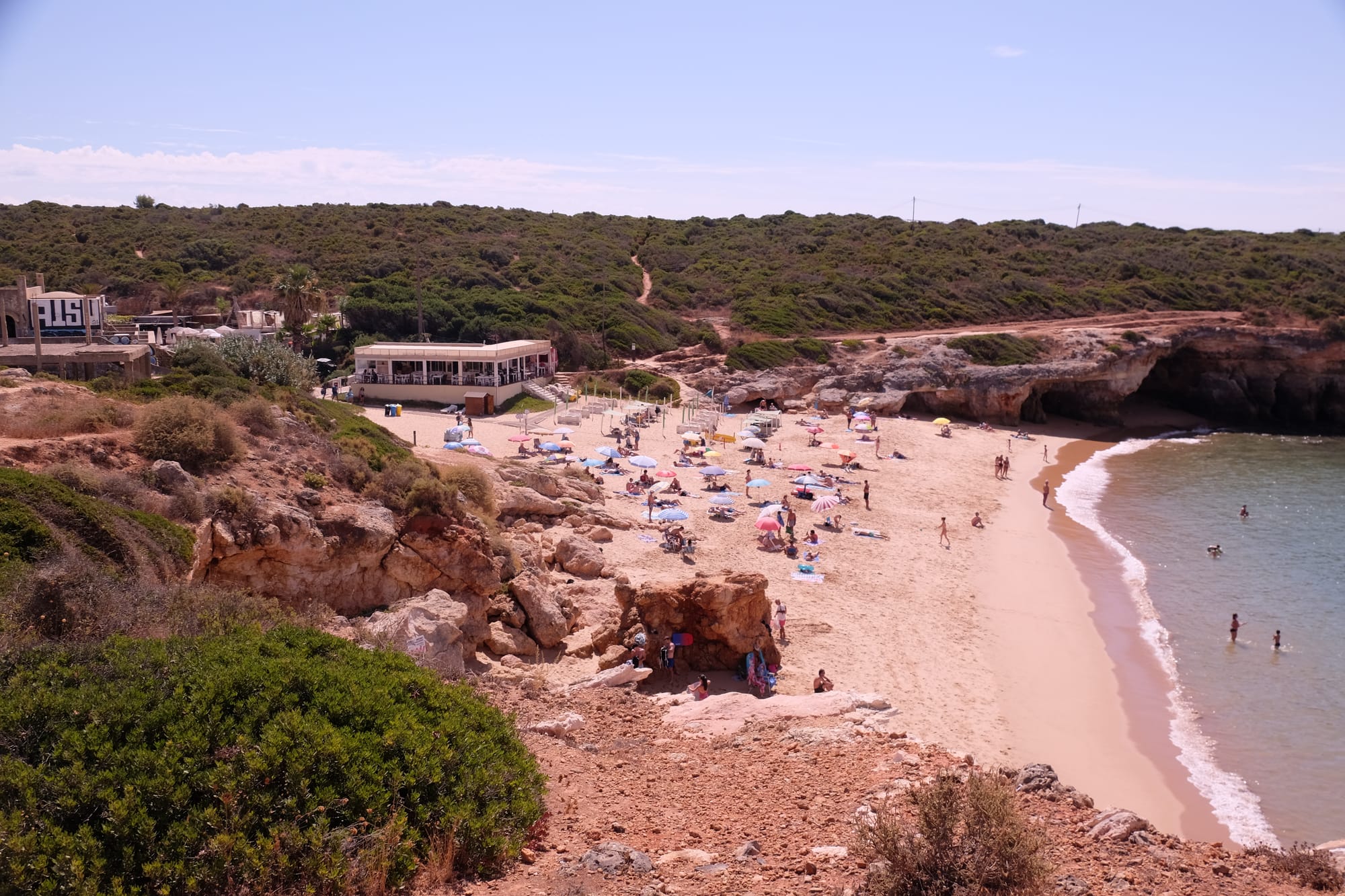
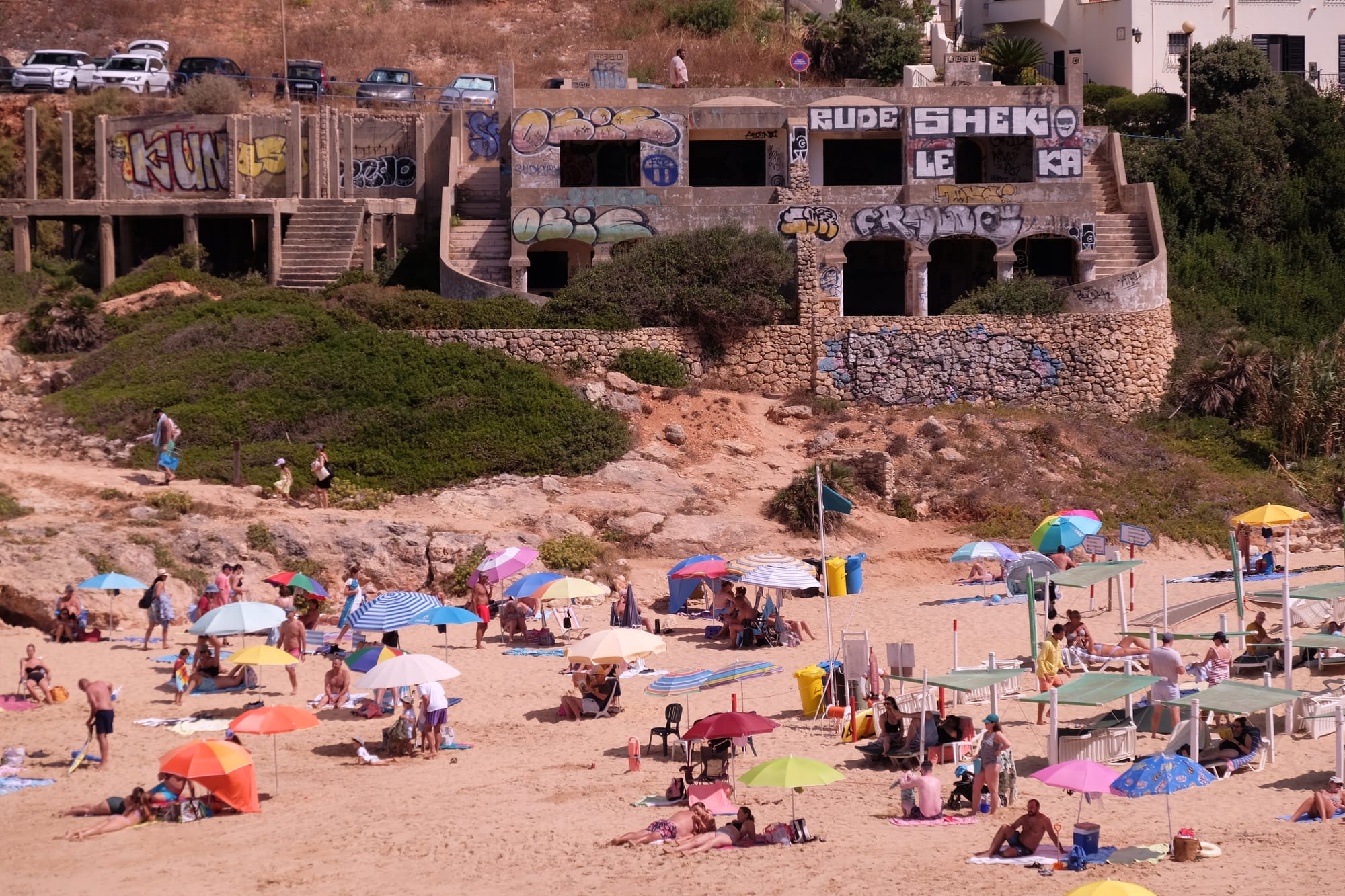
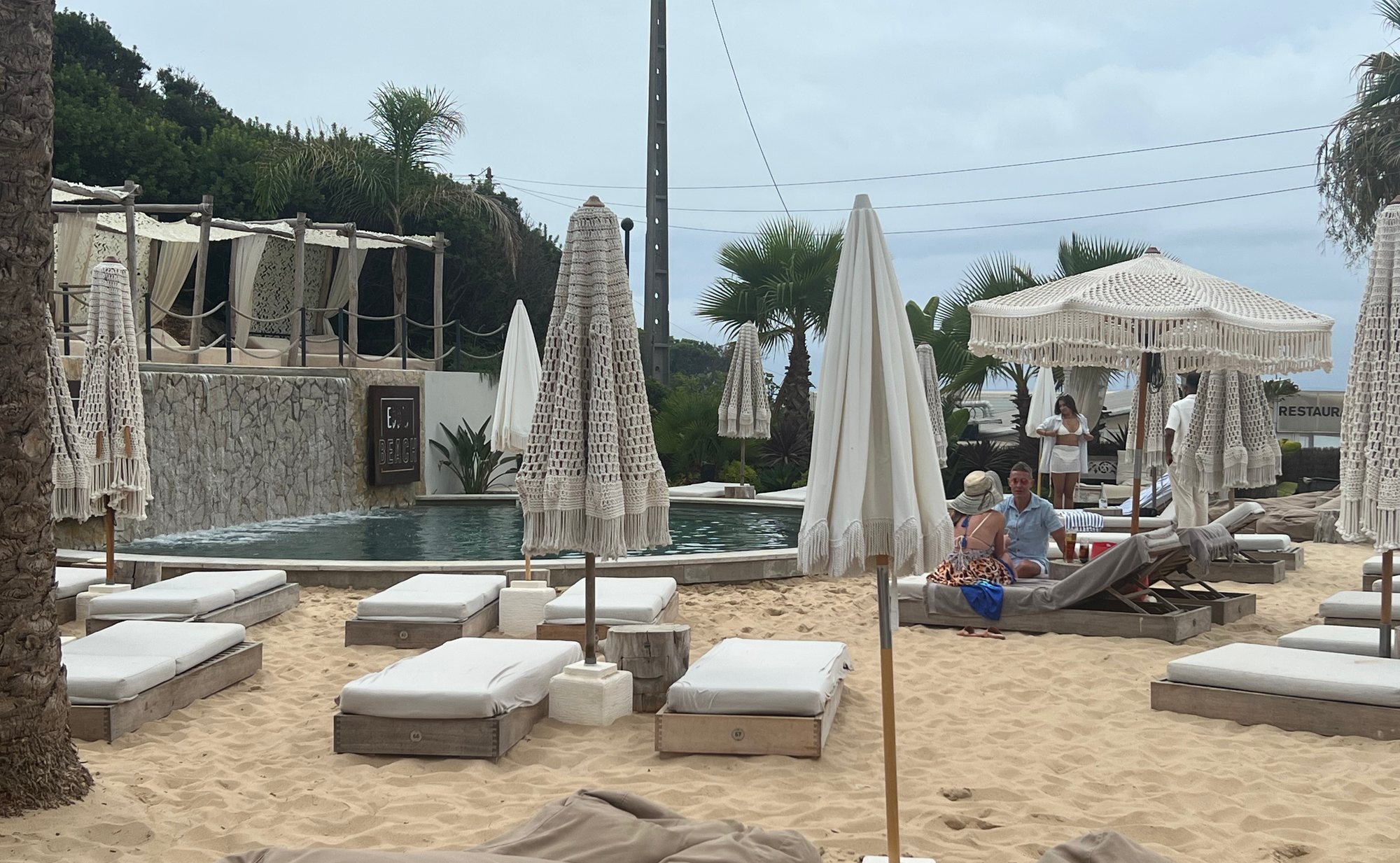
The beach at Praia do Pintadinho is a half hour walk away from their spot. Its a lovely cove type beach nestled within the sandstone cliffs, and with a couple of restaurants on land. We walked accross to the other side of the headland to get a view of the next beach, Praia dos Caneiros, even more beautiful.
The Feline Palace
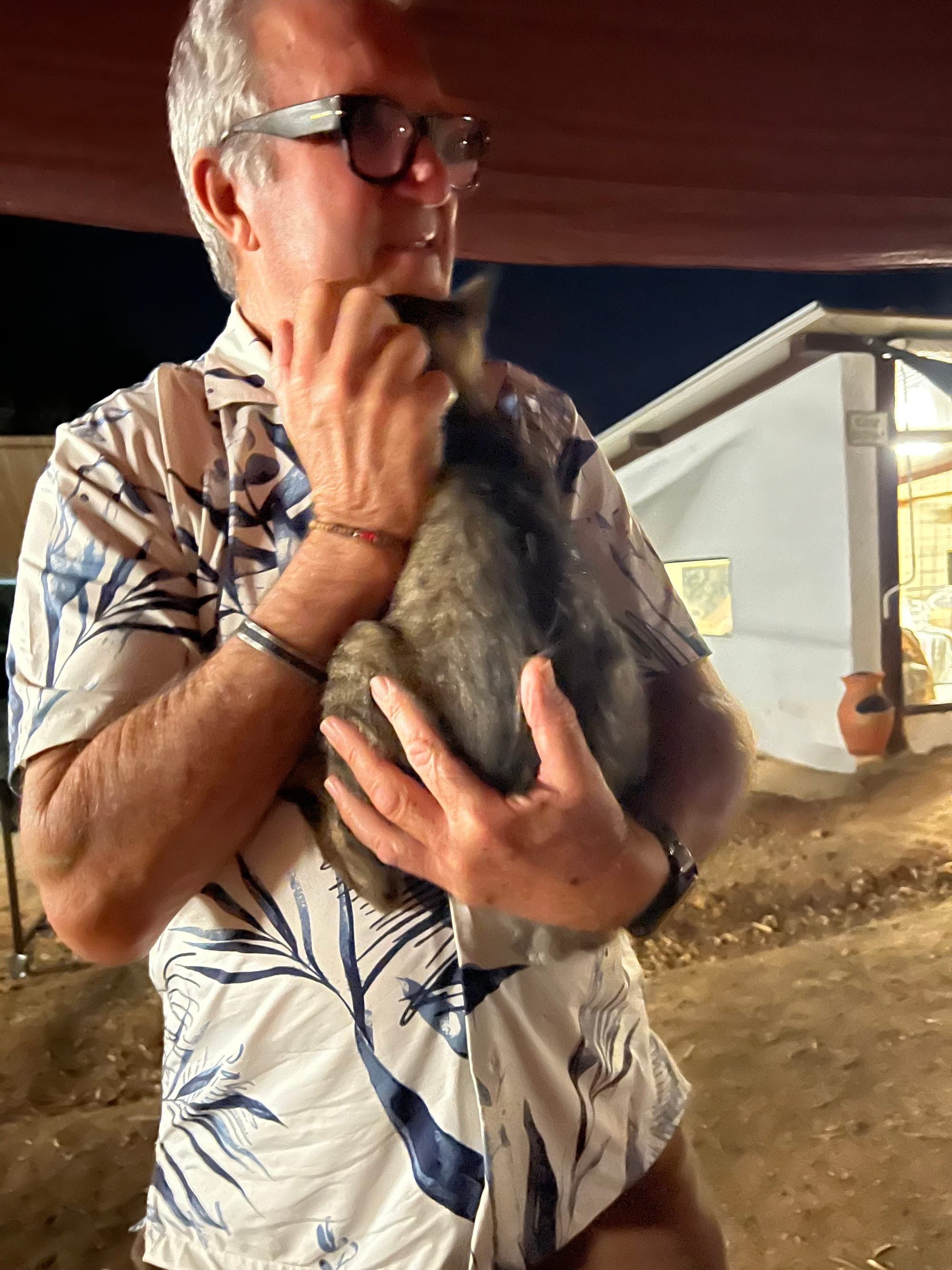
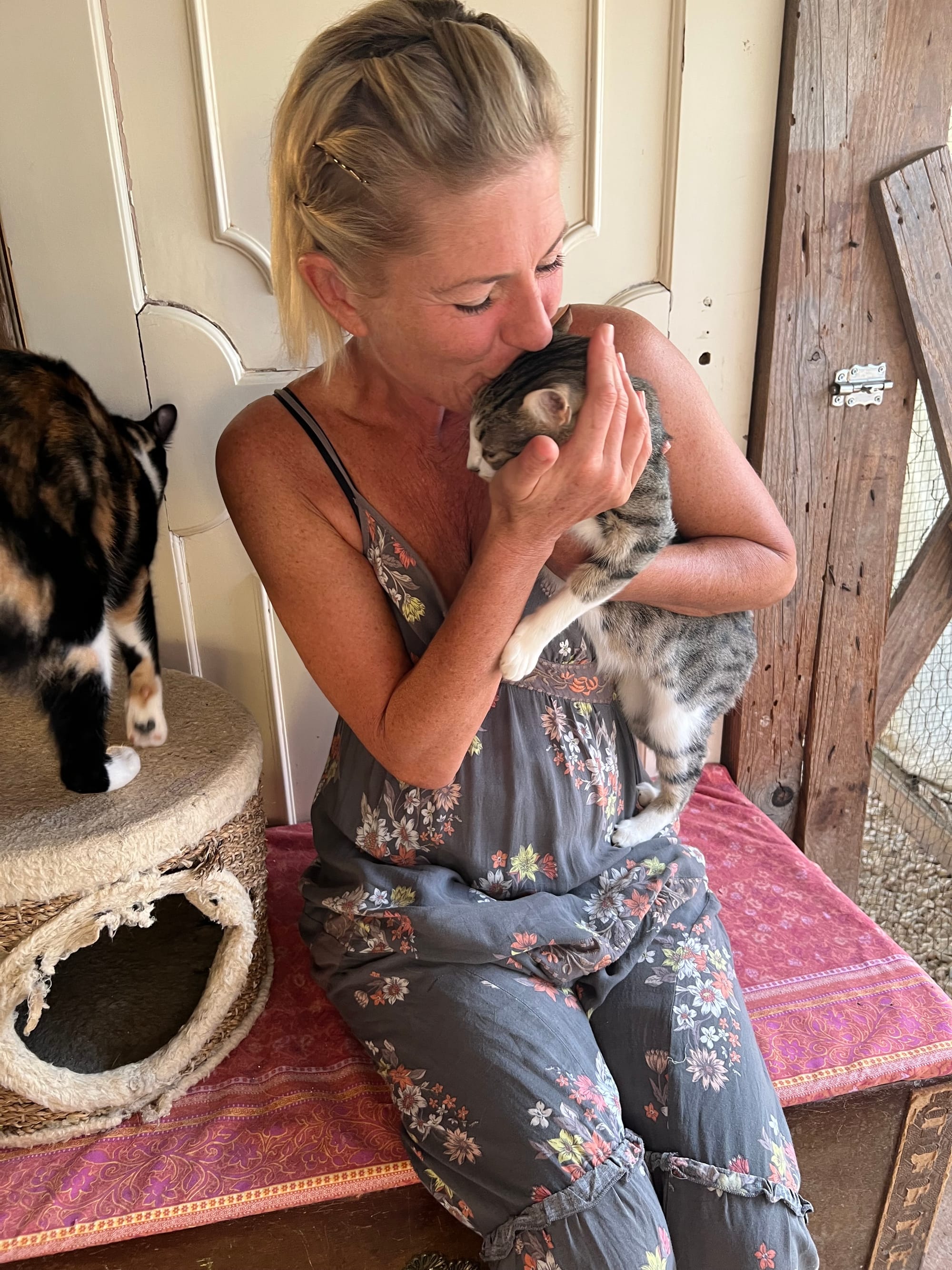
Mike and Sam are cat lovers of note and live with 7 rescued cats and devote a lot of their time to a cat sanctuary in Ferragudo called the Carvoeiro Cat Charity. Many of the inmates have been bottle fed from two weeks. They are well fed and given love every day by a couple of staff and several volunteers, some from other countries.
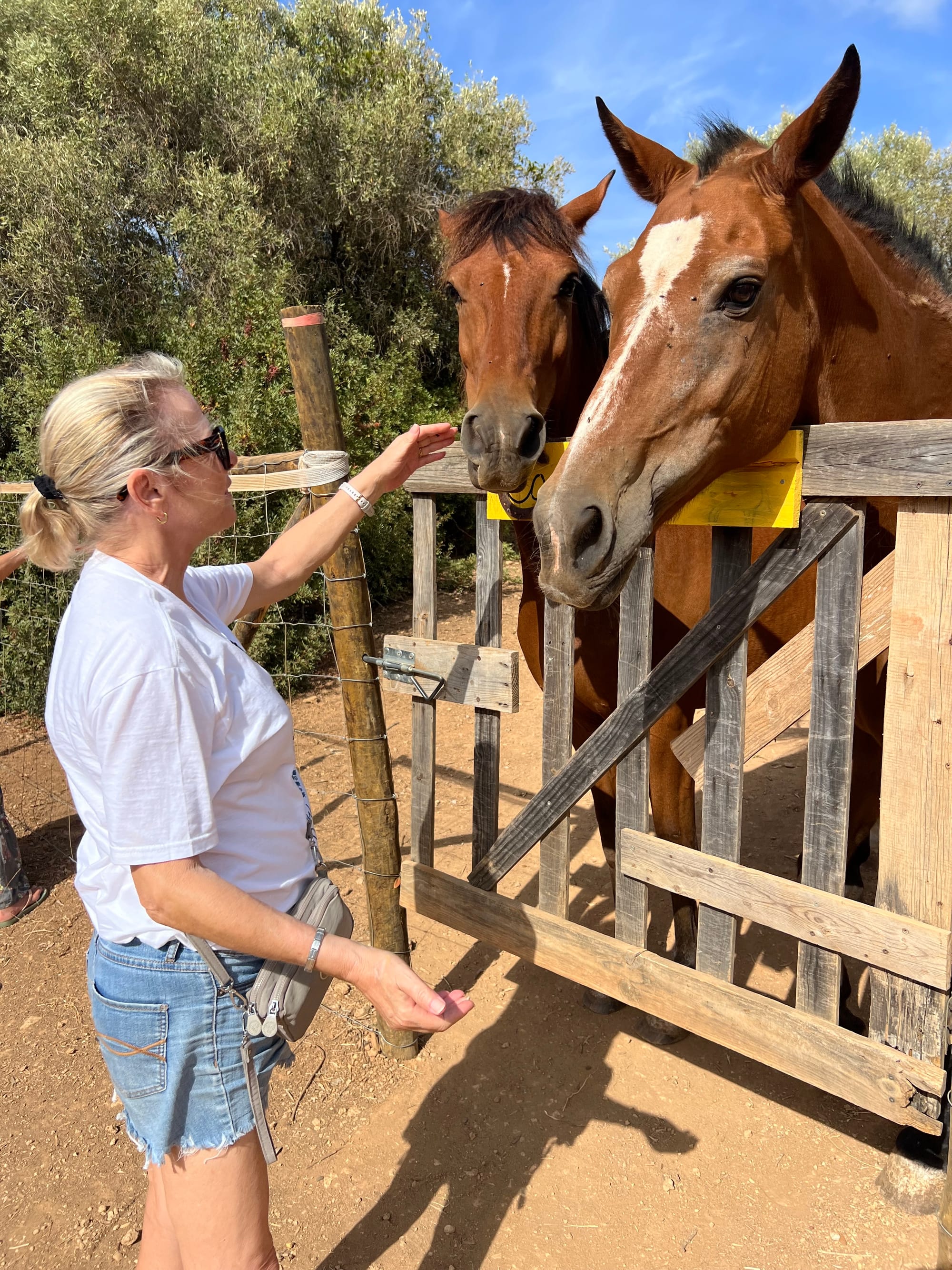
The Charity hosted an evening braai and we were introduced to many of the 250 cats cared for in separate hand made shelters. There are also a couple of dogs, three horses and two chickens, literally dumped there. There can be moments when you want to take them all home.
The Charity hosted an evening braai and we were introduced to many of the 250 cats cared for in separate hand made shelters. There are also a couple of dogs, three horses and two chickens, literally dumped there. There can be moments when you want to take them all home.
Silves, central Algarve
Mike drove us all through to nearby Silves where our dear friends Gary and Wendy live, and we all hooked up at the local chicken restaurant to meet and enjoy an easy lunch of peri-peri chicken, salad and chips at Eu8 (R160) per head including wine. Afterwards we all went back to Gary and Wendy’s house for an ABF or two, whereafter Mike and Sam left for home.
Their lovely villa is in a quiet road on the outskirts of Silves. They are very proud of what they have added in terms of adding to the plants around the pool and it really does enhance the setting.
Their lovely villa is in a quiet road on the outskirts of Silves. They are very proud of what they have added in terms of adding to the plants around the pool and it really does enhance the setting.
Silves Surrounds
The focal point of the next day was lunch at a fabulous restaurant up the mountains outside of Silves called Restaurante Solar do Farelo to celebrate Wendy’s birthday. The setting is very pleasant with a lovely outlook down the valley. The restauranteur and chef is the amazing Fernando, who comes to your table and runs through the menu specials in detail. I chose duck a l’ orange which was incredible. There are two barrels of wine with a tap, one of white and one of red, which you can help yourself to throughout your meal.
The car did a sharp swerve on the way home and we popped into the Arvad Wines Tasting Center for a taste of their wines. The wines turned out to be pretty good. Not being familiar with Portuguese wines, we didn’t know the different cultivars and regions, but we learnt a lot. The tasting turned into a wine fest with some visiting British students – par for the course 🤷♂️.
The car did a sharp swerve on the way home and we popped into the Arvad Wines Tasting Center for a taste of their wines. The wines turned out to be pretty good. Not being familiar with Portuguese wines, we didn’t know the different cultivars and regions, but we learnt a lot. The tasting turned into a wine fest with some visiting British students – par for the course 🤷♂️.
Silves Town
In the morning Gary and I took a walk into Silves town. The village is not hugely pretty, its redeeming icon being the castle on top of the hill. I had visited it before, so we walked through the narrow streets to the top of the hill and enjoyed the view of the surrounds. On the way down we stopped off at an endearing little café for coffee and a pastéis de Nata. It’s the right thing to do in Portugal.
Benagil Caves
The Saturday morning we woke early to be sure to catch the start of the Springboks vs the All Blacks second test match of the year. What a game that turned out to be with the Boks getting their revenge on the previous game and annihilating the Kiwis 43 to 10. Very exciting.
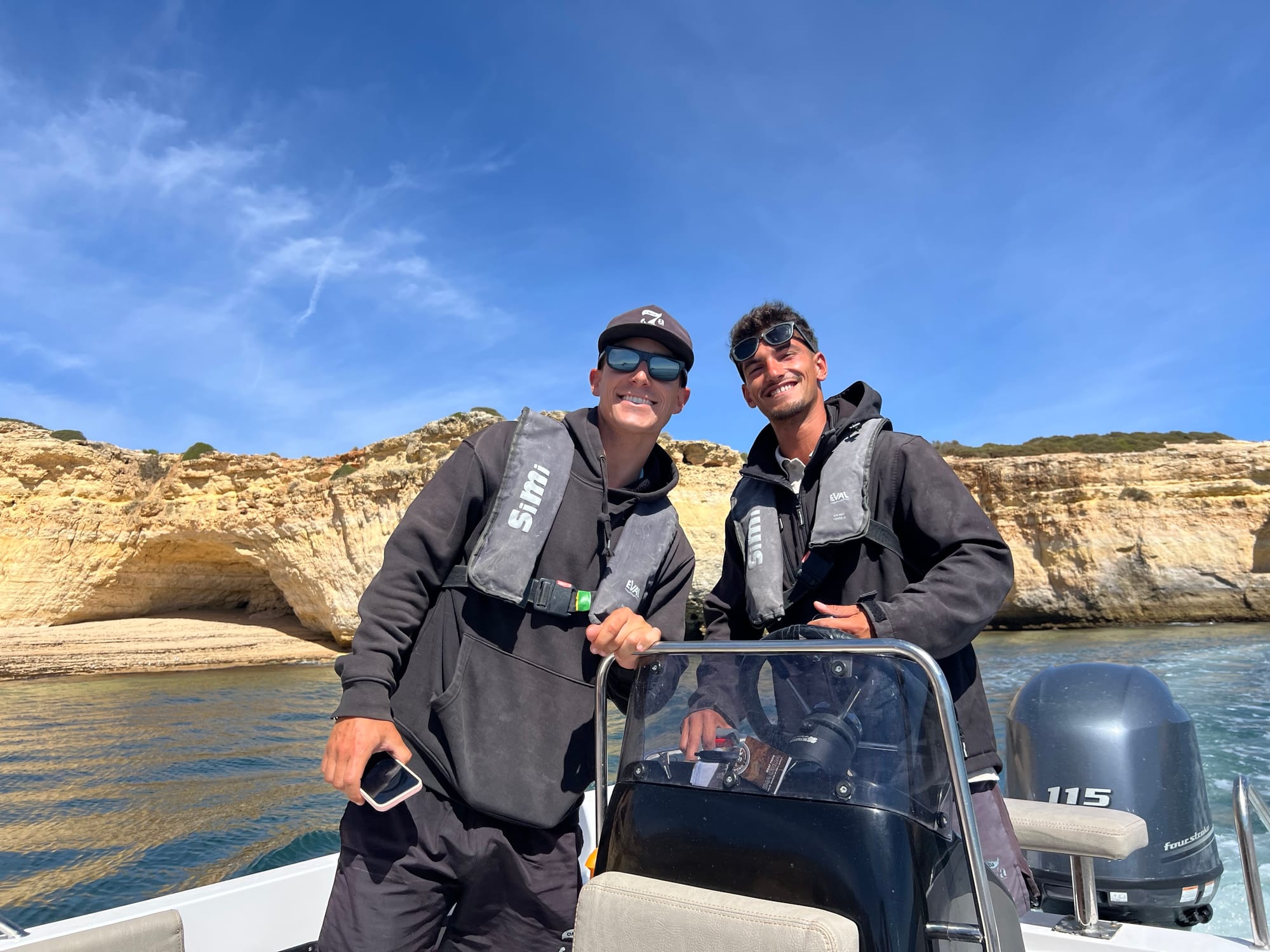
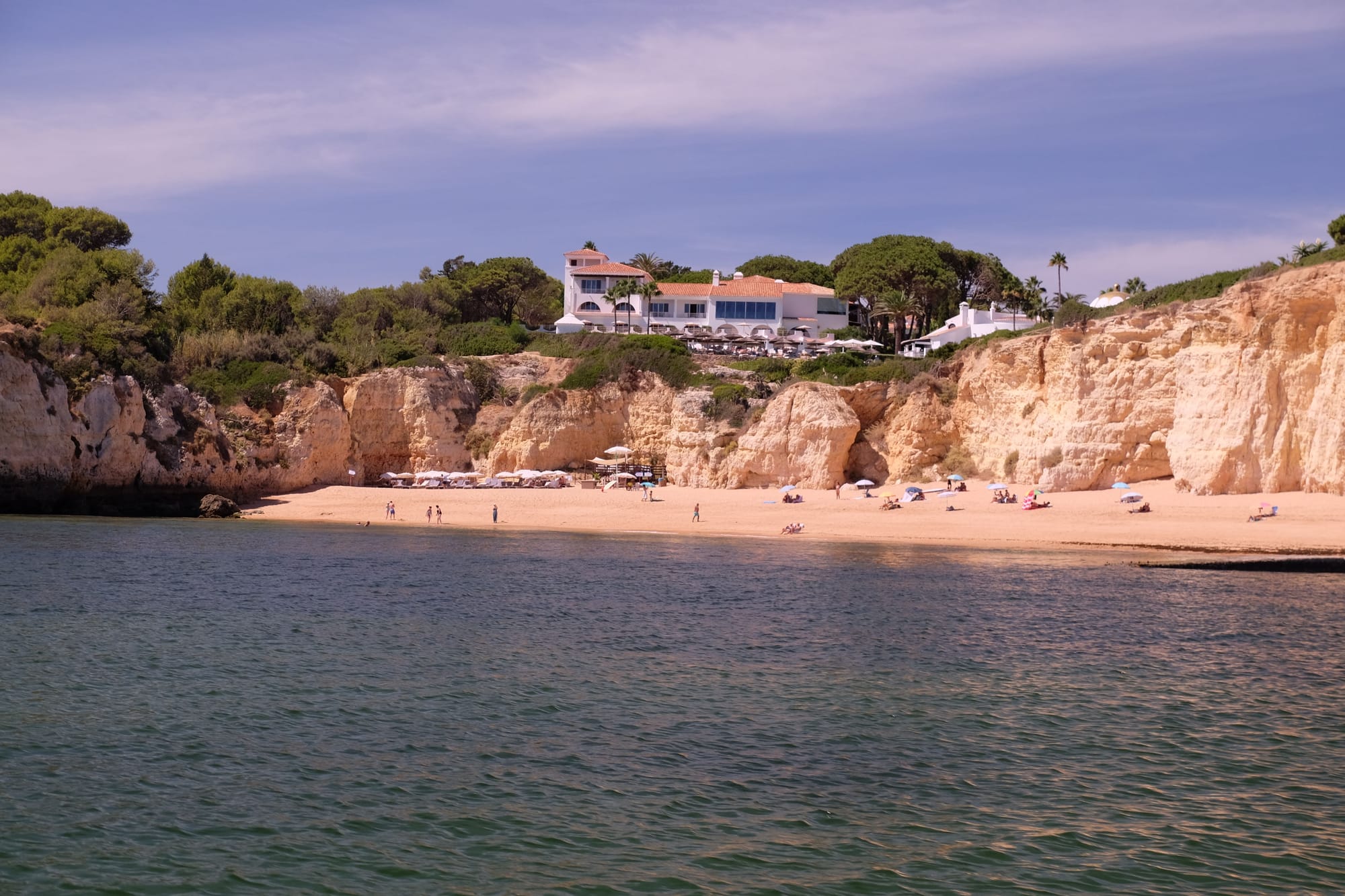
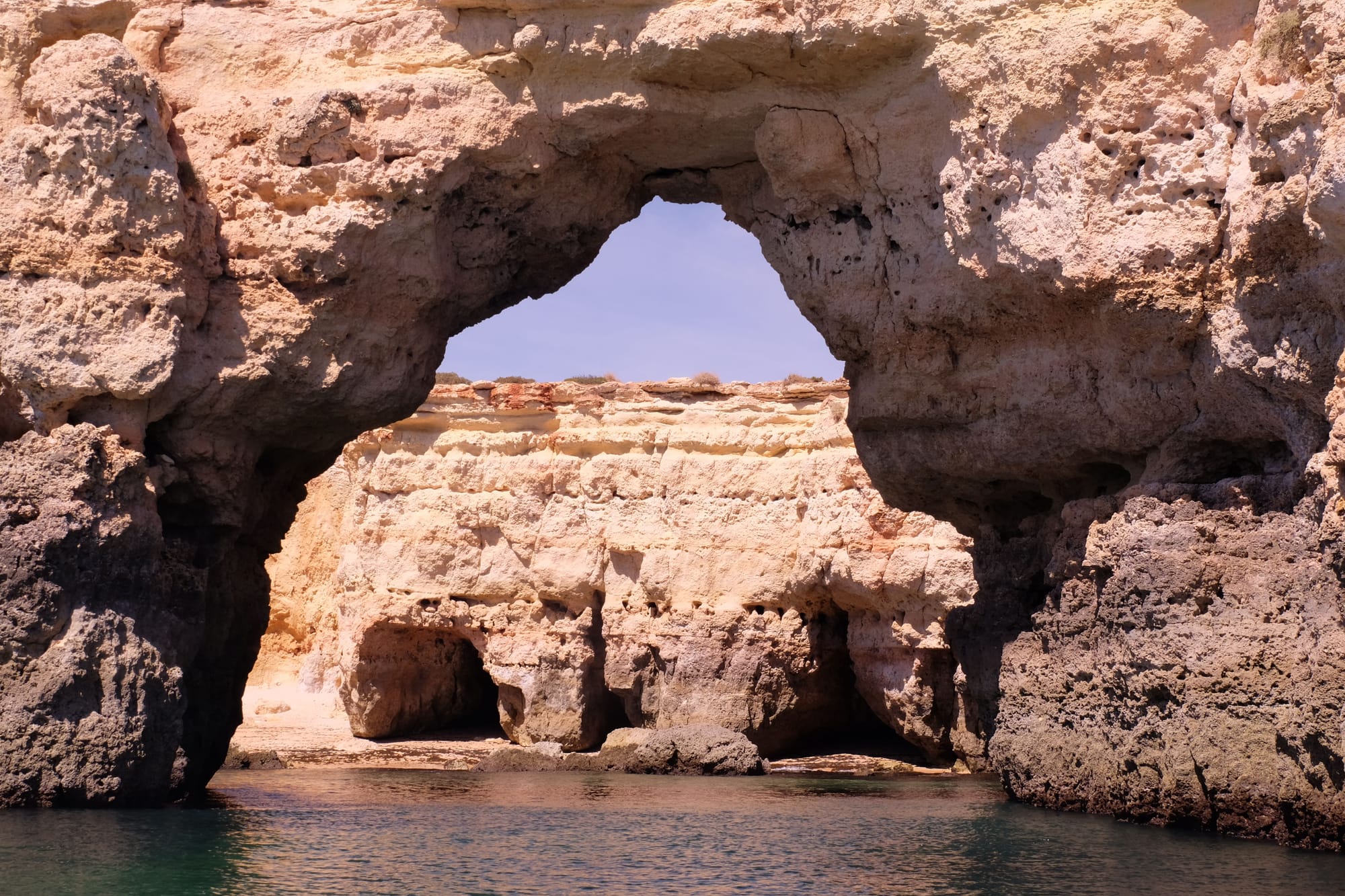
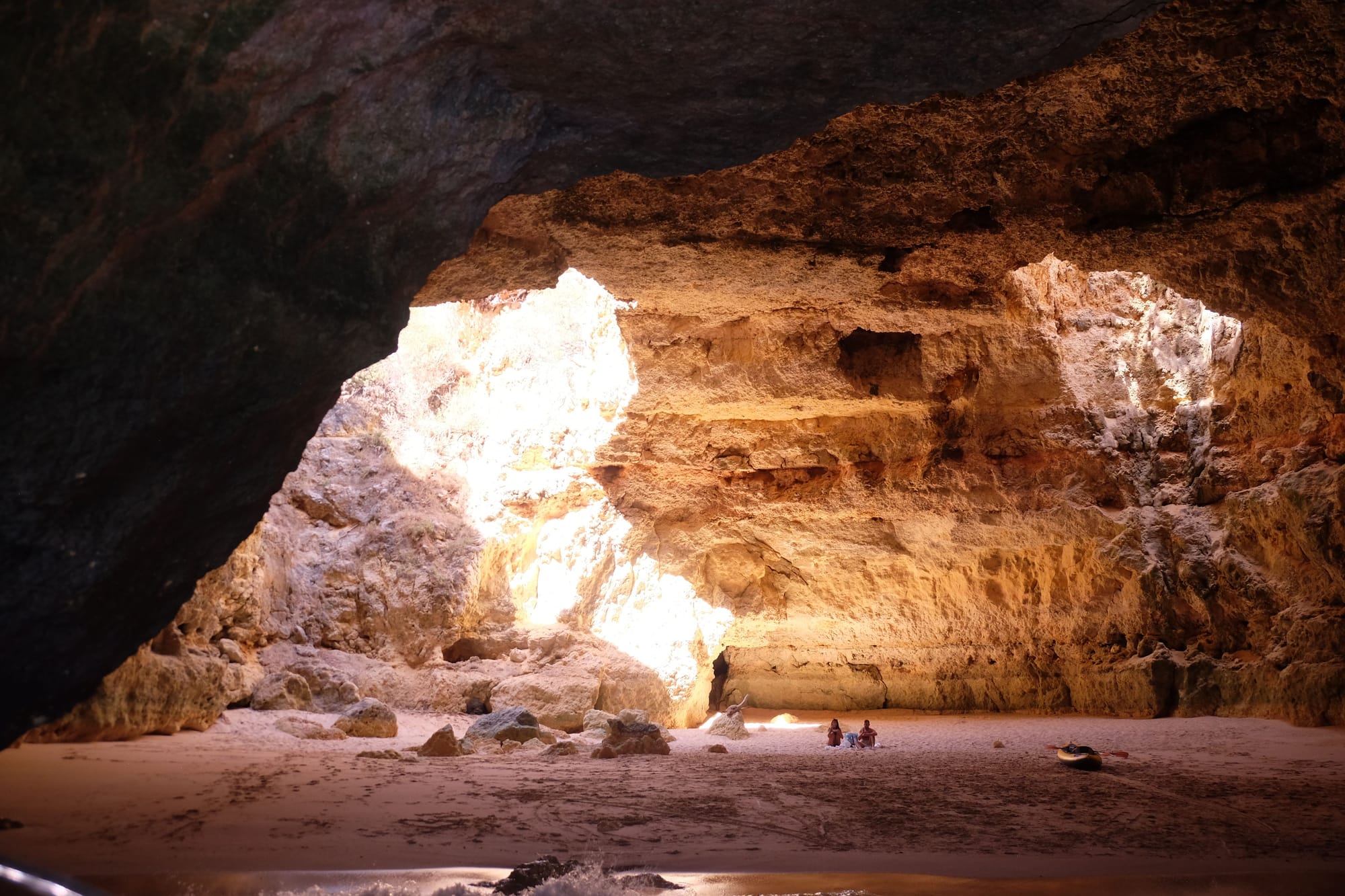
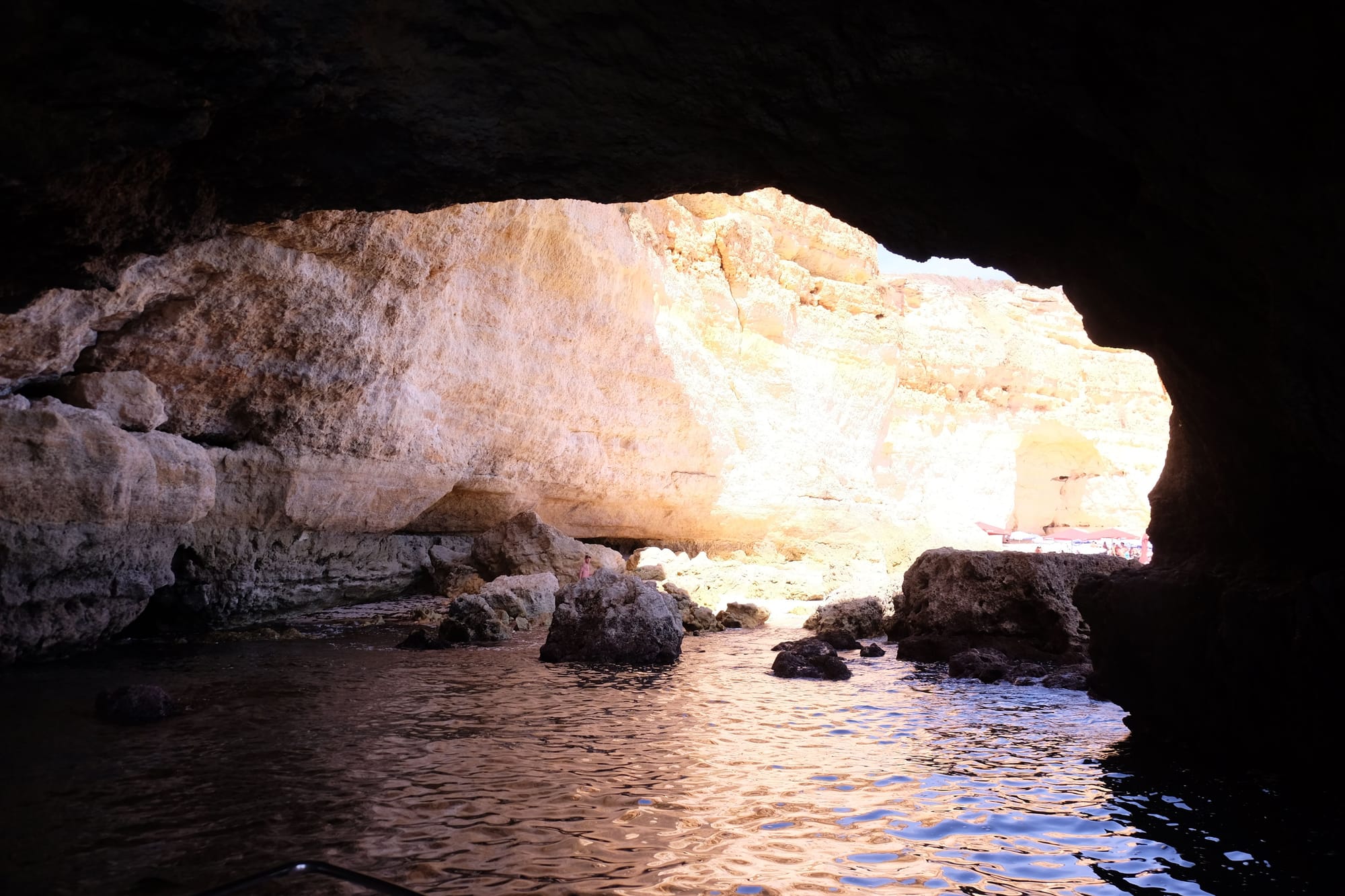
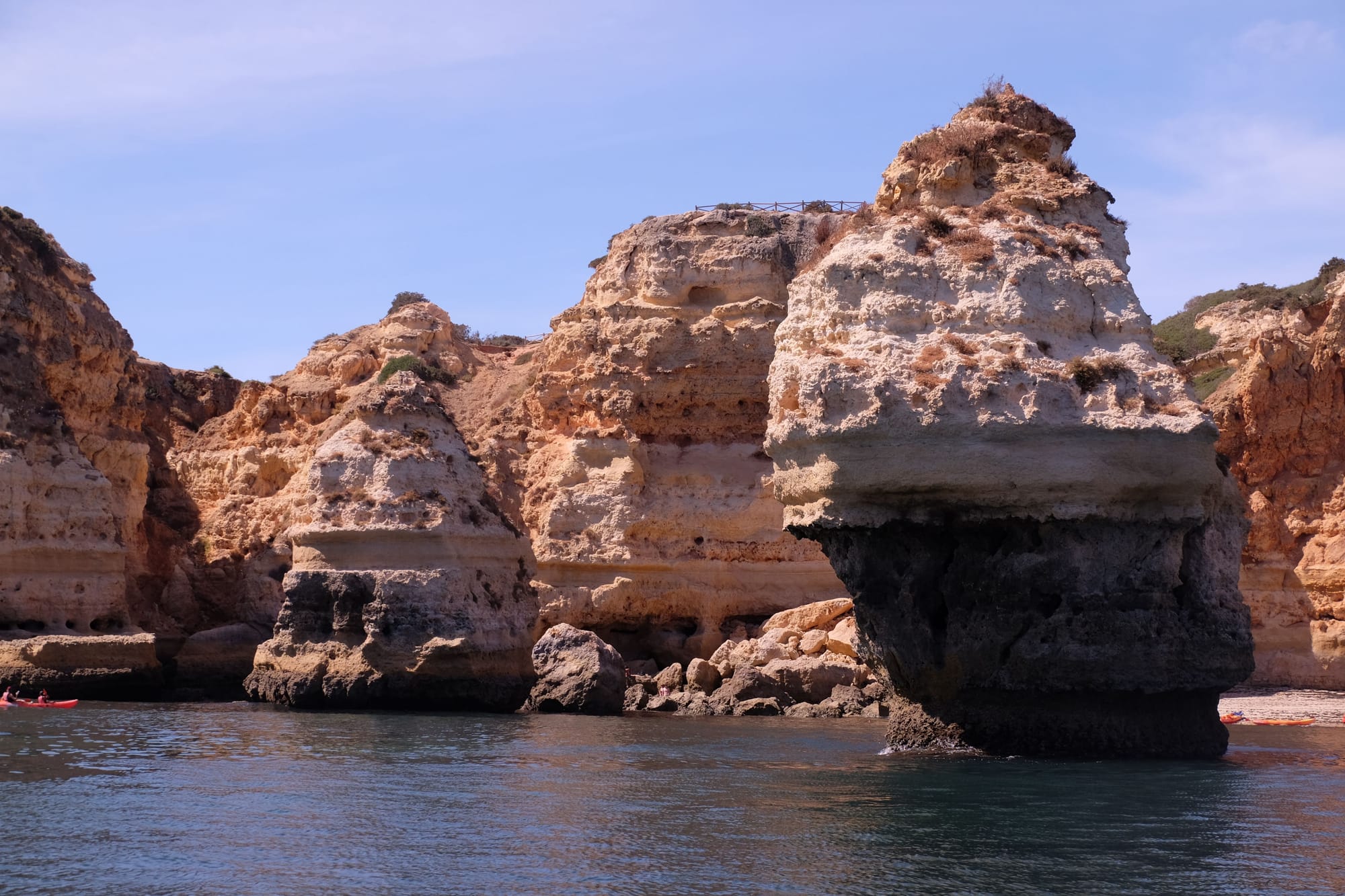
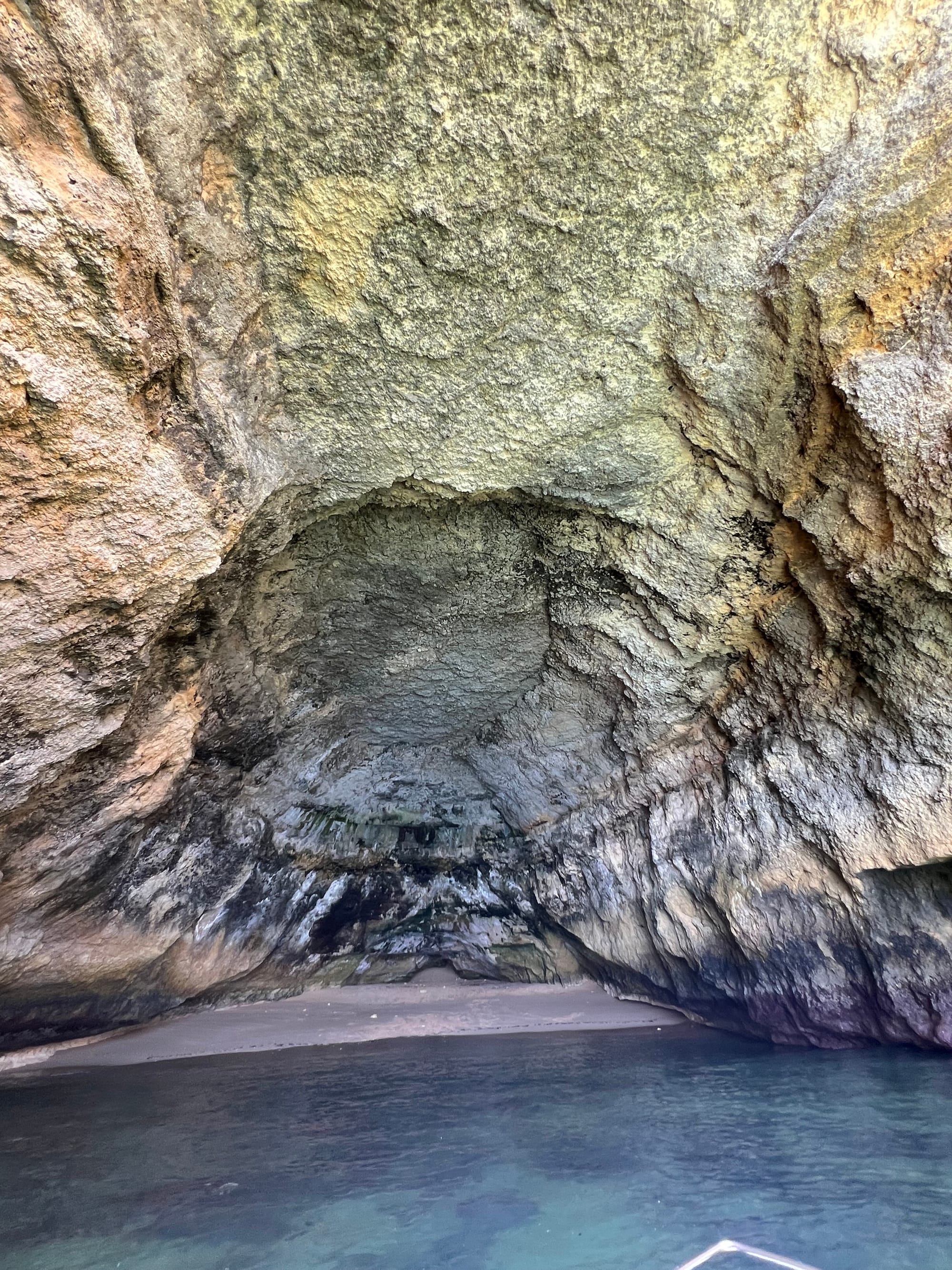
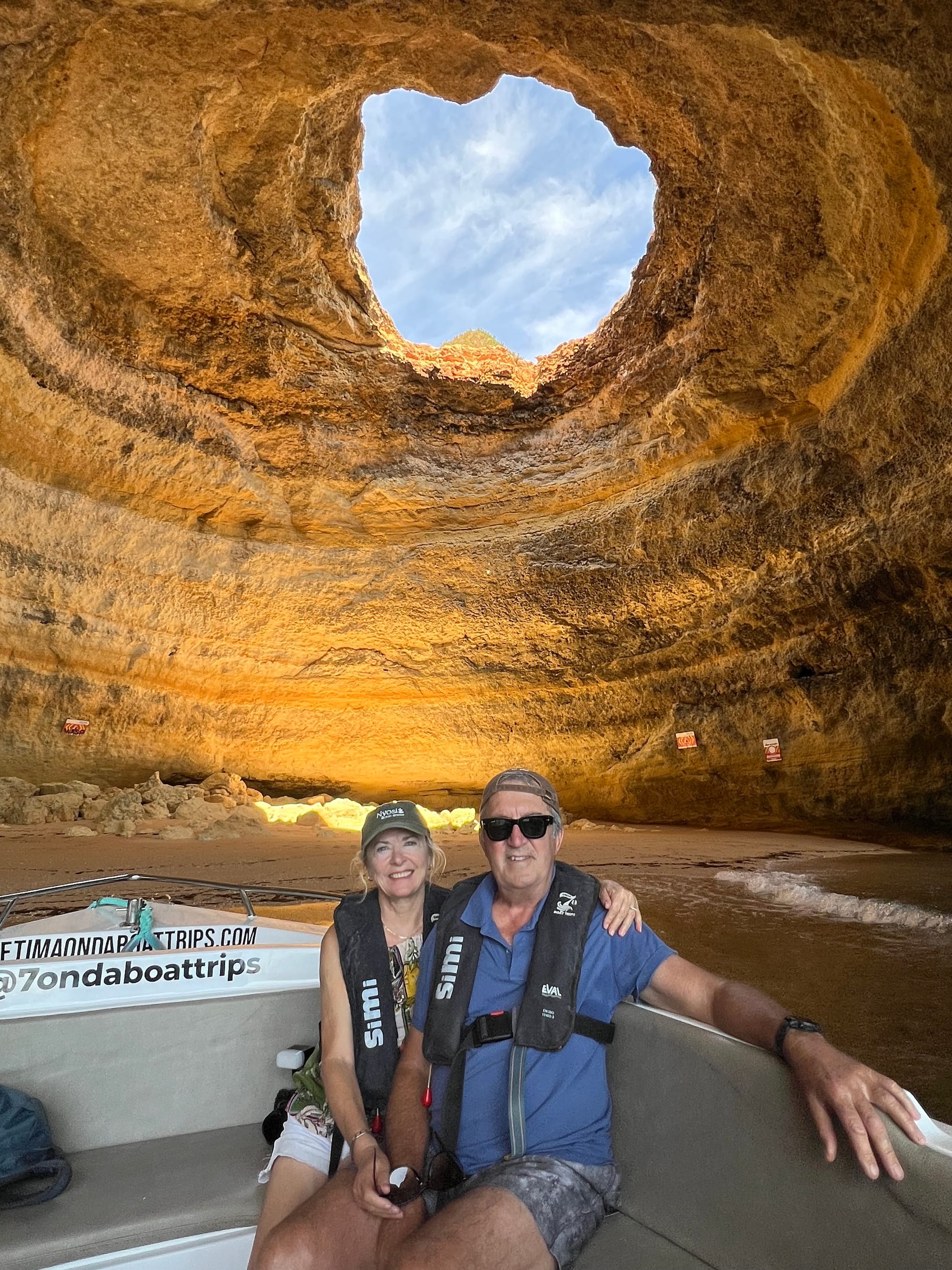
Later that morning we went to Armação de Pêra to hook up with our guides GPS and Tiago of Onda Boat trips for a boat tour to the Benagil Caves. We were the only passengers and two crew in a 16ft boat - much nicer than the bigger catamarans. Our crew took us to about 12 caves. all eroded out of the sanstone cliffs by the waves. The result is a series of magical caverns, some with beaches at the back from the eroded sand - cozy spot if you don't mind the boats.
Later that morning we went to Armação de Pêra to hook up with our guides GPS and Tiago of Onda Boat trips for a boat tour to the Benagil Caves. We were the only passengers and two crew in a 16ft boat - much nicer than the bigger catamarans. Our crew took us to about 12 caves. all eroded out of the sanstone cliffs by the waves. The result is a series of magical caverns, some with beaches at the back from the eroded sand - cozy spot if you don't mind the boats.

Sagres
The surfing town of Sagres sits on the most south-western point of Portugal - one could call it ‘Lands End’. There is an old fort wall protecting entry to the point area, requiring an entry fee, but somehow local fishermen reach the rock cliffs of the point to try their luck in the cold waters. The surfing context comes from the western shores where surfers enjoy the swells rolling in from the Atlantic. It’s a striking area with, as one can imagine, a lot of history from Portugal’s exploratory times, nicely portrayed in a small museum. After a walk around the point cliff rim we went looking for a seafood restaurant and were happy to find one that met our requirements by offering clams, mussels and goose neck barnacles. We enjoyed sharing these for entrees, and then ordered mains of fish including sea bass, squid and sole. Delicious.
Carvoeiro
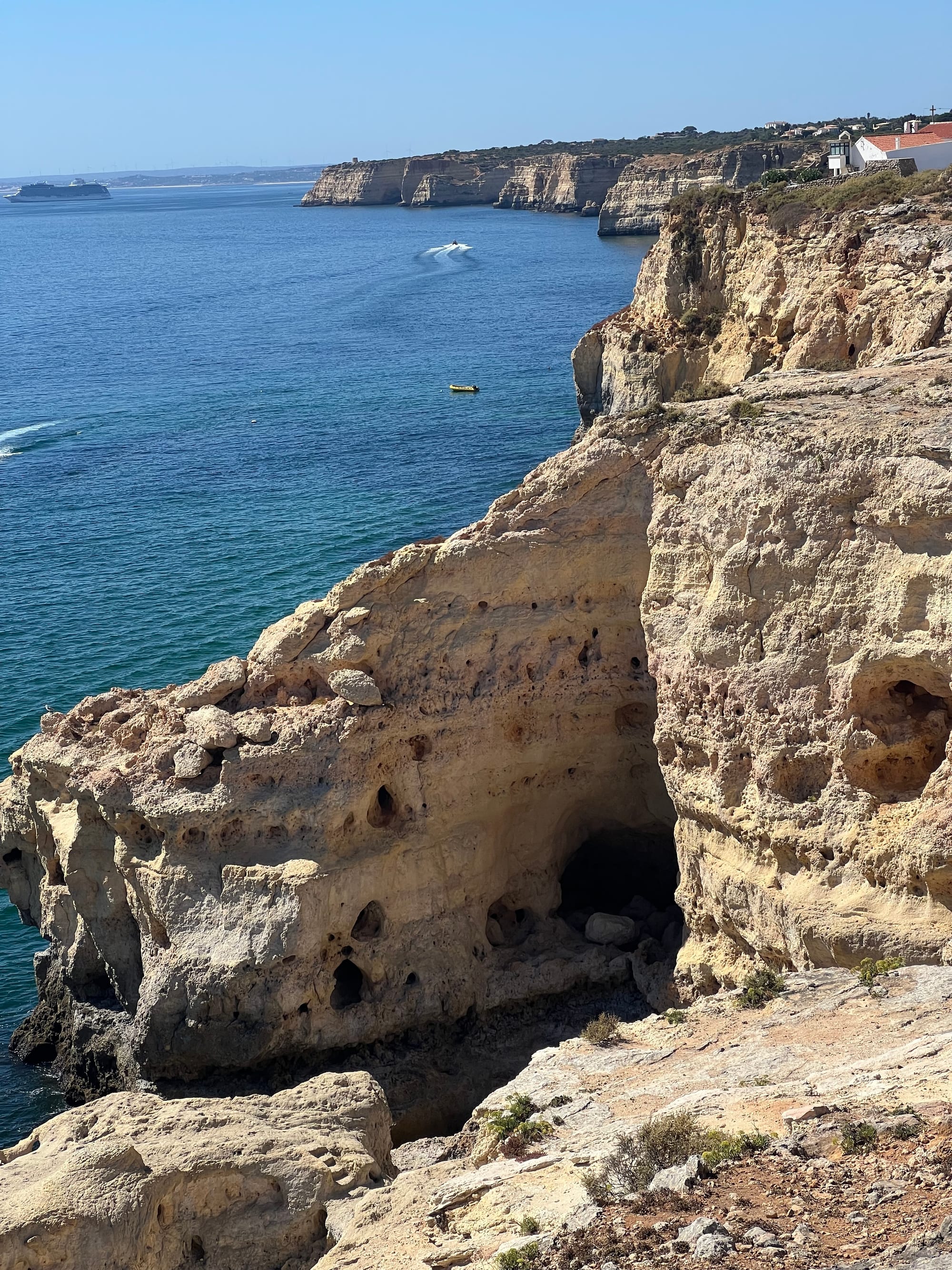
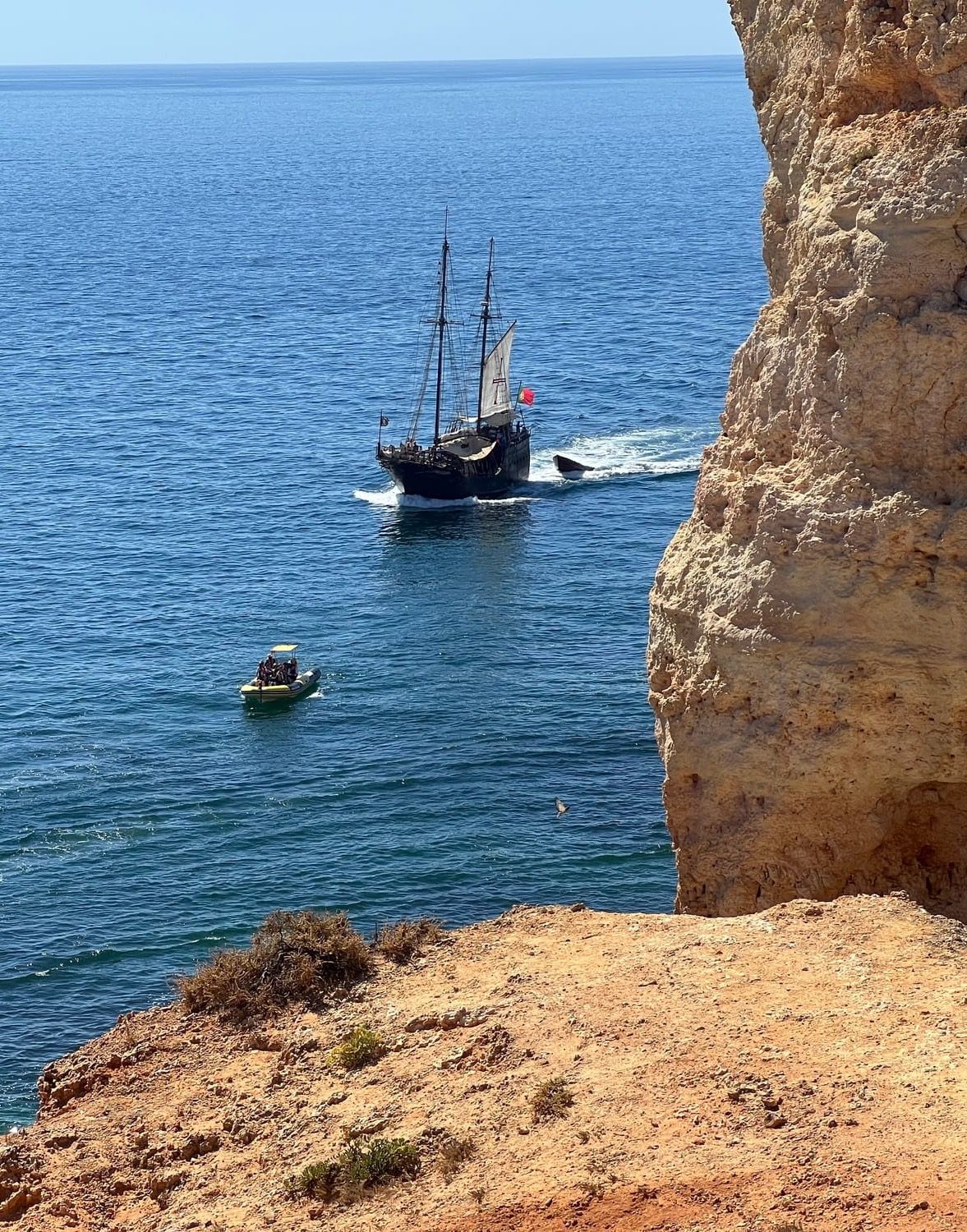
Brigi had put her hand up to cook the dinner on our last night and we had invited Mike and Sam around. She planned a menu of pork belly with a tuna tartare and salmon roe entre, and chocolate mint pudding. So on the Monday off we went to Apolonia to shop. On the way home we stopped off for a beer at the Boneca Bar and Restaurant located within the rock formations and cliffs at Carvoeiro's coast. Its a lovely setting and the seafood is highly rated. One can walk amongst the rock formation close to the sea. We also walked along the boardwalk to a lookout point over Pria do Carvoeiro.

The foodie section
The cuisine in Portugal differs quite substantially from Lisbon to the Algarve. When we arived in Lisbon we asked after genuine Portuguese restaurants (rather than tourist spots). We followed through on the suggestions and found that the menus consisted of quite a few pork dishes, in particular the delicacy of black pig cheeks. Portuguese dishes are in the main very rich. In the south there is a strong leaning to seafood, freshly caught, which we generally prefer.
Our favourite restaurant meals were the most amazing steaks at the Argentinian Hexagon in Ferragudo, and Fernando's near Silves, mentioned above.
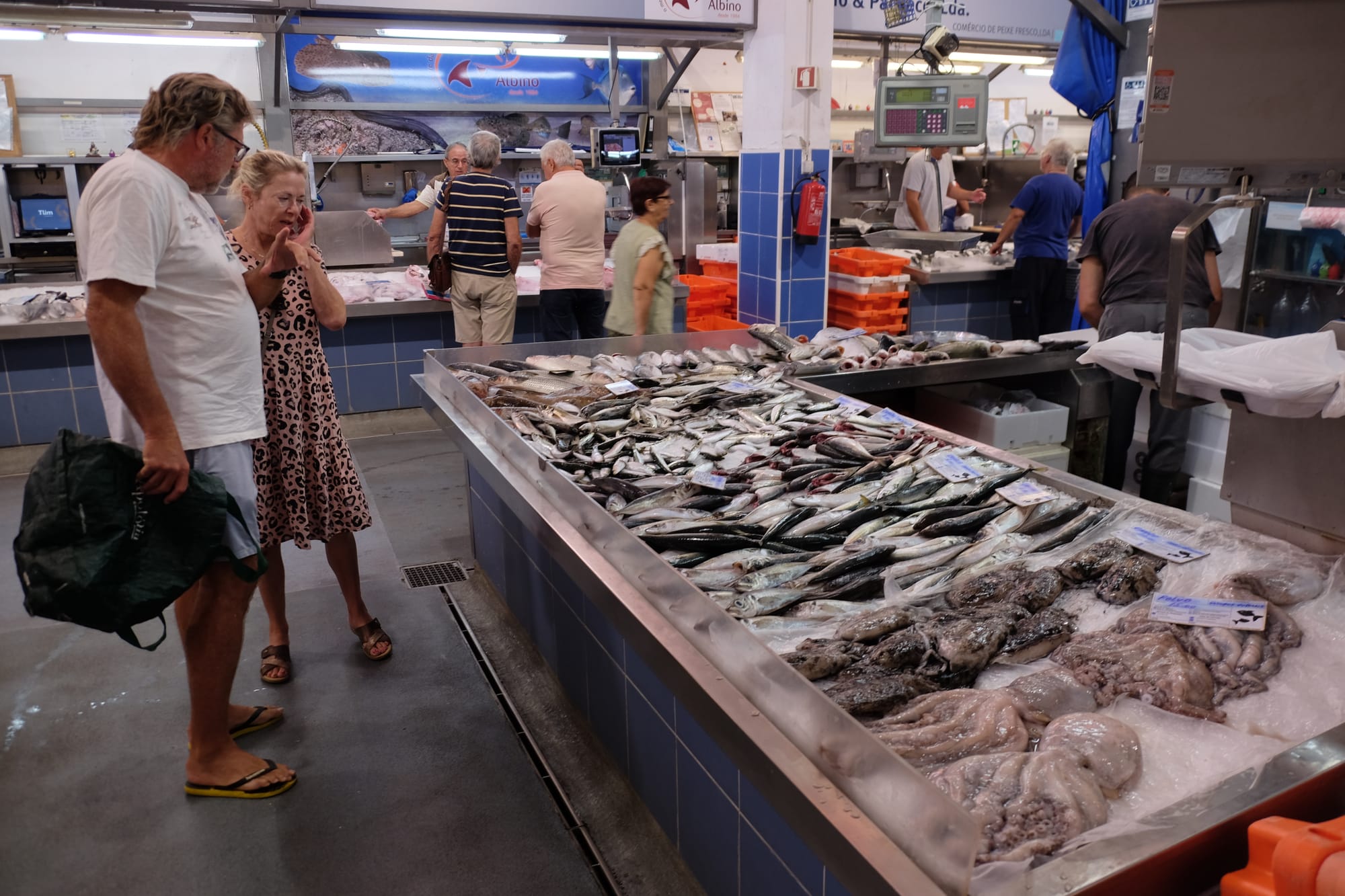
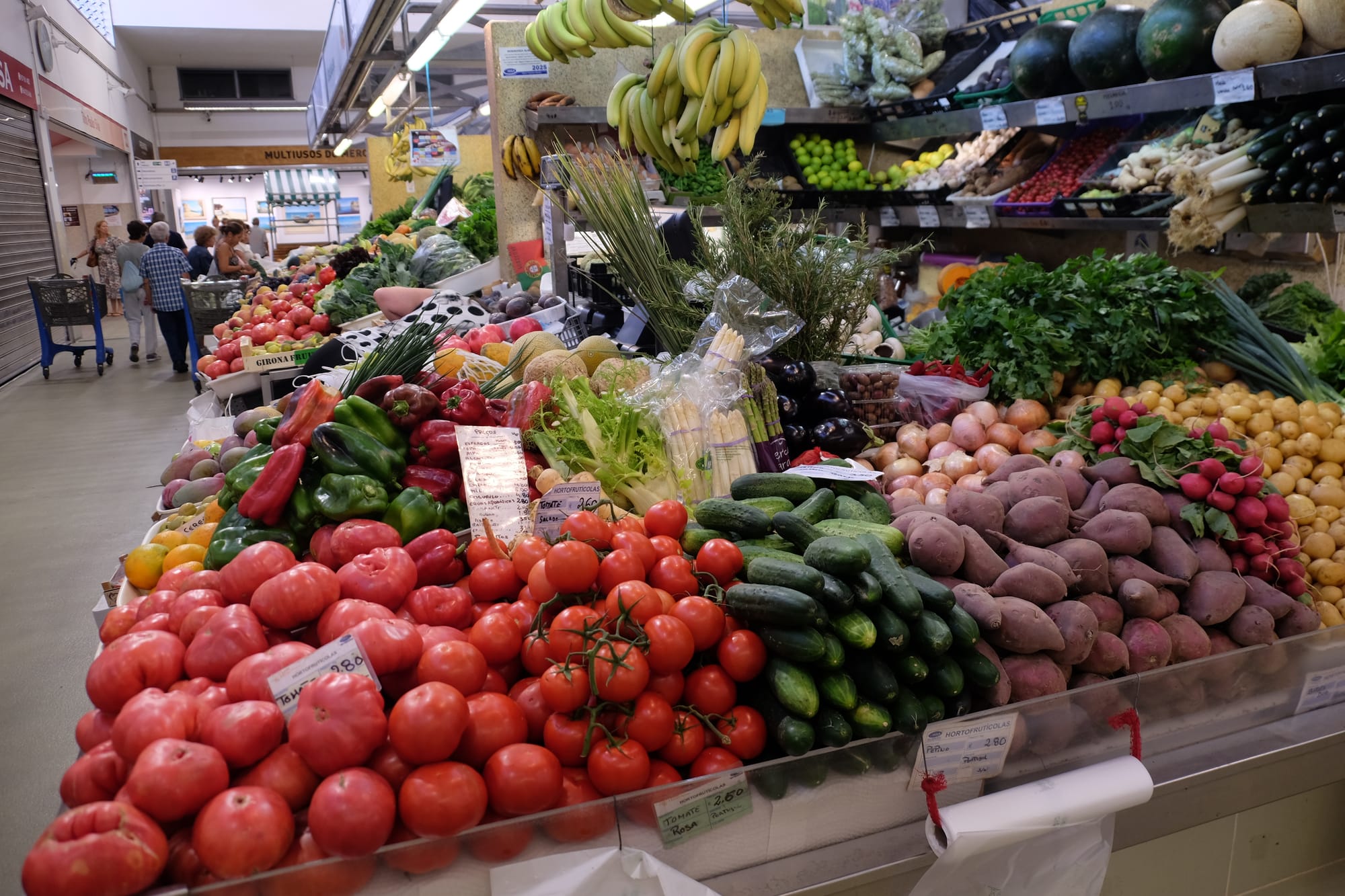
The shopping experience at Apolonia is quite something. There is such an array of produce, especially in the sections of fresh produce, cheeses and wines, all of great quality. It is however relatively expensive. But then there is the market at Portimão. So having bought the pig belly for Brigi's dinner at Apolonia we headed to the market early to get tuna, and were successful in finding a nice piece exactly as we wanted. After a stunning meal that evening we hauled ourselves home the next day, eternally grateful to our hosts Mike and Sam, Gary and Wendy, for their wonderful hospitality.
Our favourite restaurant meals were the most amazing steaks at the Argentinian Hexagon in Ferragudo, and Fernando's near Silves, mentioned above.
The shopping experience at Apolonia is quite something. There is such an array of produce, especially in the sections of fresh produce, cheeses and wines, all of great quality. It is however relatively expensive. But then there is the market at Portimão. So having bought the pig belly for Brigi's dinner at Apolonia we headed to the market early to get tuna, and were successful in finding a nice piece exactly as we wanted. After a stunning meal that evening we hauled ourselves home the next day, eternally grateful to our hosts Mike and Sam, Gary and Wendy, for their wonderful hospitality.